📖 View in Flipbook All editions
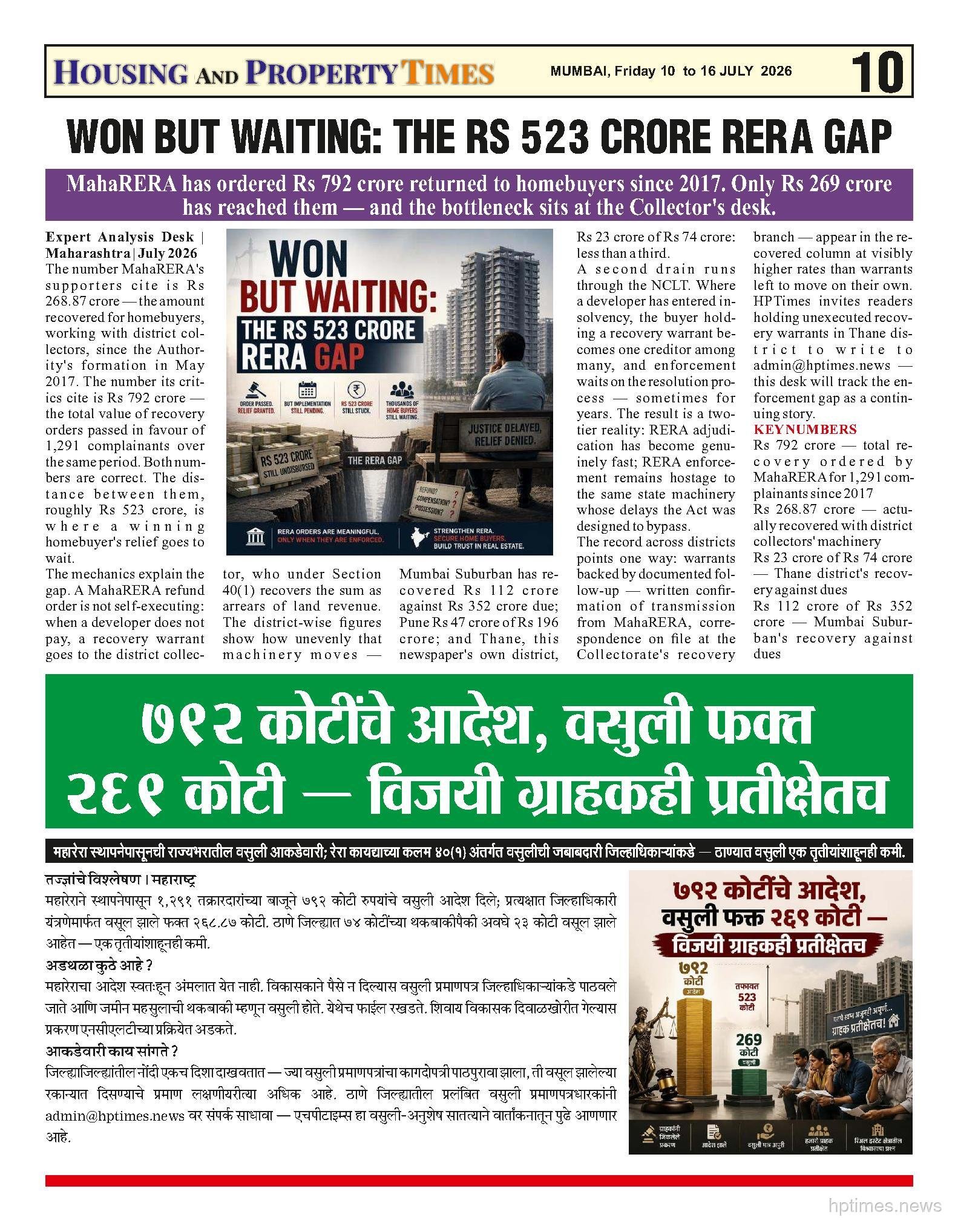
WON BUT WAITING: THE RS 523 CRORE RERA GAP
The number MahaRERA's supporters cite is Rs 268.87 crore — the amount recovered for homebuyers, working with district collectors, since the Authority's formation in May 2017. The number its critics cite is Rs 792 crore — the total value of recovery orders passed in favour of 1,291 complainants over the same period. Both numbers are correct. The distance between them, roughly Rs 523 crore, is where a winning homebuyer's relief goes to wait. The mechanics explain the gap. A MahaRERA refund order is not self-executing: when a developer does not pay, a recovery warrant goes to the district collector, who under Section 40(1) recovers the sum as arrears of land revenue. The district-wise figures show how unevenly that machinery moves — Mumbai Suburban has recovered Rs 112 crore against Rs 352 crore due; Pune Rs 47 crore of Rs 196 crore; and Thane, this newspaper's own district, Rs 23 crore of Rs 74 crore: less than a third. A second drain runs through the NCLT. Where a developer has entered insolvency, the buyer holding a recovery warrant becomes one creditor among many, and enforcement waits on the resolution process — sometimes for years. The result is a two-tier reality: RERA adjudication has become genuinely fast; RERA enforcement remains hostage to the same state machinery whose delays the Act was designed to bypass. The record across districts points one way: warrants backed by documented follow-up — written confirmation of transmission from MahaRERA, correspondence on file at the Collectorate's recovery branch — appear in the recovered column at visibly higher rates than warrants left to move on their own. HPTimes invites readers holding unexecuted recovery warrants in Thane district to write to admin@hptimes.news — this desk will track the enforcement gap as a continuing story.
React
More from this issue & web
 Page 1
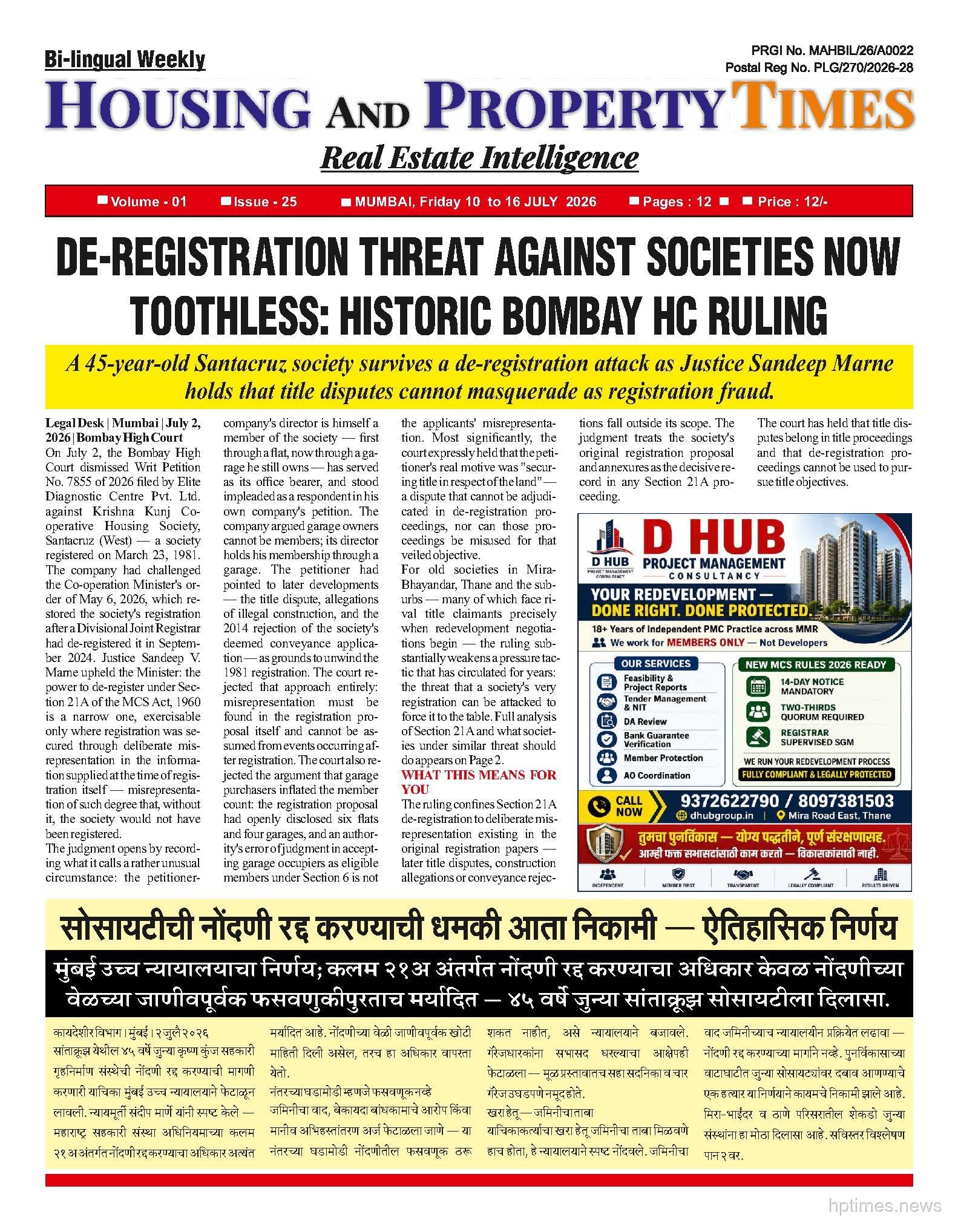
SOCIETY REGISTRATION IS NOT A LAND-GRAB TARGET, RULES BOMBAY HC
Page 1
SOCIETY REGISTRATION IS NOT A LAND-GRAB TARGET, RULES BOMBAY HC
 Page 2
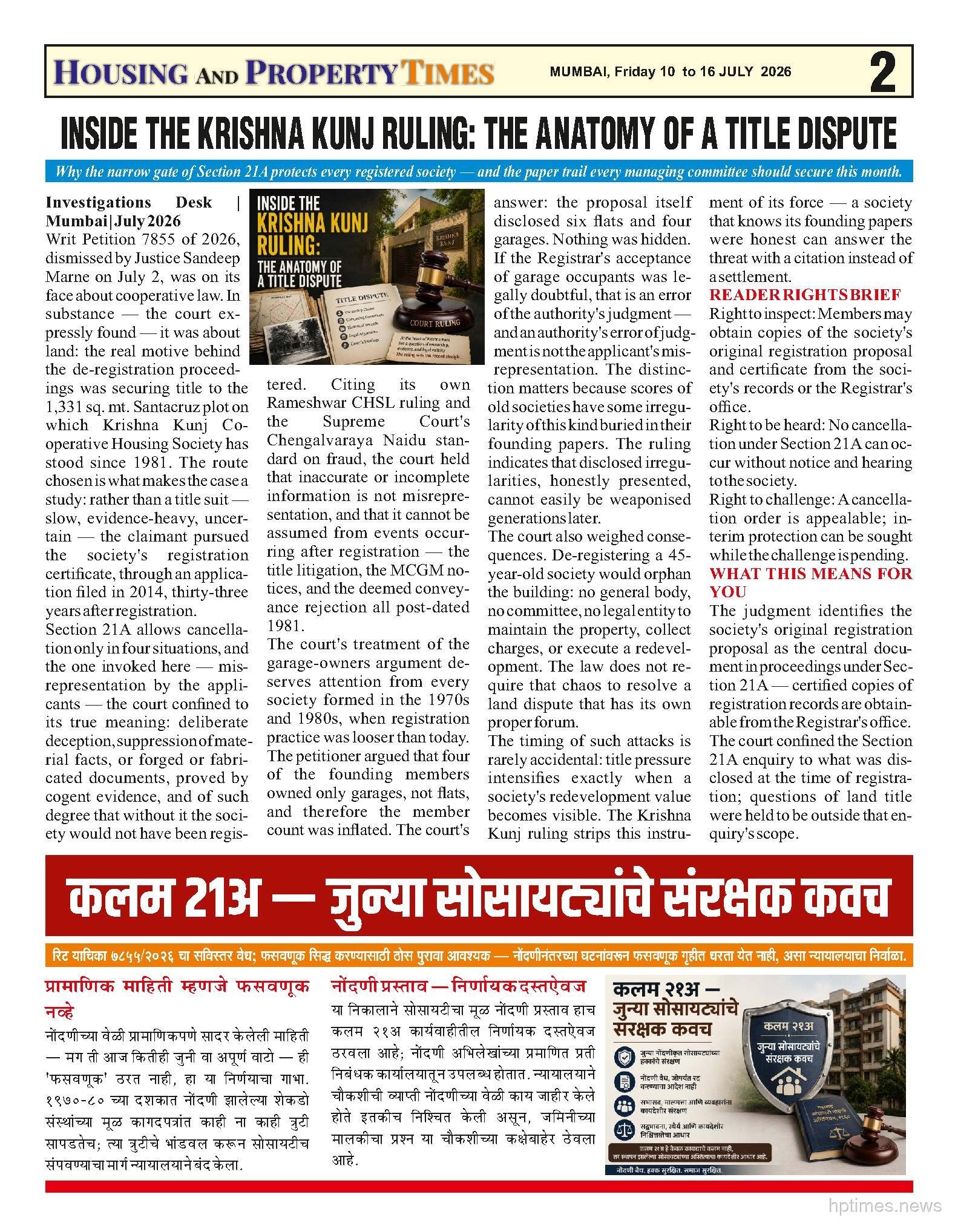
INSIDE THE KRISHNA KUNJ RULING: THE ANATOMY OF A TITLE DISPUTE
Page 2
INSIDE THE KRISHNA KUNJ RULING: THE ANATOMY OF A TITLE DISPUTE
 Page 3
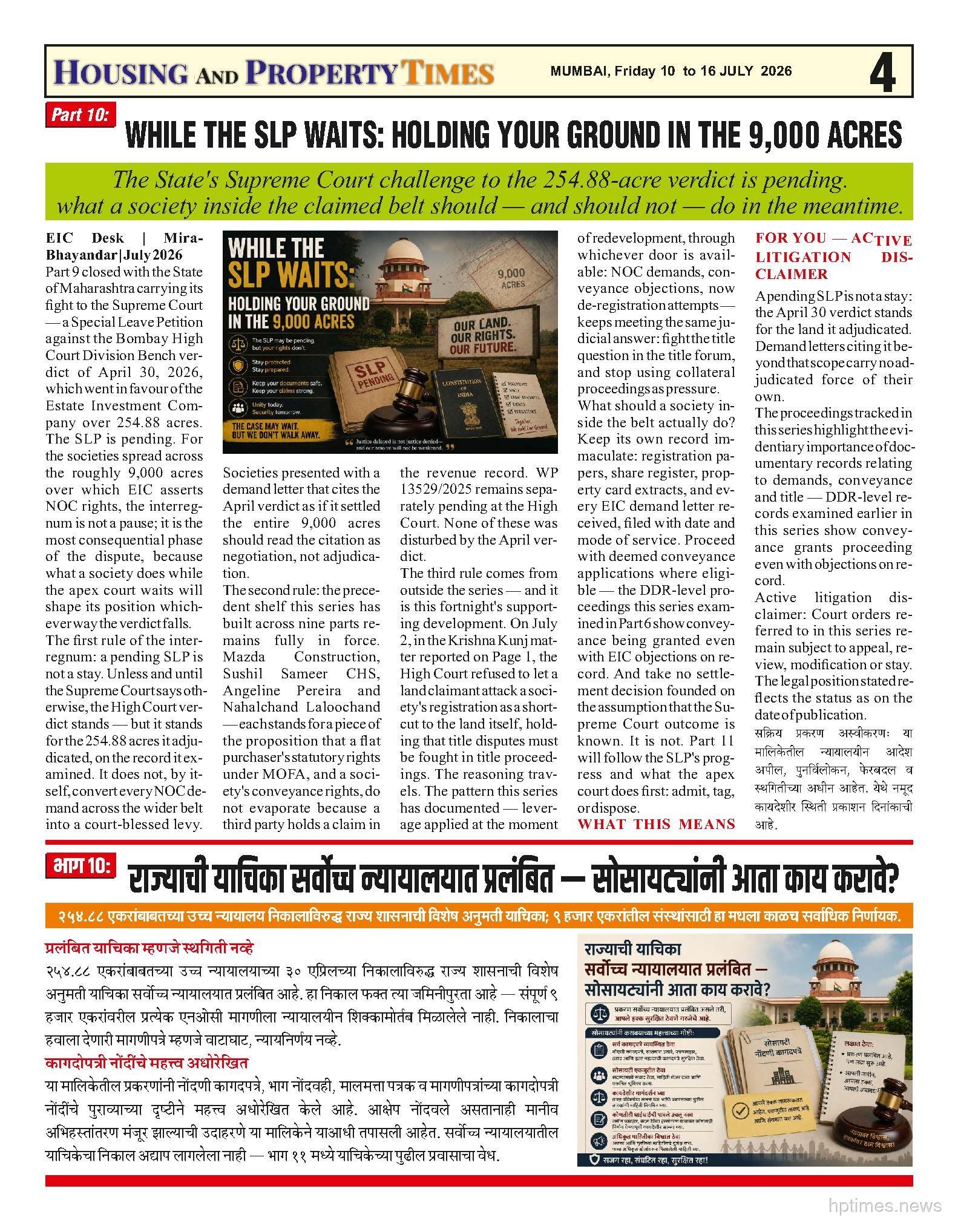
WHILE THE SLP WAITS: HOLDING YOUR GROUND IN THE 9,000 ACRES
Page 3
WHILE THE SLP WAITS: HOLDING YOUR GROUND IN THE 9,000 ACRES
 Page 4
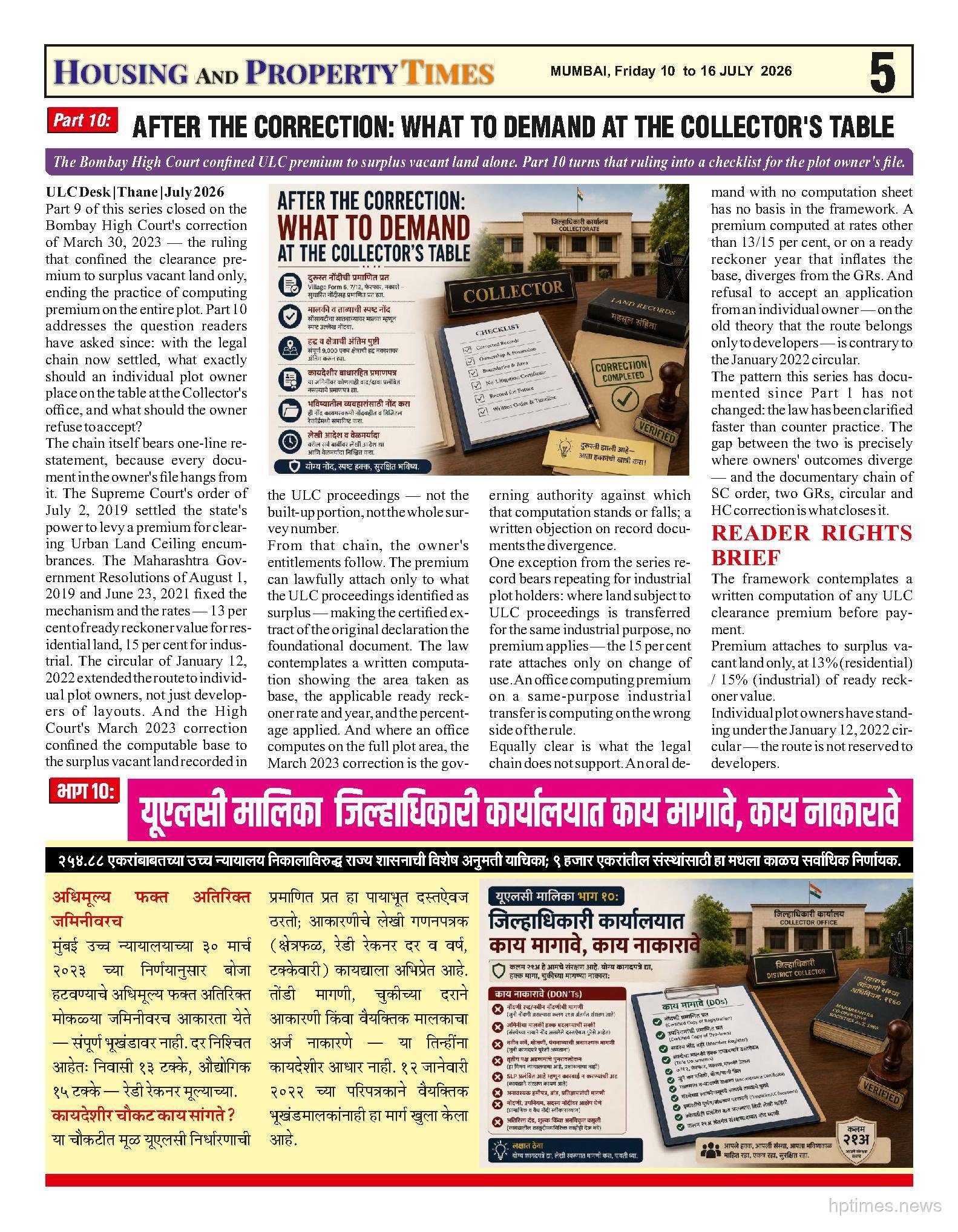
AFTER THE CORRECTION: WHAT TO DEMAND AT THE COLLECTOR'S TABLE
Page 4
AFTER THE CORRECTION: WHAT TO DEMAND AT THE COLLECTOR'S TABLE
 Page 5
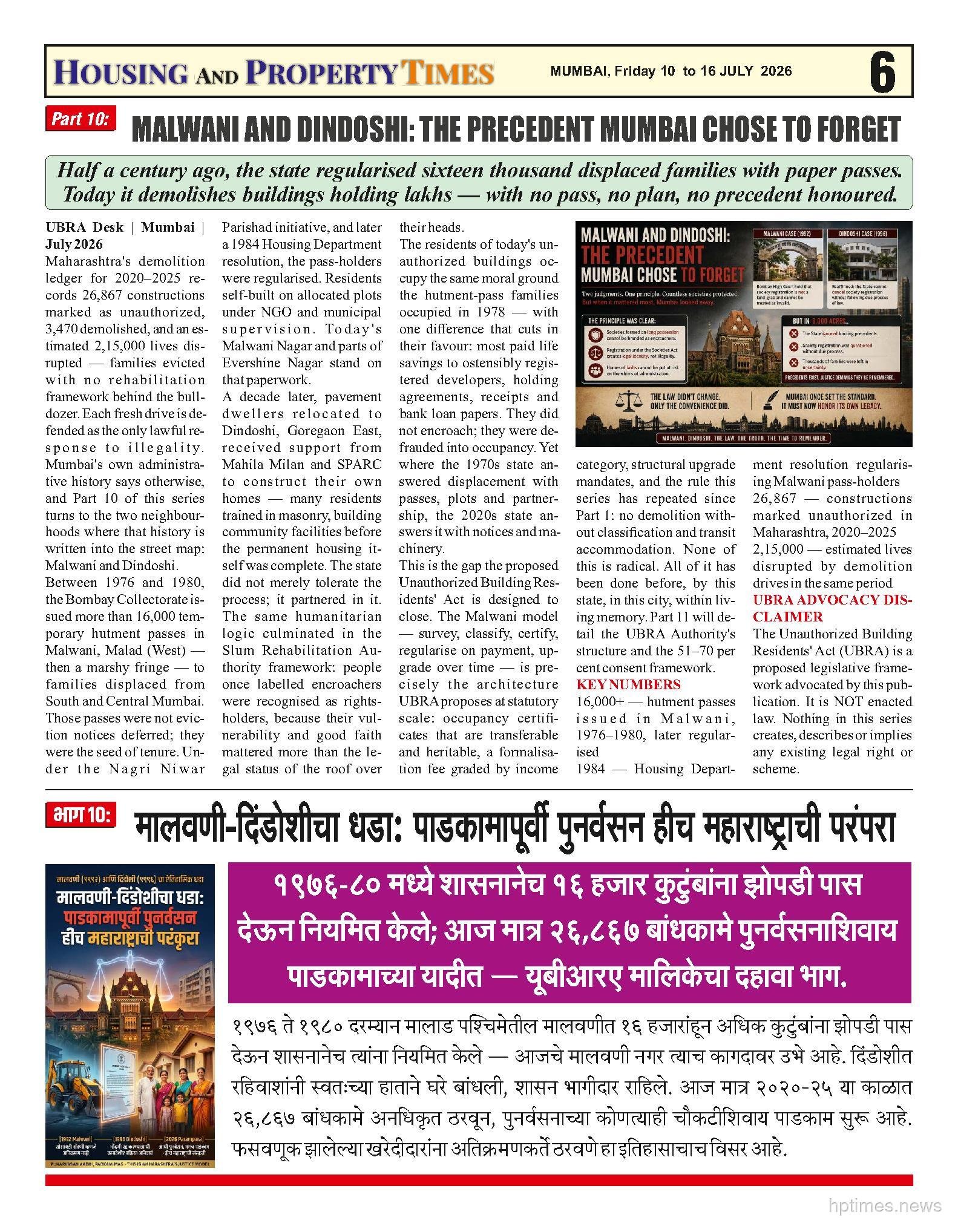
MALWANI AND DINDOSHI: THE PRECEDENT MUMBAI CHOSE TO FORGET
Page 5
MALWANI AND DINDOSHI: THE PRECEDENT MUMBAI CHOSE TO FORGET
 Page 6
HIDE DOCUMENTS FROM A MEMBER, LOSE YOUR COMMITTEE SEAT
Page 6
HIDE DOCUMENTS FROM A MEMBER, LOSE YOUR COMMITTEE SEAT
Comments (0)