📖 View in Flipbook All editions
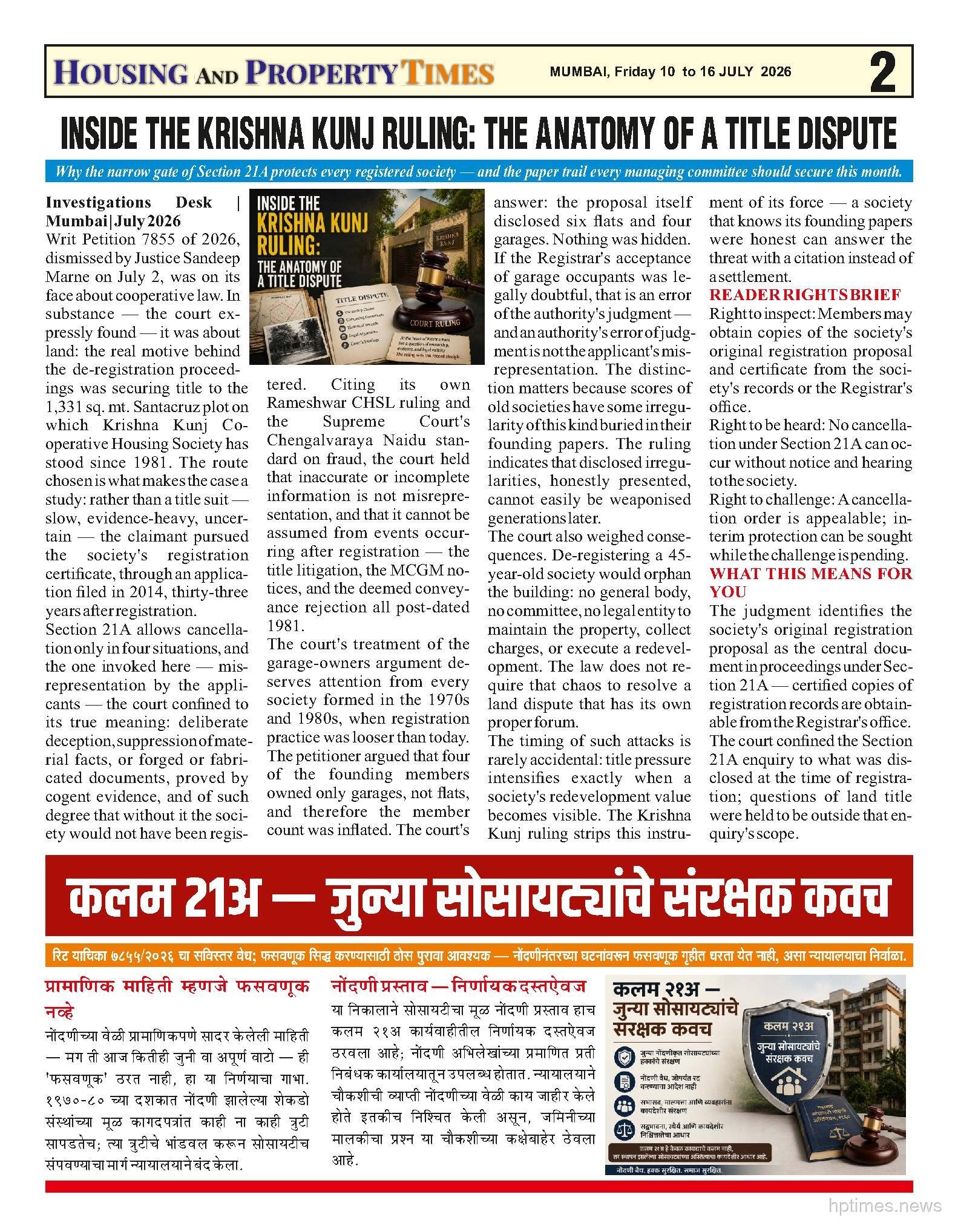
INSIDE THE KRISHNA KUNJ RULING: THE ANATOMY OF A TITLE DISPUTE
Writ Petition 7855 of 2026, dismissed by Justice Sandeep Marne on July 2, was on its face about cooperative law. In substance — the court expressly found — it was about land: the real motive behind the de-registration proceedings was securing title to the 1,331 sq. mt. Santacruz plot on which Krishna Kunj Co-operative Housing Society has stood since 1981. The route chosen is what makes the case a study: rather than a title suit — slow, evidence-heavy, uncertain — the claimant pursued the society's registration certificate, through an application filed in 2014, thirty-three years after registration. Section 21A allows cancellation only in four situations, and the one invoked here — misrepresentation by the applicants — the court confined to its true meaning: deliberate deception, suppression of material facts, or forged or fabricated documents, proved by cogent evidence, and of such degree that without it the society would not have been registered. Citing its own Rameshwar CHSL ruling and the Supreme Court's Chengalvaraya Naidu standard on fraud, the court held that inaccurate or incomplete information is not misrepresentation, and that it cannot be assumed from events occurring after registration — the title litigation, the MCGM notices, and the deemed conveyance rejection all post-dated 1981. The court's treatment of the garage-owners argument deserves attention from every society formed in the 1970s and 1980s, when registration practice was looser than today. The petitioner argued that four of the founding members owned only garages, not flats, and therefore the member count was inflated. The court's answer: the proposal itself disclosed six flats and four garages. Nothing was hidden. If the Registrar's acceptance of garage occupants was legally doubtful, that is an error of the authority's judgment — and an authority's error of judgment is not the applicant's misrepresentation. The distinction matters because scores of old societies have some irregularity of this kind buried in their founding papers. The ruling indicates that disclosed irregularities, honestly presented, cannot easily be weaponised generations later. The court also weighed consequences. De-registering a 45-year-old society would orphan the building: no general body, no committee, no legal entity to maintain the property, collect charges, or execute a redevelopment. The law does not require that chaos to resolve a land dispute that has its own proper forum. The timing of such attacks is rarely accidental: title pressure intensifies exactly when a society's redevelopment value becomes visible. The Krishna Kunj ruling strips this instrument of its force — a society that knows its founding papers were honest can answer the threat with a citation instead of a settlement.
React
More from this issue & web
 Page 1
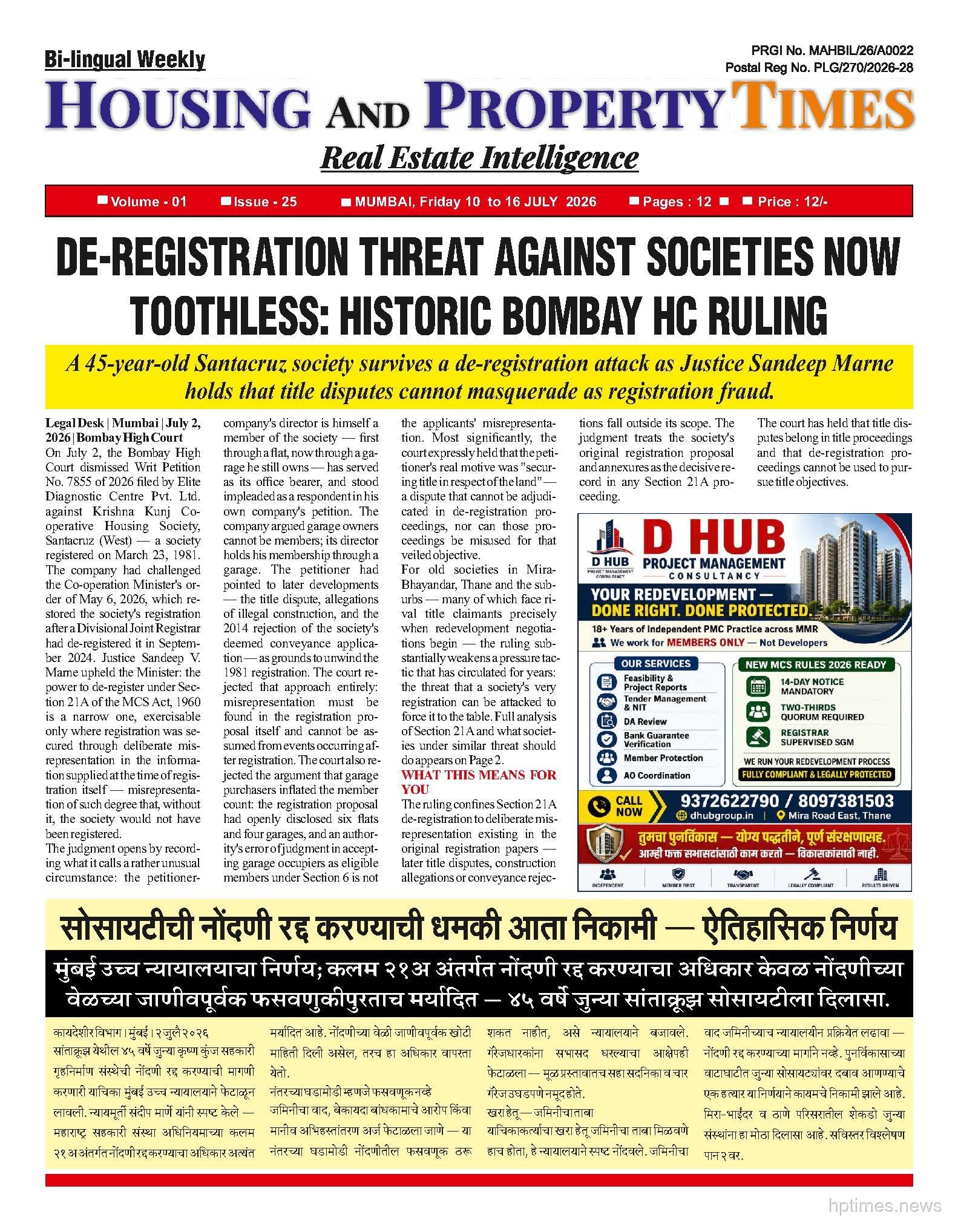
SOCIETY REGISTRATION IS NOT A LAND-GRAB TARGET, RULES BOMBAY HC
Page 1
SOCIETY REGISTRATION IS NOT A LAND-GRAB TARGET, RULES BOMBAY HC
 Page 3
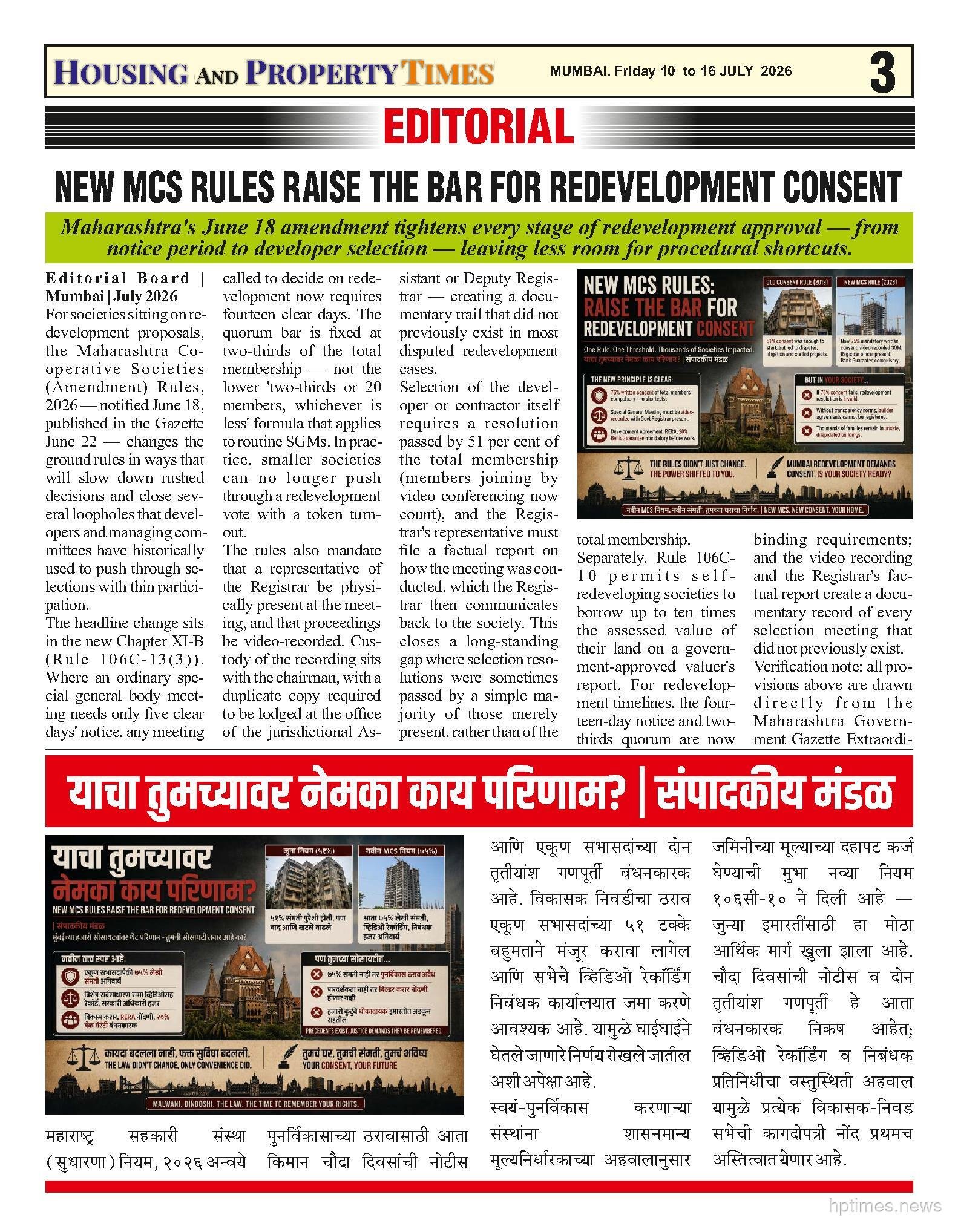
WHILE THE SLP WAITS: HOLDING YOUR GROUND IN THE 9,000 ACRES
Page 3
WHILE THE SLP WAITS: HOLDING YOUR GROUND IN THE 9,000 ACRES
 Page 4
AFTER THE CORRECTION: WHAT TO DEMAND AT THE COLLECTOR'S TABLE
Page 4
AFTER THE CORRECTION: WHAT TO DEMAND AT THE COLLECTOR'S TABLE
 Page 5
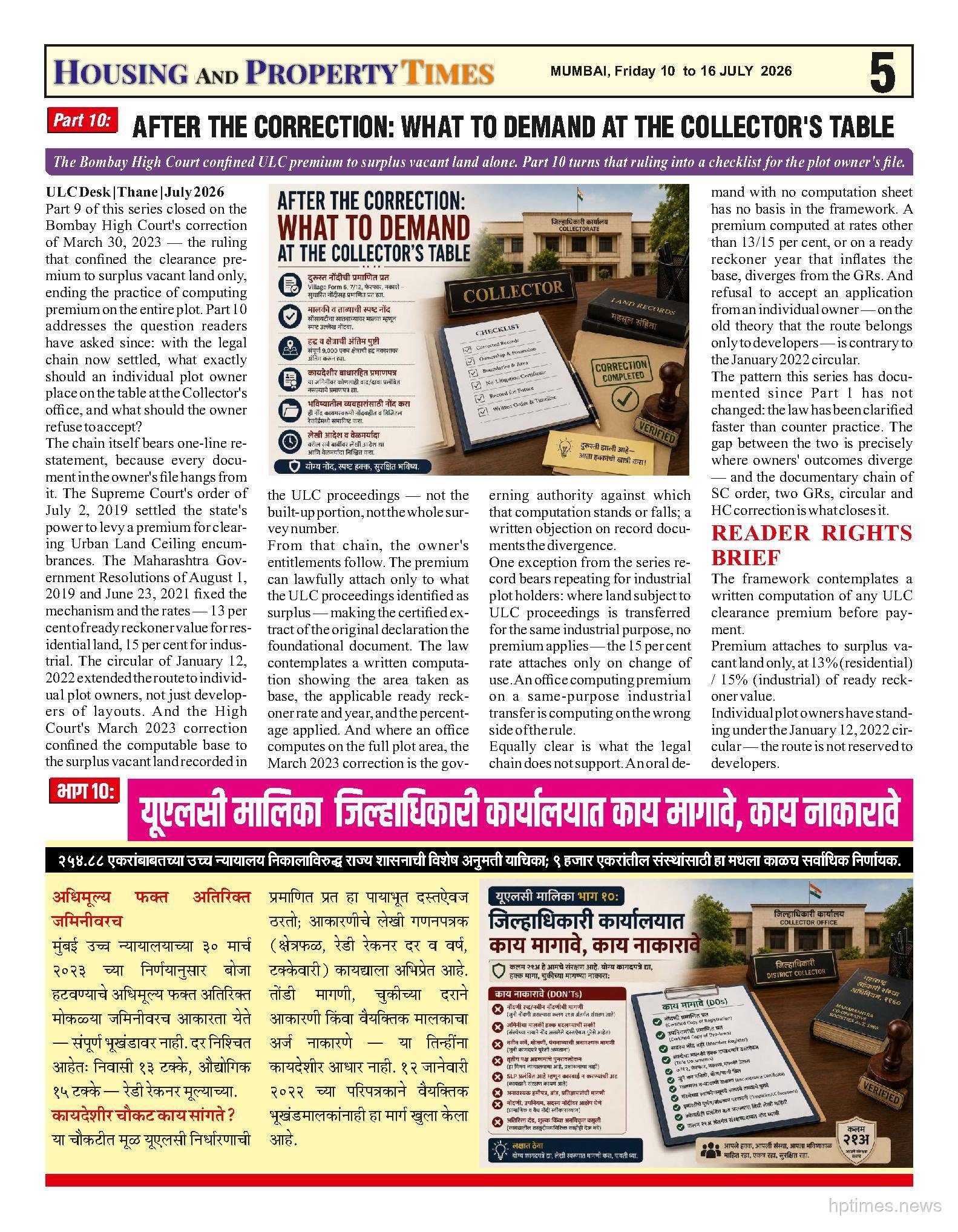
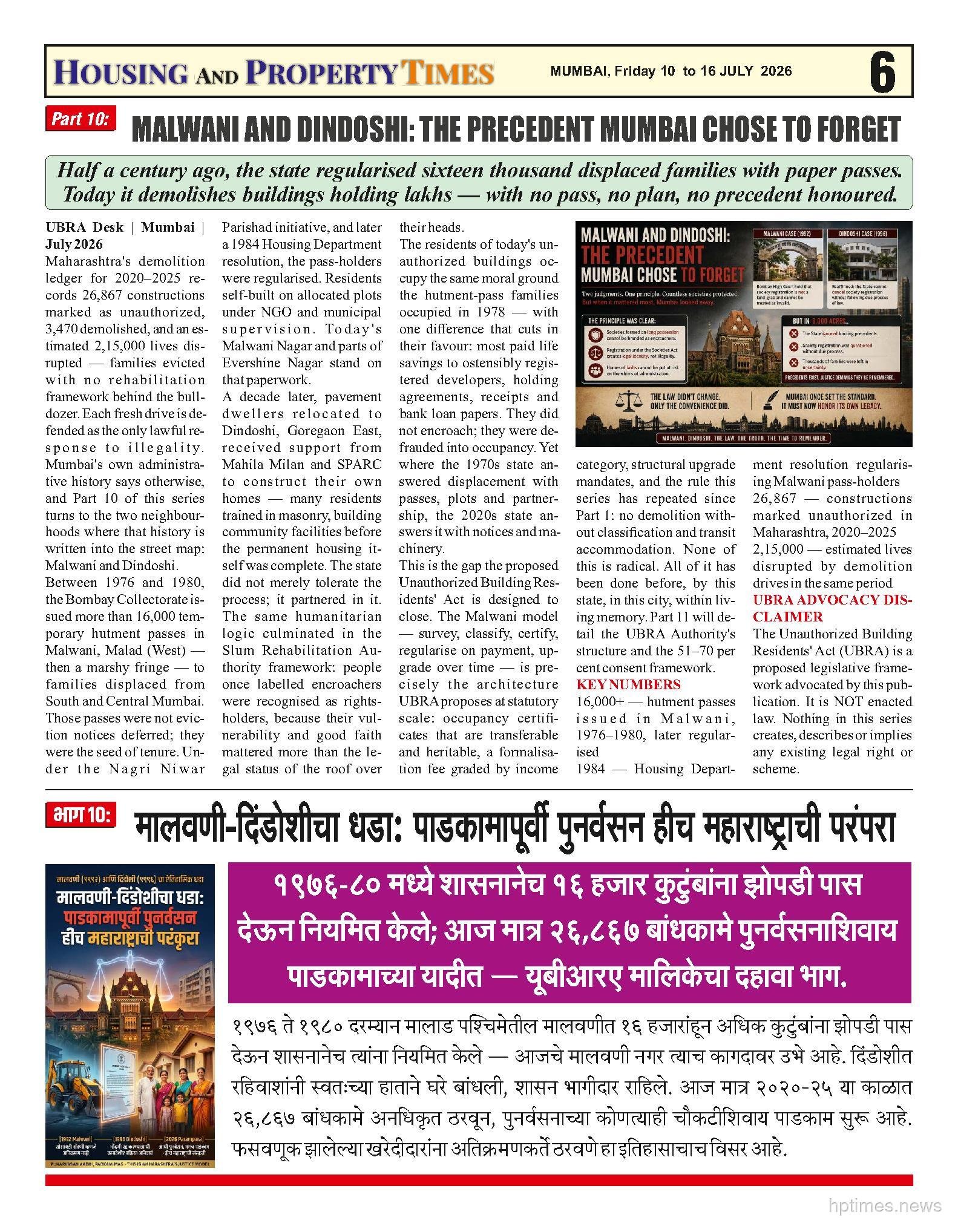
MALWANI AND DINDOSHI: THE PRECEDENT MUMBAI CHOSE TO FORGET
Page 5
MALWANI AND DINDOSHI: THE PRECEDENT MUMBAI CHOSE TO FORGET
 Page 6
HIDE DOCUMENTS FROM A MEMBER, LOSE YOUR COMMITTEE SEAT
Page 6
HIDE DOCUMENTS FROM A MEMBER, LOSE YOUR COMMITTEE SEAT
 Page 7
NEW MCS RULES RAISE THE BAR FOR REDEVELOPMENT CONSENT
Page 7
NEW MCS RULES RAISE THE BAR FOR REDEVELOPMENT CONSENT
Comments (0)