📖 View in Flipbook All editions
WHILE THE SLP WAITS: HOLDING YOUR GROUND IN THE 9,000 ACRES
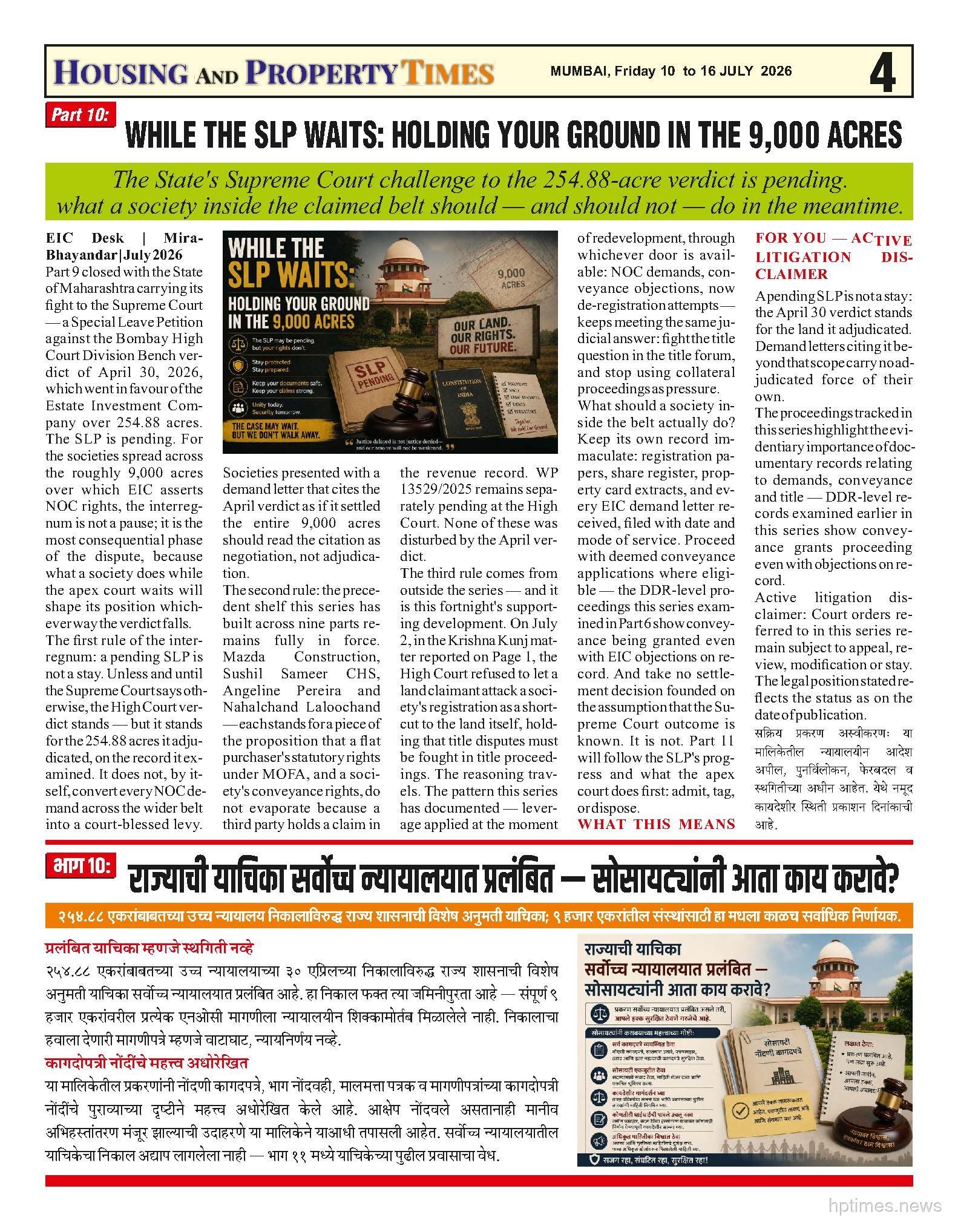
राज्याची याचिका सर्वोच्च न्यायालयात प्रलंबित — सोसायट्यांनी आता काय करावे? Part 9 closed with the State of Maharashtra carrying its fight to the Supreme Court — a Special Leave Petition against the Bombay High Court Division Bench verdict of April 30, 2026, which went in favour of the Estate Investment Company over 254.88 acres. The SLP is pending. For the societies spread across the roughly 9,000 acres over which EIC asserts NOC rights, the interregnum is not a pause; it is the most consequential phase of the dispute, because what a society does while the apex court waits will shape its position whichever way the verdict falls. The first rule of the interregnum: a pending SLP is not a stay. Unless and until the Supreme Court says otherwise, the High Court verdict stands — but it stands for the 254.88 acres it adjudicated, on the record it examined. It does not, by itself, convert every NOC demand across the wider belt into a court-blessed levy. Societies presented with a demand letter that cites the April verdict as if it settled the entire 9,000 acres should read the citation as negotiation, not adjudication. The second rule: the precedent shelf this series has built across nine parts remains fully in force. Mazda Construction, Sushil Sameer CHS, Angeline Pereira and Nahalchand Laloochand — each stands for a piece of the proposition that a flat purchaser's statutory rights under MOFA, and a society's conveyance rights, do not evaporate because a third party holds a claim in the revenue record. WP 13529/2025 remains separately pending at the High Court. None of these was disturbed by the April verdict. The third rule comes from outside the series — and it is this fortnight's supporting development. On July 2, in the Krishna Kunj matter reported on Page 1, the High Court refused to let a land claimant attack a society's registration as a shortcut to the land itself, holding that title disputes must be fought in title proceedings. The reasoning travels. The pattern this series has documented — leverage applied at the moment of redevelopment, through whichever door is available: NOC demands, conveyance objections, now de-registration attempts — keeps meeting the same judicial answer: fight the title question in the title forum, and stop using collateral proceedings as pressure. What should a society inside the belt actually do? Keep its own record immaculate: registration papers, share register, property card extracts, and every EIC demand letter received, filed with date and mode of service. Proceed with deemed conveyance applications where eligible — the DDR-level proceedings this series examined in Part 6 show conveyance being granted even with EIC objections on record. And take no settlement decision founded on the assumption that the Supreme Court outcome is known. It is not. Part 11 will follow the SLP's progress and what the apex court does first: admit, tag, or dispose.
React
More from this issue & web
 Page 1
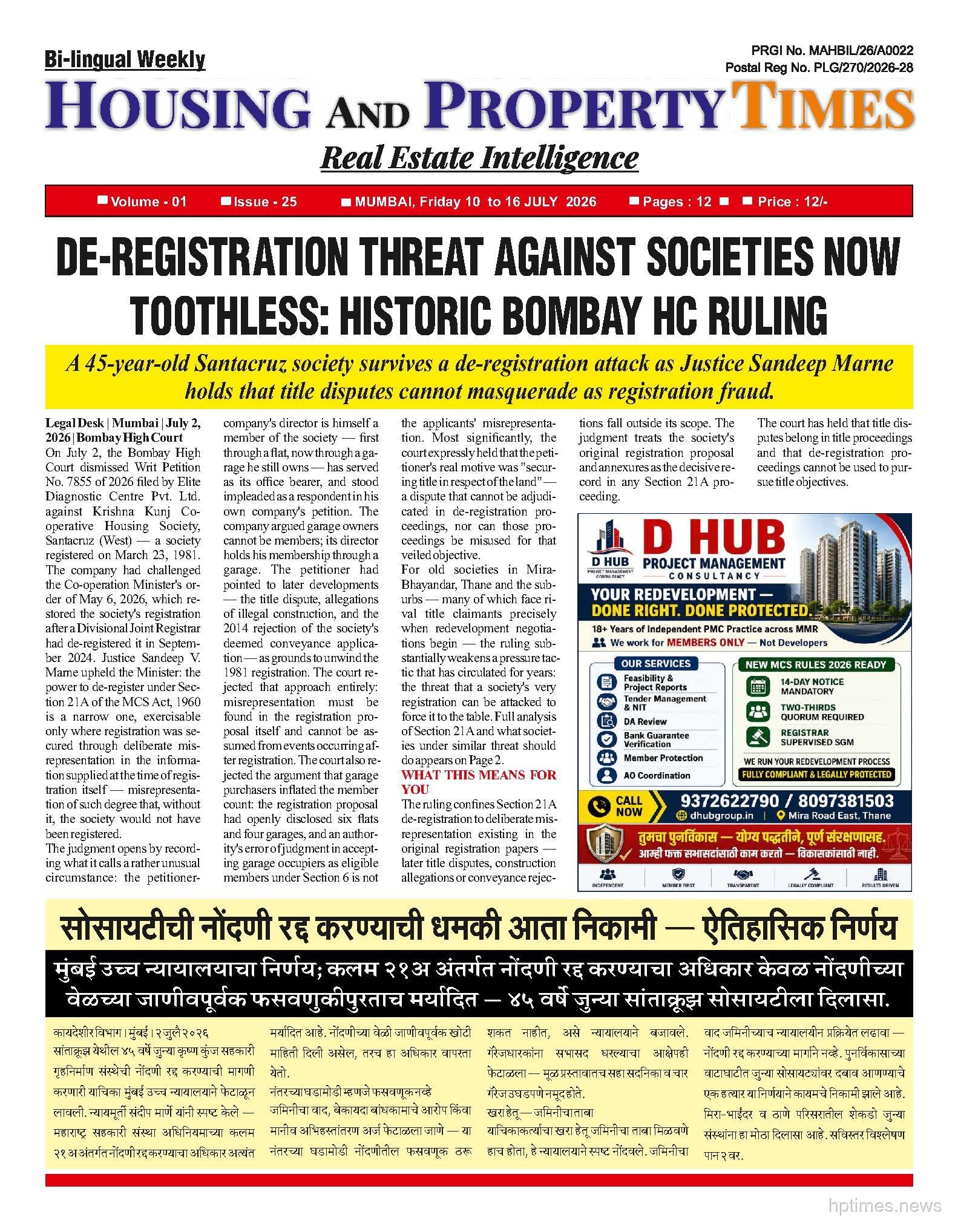
SOCIETY REGISTRATION IS NOT A LAND-GRAB TARGET, RULES BOMBAY HC
Page 1
SOCIETY REGISTRATION IS NOT A LAND-GRAB TARGET, RULES BOMBAY HC
 Page 2
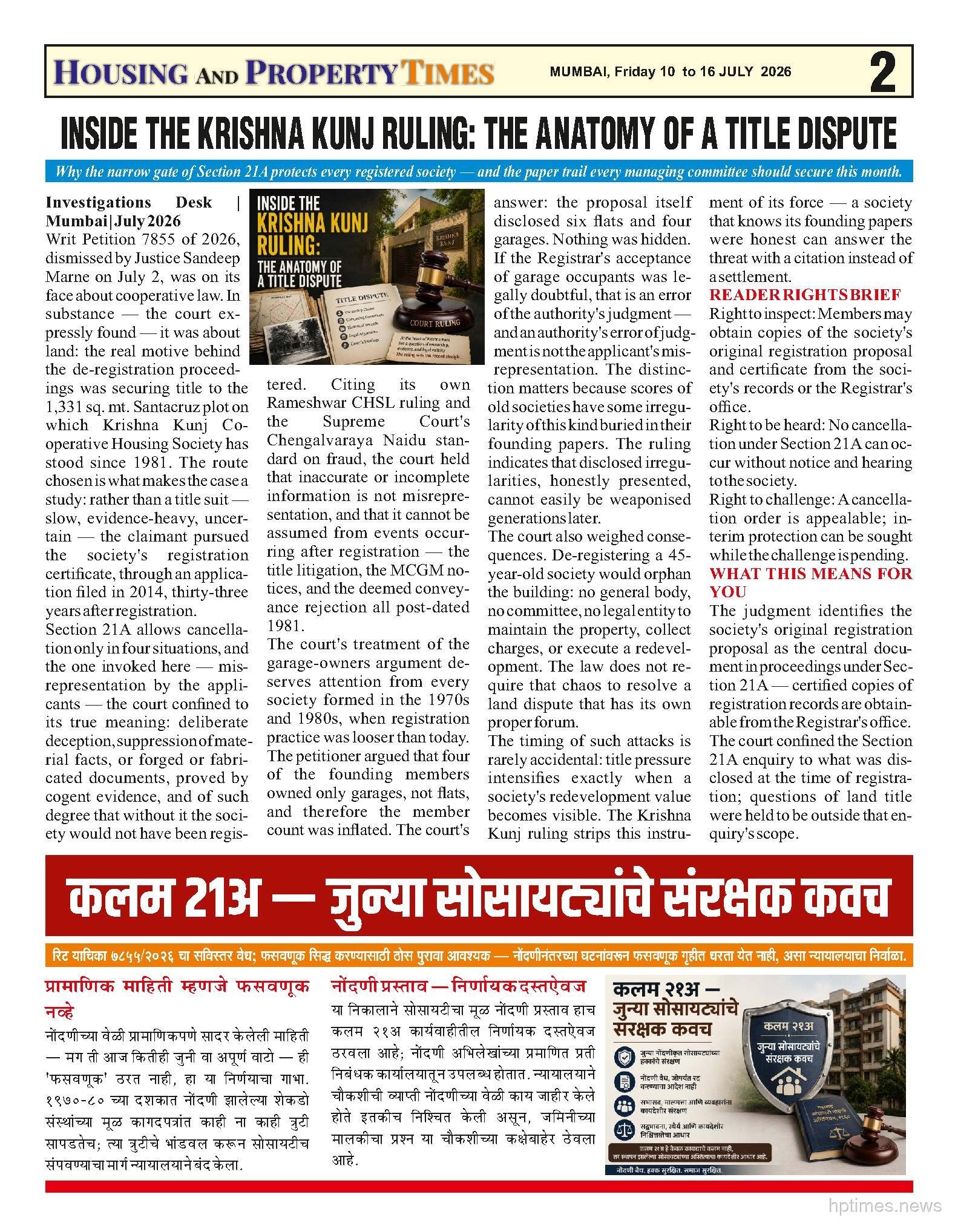
INSIDE THE KRISHNA KUNJ RULING: THE ANATOMY OF A TITLE DISPUTE
Page 2
INSIDE THE KRISHNA KUNJ RULING: THE ANATOMY OF A TITLE DISPUTE
 Page 4
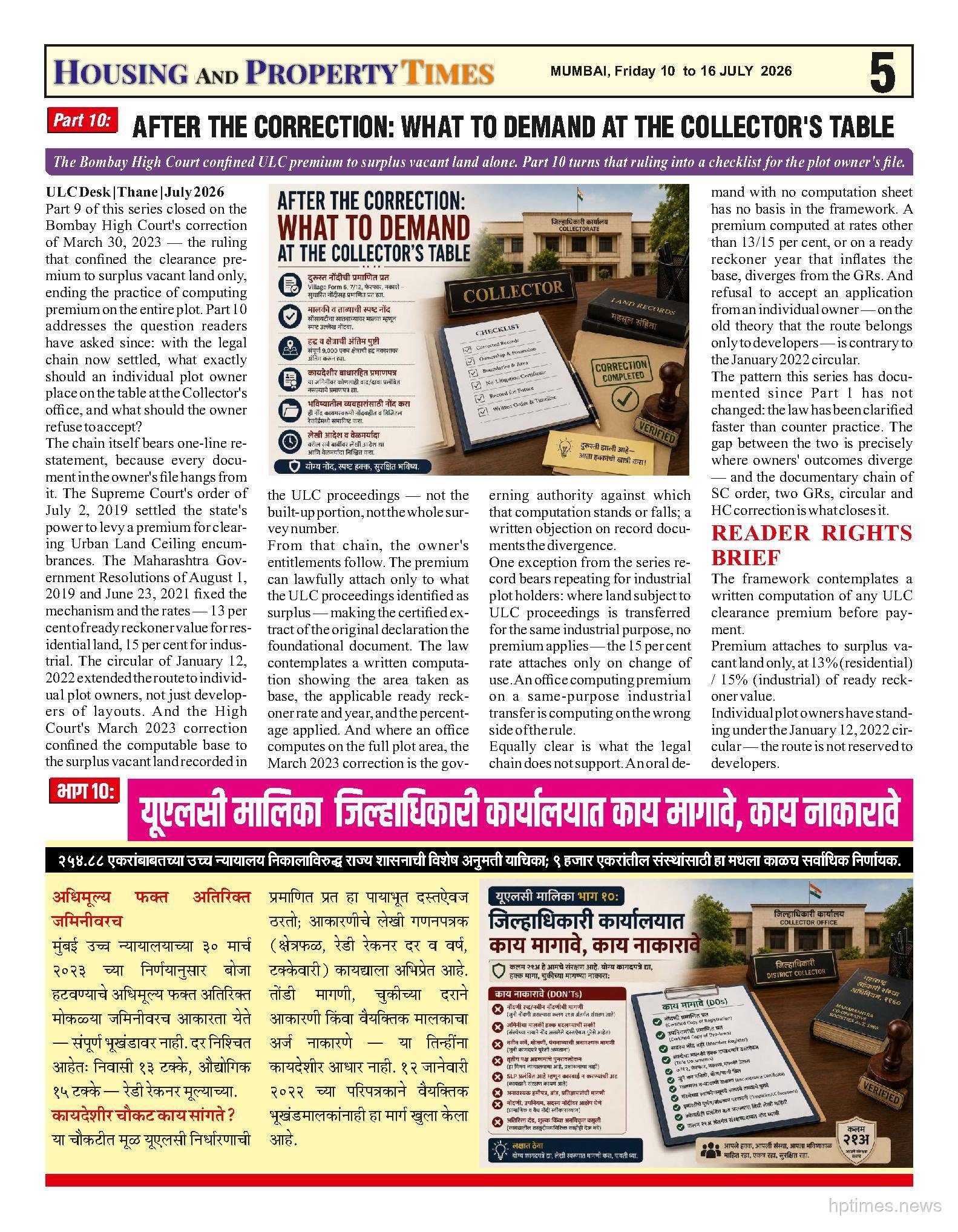
AFTER THE CORRECTION: WHAT TO DEMAND AT THE COLLECTOR'S TABLE
Page 4
AFTER THE CORRECTION: WHAT TO DEMAND AT THE COLLECTOR'S TABLE
 Page 5
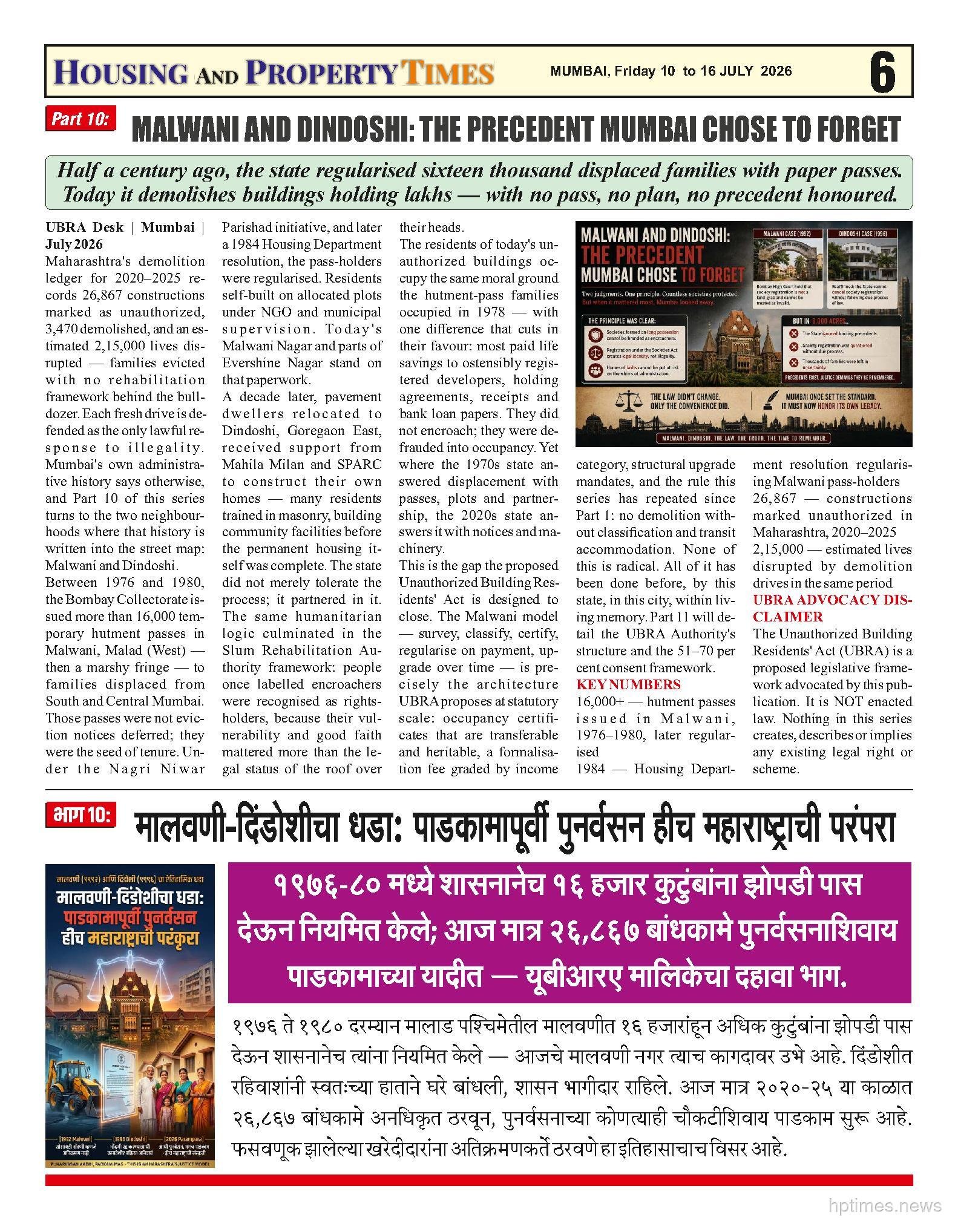
MALWANI AND DINDOSHI: THE PRECEDENT MUMBAI CHOSE TO FORGET
Page 5
MALWANI AND DINDOSHI: THE PRECEDENT MUMBAI CHOSE TO FORGET
 Page 6
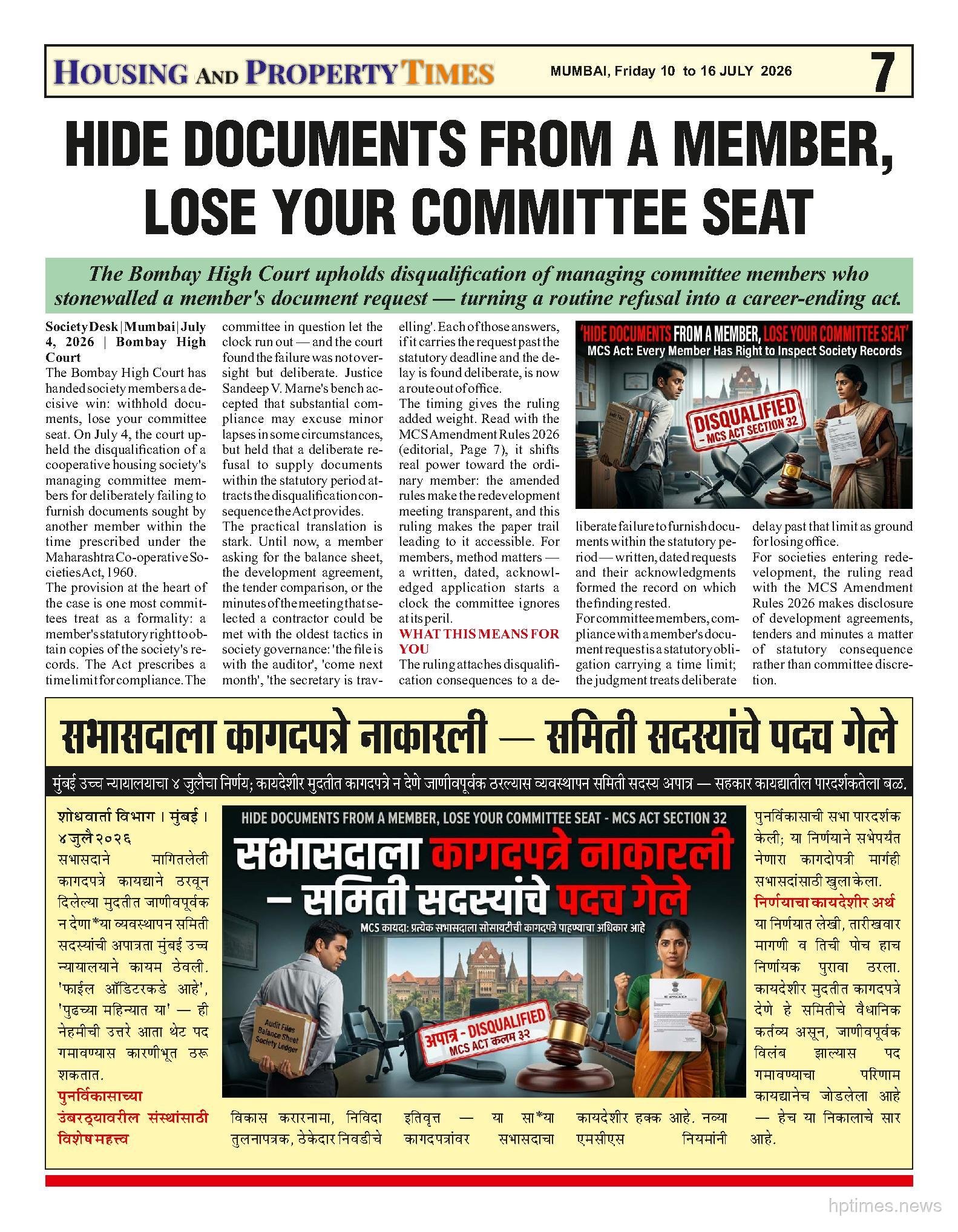
HIDE DOCUMENTS FROM A MEMBER, LOSE YOUR COMMITTEE SEAT
Page 6
HIDE DOCUMENTS FROM A MEMBER, LOSE YOUR COMMITTEE SEAT
 Page 7
NEW MCS RULES RAISE THE BAR FOR REDEVELOPMENT CONSENT
Page 7
NEW MCS RULES RAISE THE BAR FOR REDEVELOPMENT CONSENT
Comments (0)