📖 View in Flipbook All editions
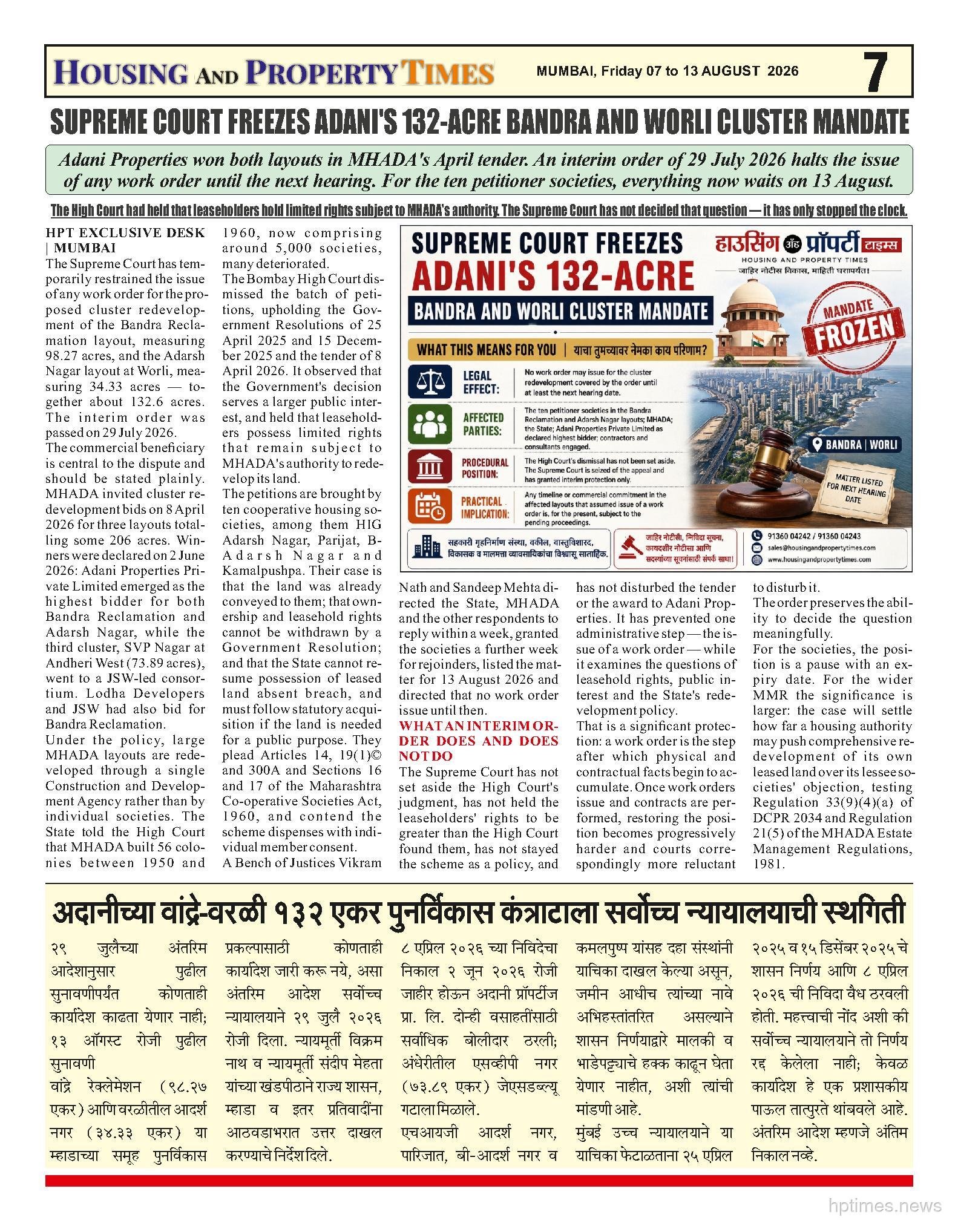
SUPREME COURT FREEZES ADANI'S 132-ACRE BANDRA AND WORLI CLUSTER MANDATE
HPT EXCLUSIVE DESK | MUMBAI The Supreme Court has temporarily restrained the issue of any work order for the proposed cluster redevelopment of the Bandra Reclamation layout, measuring 98.27 acres, and the Adarsh Nagar layout at Worli, measuring 34.33 acres — together about 132.6 acres. The interim order was passed on 29 July 2026. The commercial beneficiary is central to the dispute and should be stated plainly. MHADA invited cluster redevelopment bids on 8 April 2026 for three layouts totalling some 206 acres. Winners were declared on 2 June 2026: Adani Properties Private Limited emerged as the highest bidder for both Bandra Reclamation and Adarsh Nagar, while the third cluster, SVP Nagar at Andheri West (73.89 acres), went to a JSW-led consortium. Lodha Developers and JSW had also bid for Bandra Reclamation. Under the policy, large MHADA layouts are redeveloped through a single Construction and Development Agency rather than by individual societies. The State told the High Court that MHADA built 56 colonies between 1950 and 1960, now comprising around 5,000 societies, many deteriorated. The Bombay High Court dismissed the batch of petitions, upholding the Government Resolutions of 25 April 2025 and 15 December 2025 and the tender of 8 April 2026. It observed that the Government's decision serves a larger public interest, and held that leaseholders possess limited rights that remain subject to MHADA's authority to redevelop its land. The petitions are brought by ten cooperative housing societies, among them HIG Adarsh Nagar, Parijat, B-Adarsh Nagar and Kamalpushpa. Their case is that the land was already conveyed to them; that ownership and leasehold rights cannot be withdrawn by a Government Resolution; and that the State cannot resume possession of leased land absent breach, and must follow statutory acquisition if the land is needed for a public purpose. They plead Articles 14, 19(1)(c) and 300A and Sections 16 and 17 of the Maharashtra Co-operative Societies Act, 1960, and contend the scheme dispenses with individual member consent. A Bench of Justices Vikram Nath and Sandeep Mehta directed the State, MHADA and the other respondents to reply within a week, granted the societies a further week for rejoinders, listed the matter for 13 August 2026 and directed that no work order issue until then. The Supreme Court has not set aside the High Court's judgment, has not held the leaseholders' rights to be greater than the High Court found them, has not stayed the scheme as a policy, and has not disturbed the tender or the award to Adani Properties. It has prevented one administrative step — the issue of a work order — while it examines the questions of leasehold rights, public interest and the State's redevelopment policy. That is a significant protection: a work order is the step after which physical and contractual facts begin to accumulate. Once work orders issue and contracts are performed, restoring the position becomes progressively harder and courts correspondingly more reluctant to disturb it. The order preserves the ability to decide the question meaningfully. For the societies, the position is a pause with an expiry date. For the wider MMR the significance is larger: the case will settle how far a housing authority may push comprehensive redevelopment of its own leased land over its lessee societies' objection, testing Regulation 33(9)(4)(a) of DCPR 2034 and Regulation 21(5) of the MHADA Estate Management Regulations, 1981.
React
More from this issue & web
 Page 1
MAHARERA GRANTS ALL PROJECTS FOUR EXTRA MONTHS OVER WEST ASIA WAR
Page 1
MAHARERA GRANTS ALL PROJECTS FOUR EXTRA MONTHS OVER WEST ASIA WAR
 Page 2
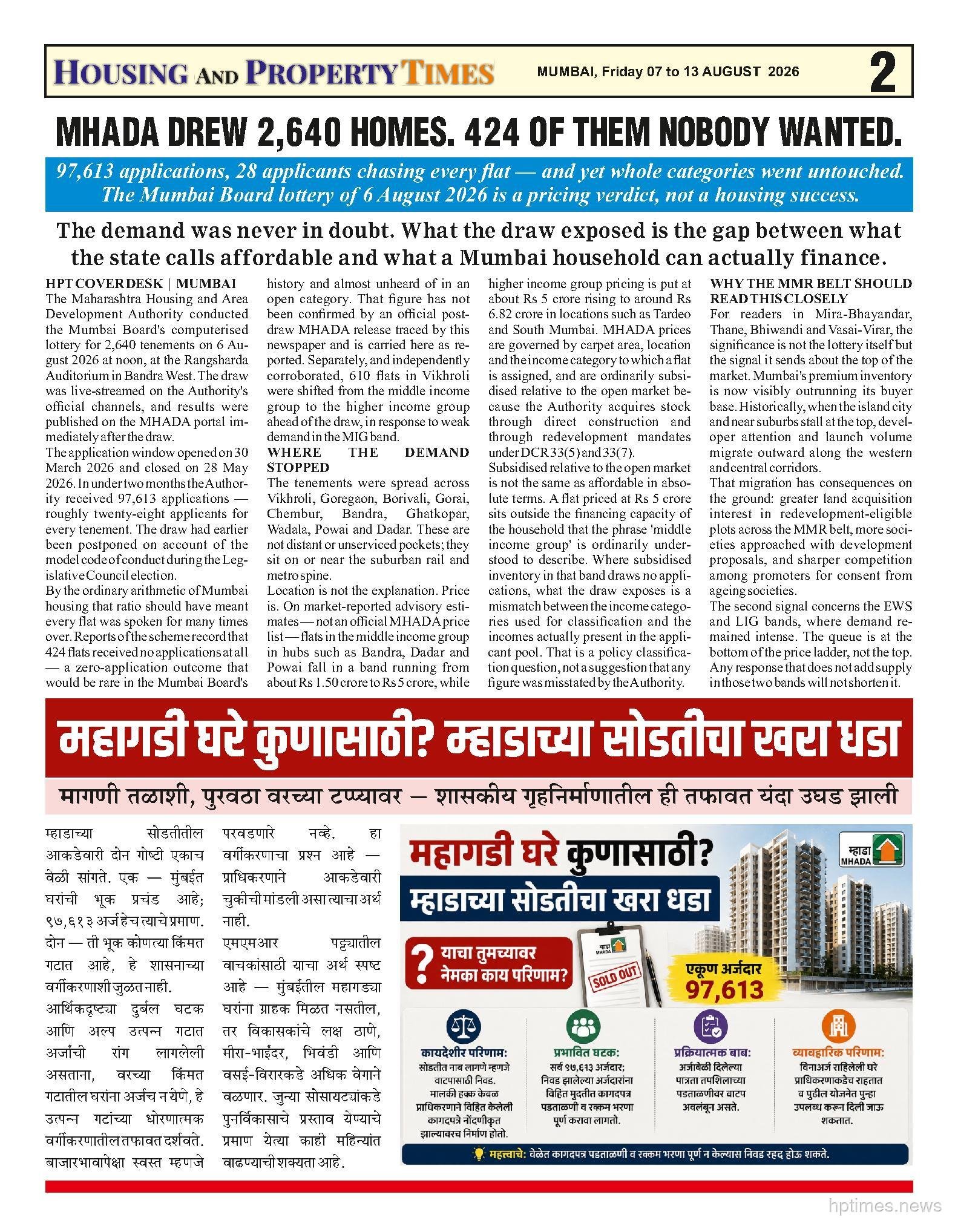
MHADA DREW 2,640 HOMES. 424 OF THEM NOBODY WANTED.
Page 2
MHADA DREW 2,640 HOMES. 424 OF THEM NOBODY WANTED.
 Page 3
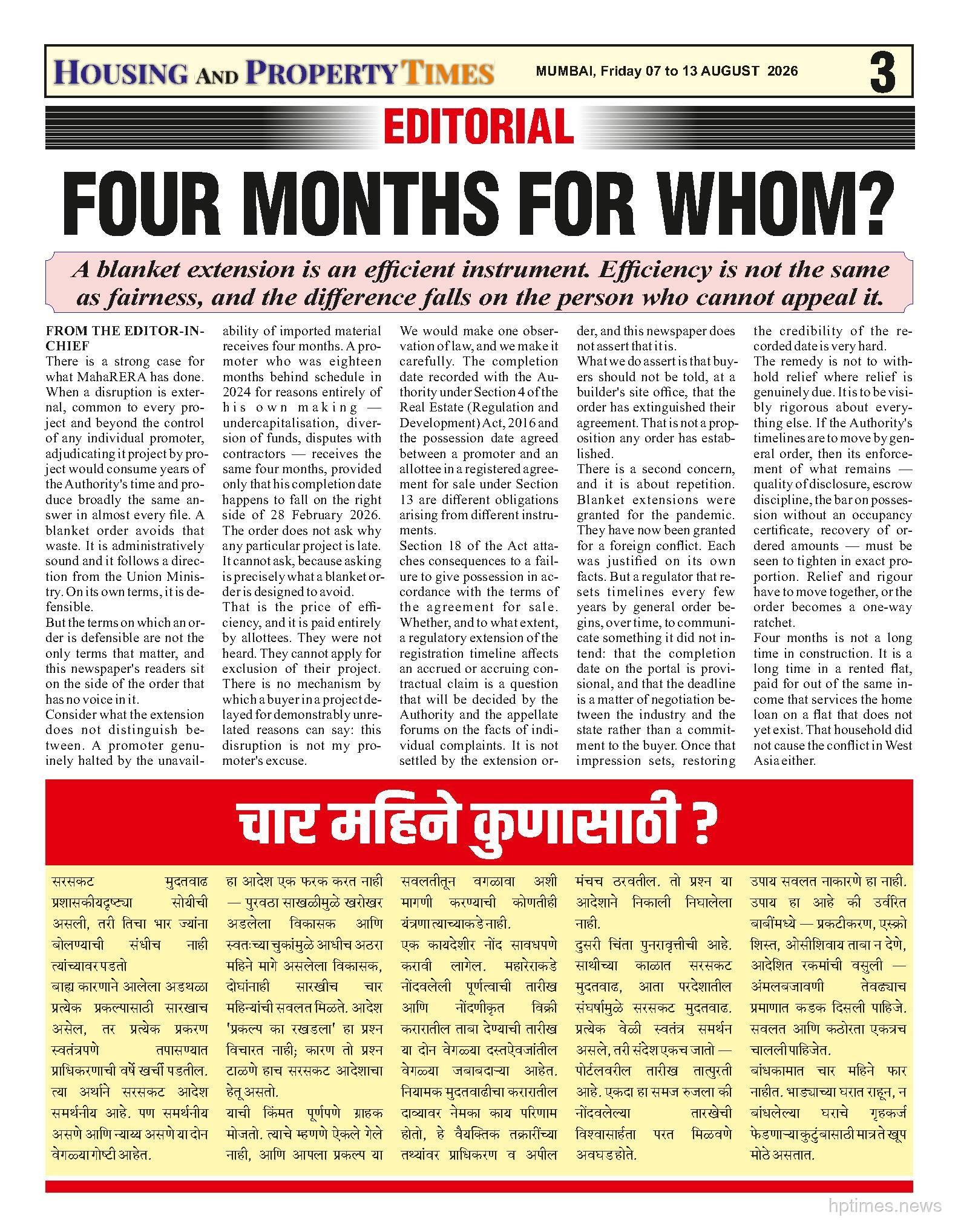
FOUR MONTHS FOR WHOM?
Page 3
FOUR MONTHS FOR WHOM?
 Page 4
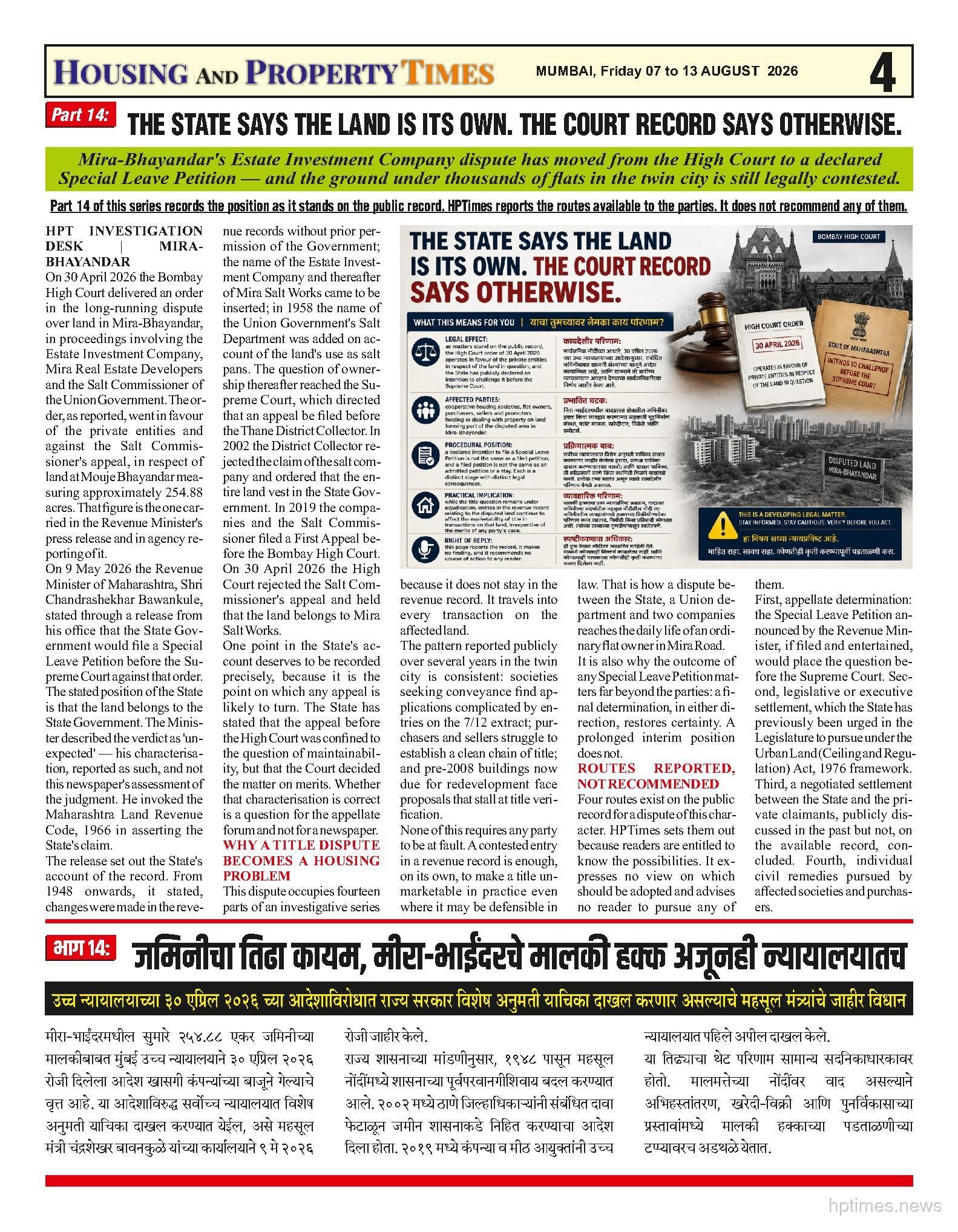
THE STATE SAYS THE LAND IS ITS OWN. THE COURT RECORD SAYS OTHERWISE.
Page 4
THE STATE SAYS THE LAND IS ITS OWN. THE COURT RECORD SAYS OTHERWISE.
 Page 5
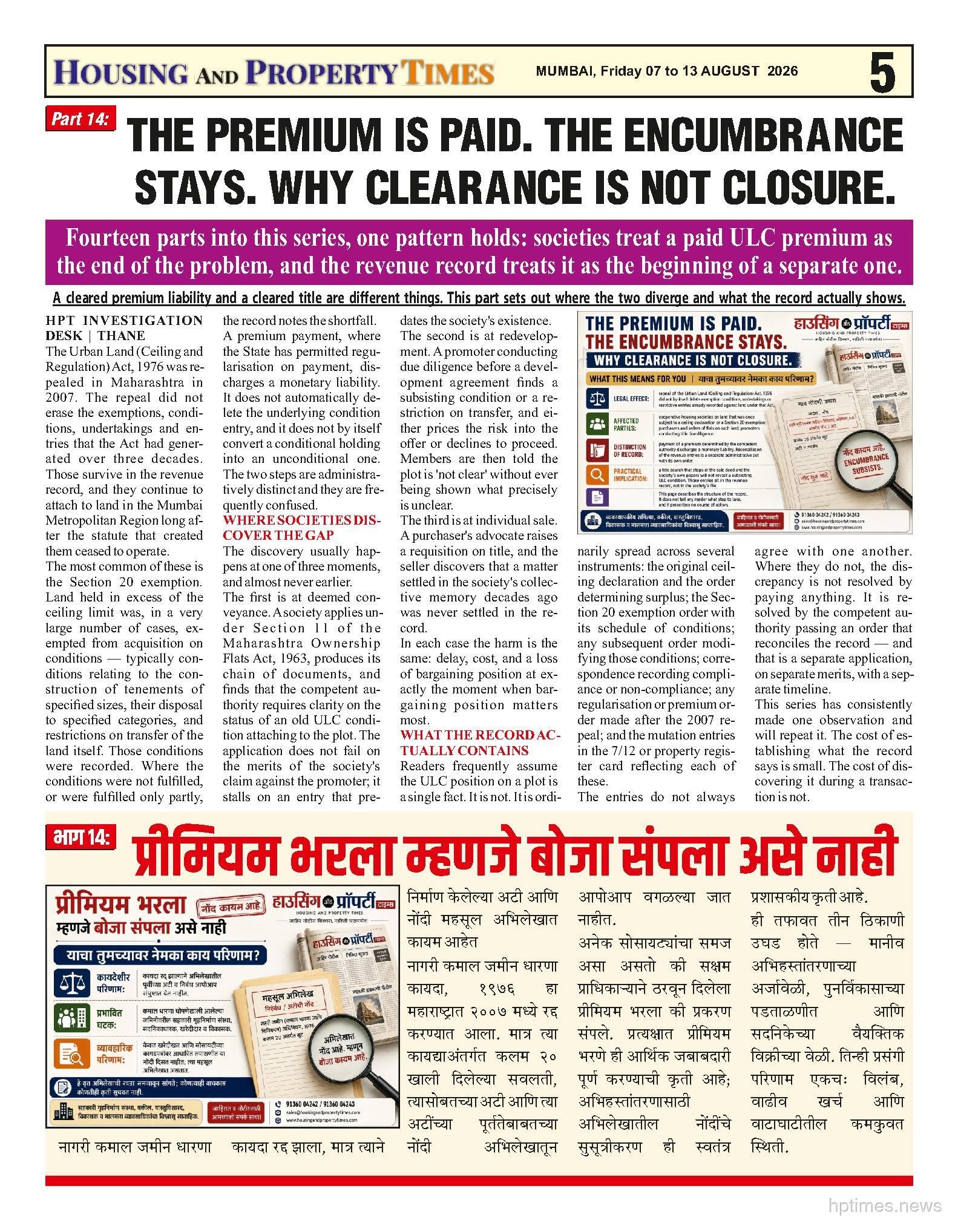
THE PREMIUM IS PAID. THE ENCUMBRANCE STAYS. WHY CLEARANCE IS NOT CLOSURE.
Page 5
THE PREMIUM IS PAID. THE ENCUMBRANCE STAYS. WHY CLEARANCE IS NOT CLOSURE.
 Page 6
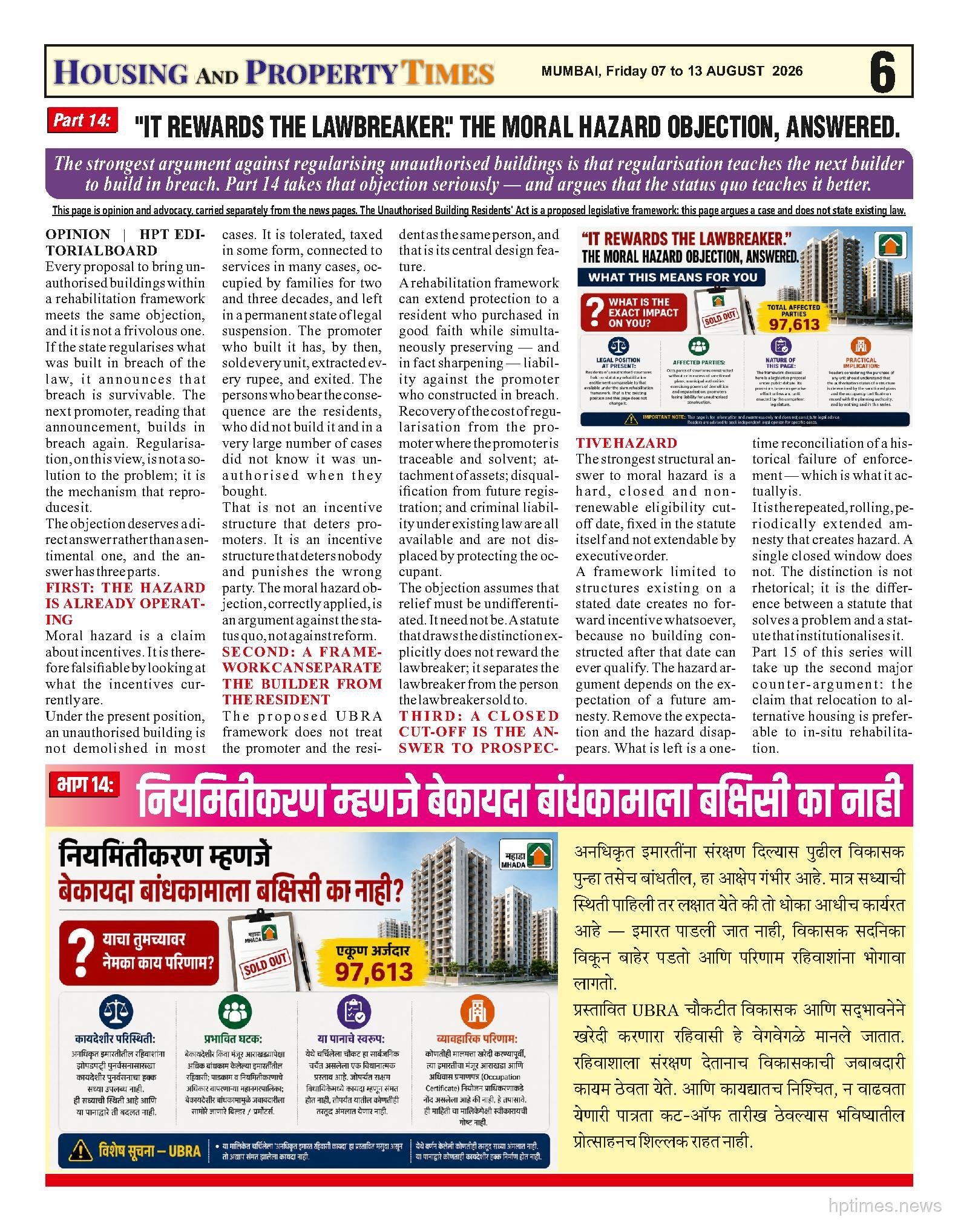
"IT REWARDS THE LAWBREAKER." THE MORAL HAZARD OBJECTION, ANSWERED.
Page 6
"IT REWARDS THE LAWBREAKER." THE MORAL HAZARD OBJECTION, ANSWERED.
Comments (0)