📖 View in Flipbook All editions
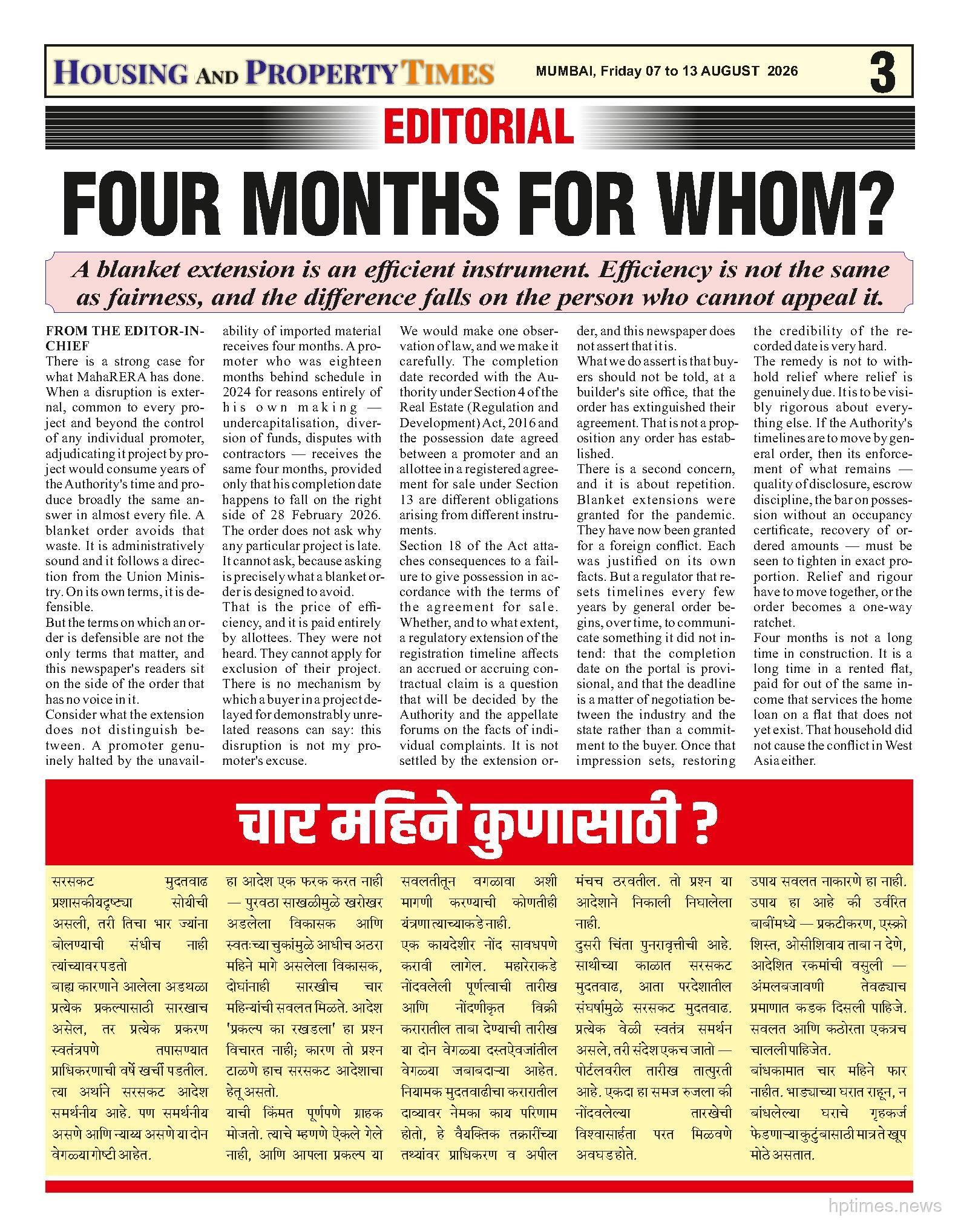
FOUR MONTHS FOR WHOM?
There is a strong case for what MahaRERA has done. When a disruption is external, common to every project and beyond the control of any individual promoter, adjudicating it project by project would consume years of the Authority's time and produce broadly the same answer in almost every file. A blanket order avoids that waste. It is administratively sound and it follows a direction from the Union Ministry. On its own terms, it is defensible. But the terms on which an order is defensible are not the only terms that matter, and this newspaper's readers sit on the side of the order that has no voice in it. Consider what the extension does not distinguish between. A promoter genuinely halted by the unavailability of imported material receives four months. A promoter who was eighteen months behind schedule in 2024 for reasons entirely of his own making — undercapitalisation, diversion of funds, disputes with contractors — receives the same four months, provided only that his completion date happens to fall on the right side of 28 February 2026. The order does not ask why any particular project is late. It cannot ask, because asking is precisely what a blanket order is designed to avoid. That is the price of efficiency, and it is paid entirely by allottees. They were not heard. They cannot apply for exclusion of their project. There is no mechanism by which a buyer in a project delayed for demonstrably unrelated reasons can say: this disruption is not my promoter's excuse. We would make one observation of law, and we make it carefully. The completion date recorded with the Authority under Section 4 of the Real Estate (Regulation and Development) Act, 2016 and the possession date agreed between a promoter and an allottee in a registered agreement for sale under Section 13 are different obligations arising from different instruments. Section 18 of the Act attaches consequences to a failure to give possession in accordance with the terms of the agreement for sale. Whether, and to what extent, a regulatory extension of the registration timeline affects an accrued or accruing contractual claim is a question that will be decided by the Authority and the appellate forums on the facts of individual complaints. It is not settled by the extension order, and this newspaper does not assert that it is. What we do assert is that buyers should not be told, at a builder's site office, that the order has extinguished their agreement. That is not a proposition any order has established. There is a second concern, and it is about repetition. Blanket extensions were granted for the pandemic. They have now been granted for a foreign conflict. Each was justified on its own facts. But a regulator that resets timelines every few years by general order begins, over time, to communicate something it did not intend: that the completion date on the portal is provisional, and that the deadline is a matter of negotiation between the industry and the state rather than a commitment to the buyer. Once that impression sets, restoring the credibility of the recorded date is very hard. The remedy is not to withhold relief where relief is genuinely due. It is to be visibly rigorous about everything else. If the Authority's timelines are to move by general order, then its enforcement of what remains — quality of disclosure, escrow discipline, the bar on possession without an occupancy certificate, recovery of ordered amounts — must be seen to tighten in exact proportion. Relief and rigour have to move together, or the order becomes a one-way ratchet. Four months is not a long time in construction. It is a long time in a rented flat, paid for out of the same income that services the home loan on a flat that does not yet exist. That household did not cause the conflict in West Asia either.
React
More from this issue & web
 Page 1
MAHARERA GRANTS ALL PROJECTS FOUR EXTRA MONTHS OVER WEST ASIA WAR
Page 1
MAHARERA GRANTS ALL PROJECTS FOUR EXTRA MONTHS OVER WEST ASIA WAR
 Page 2
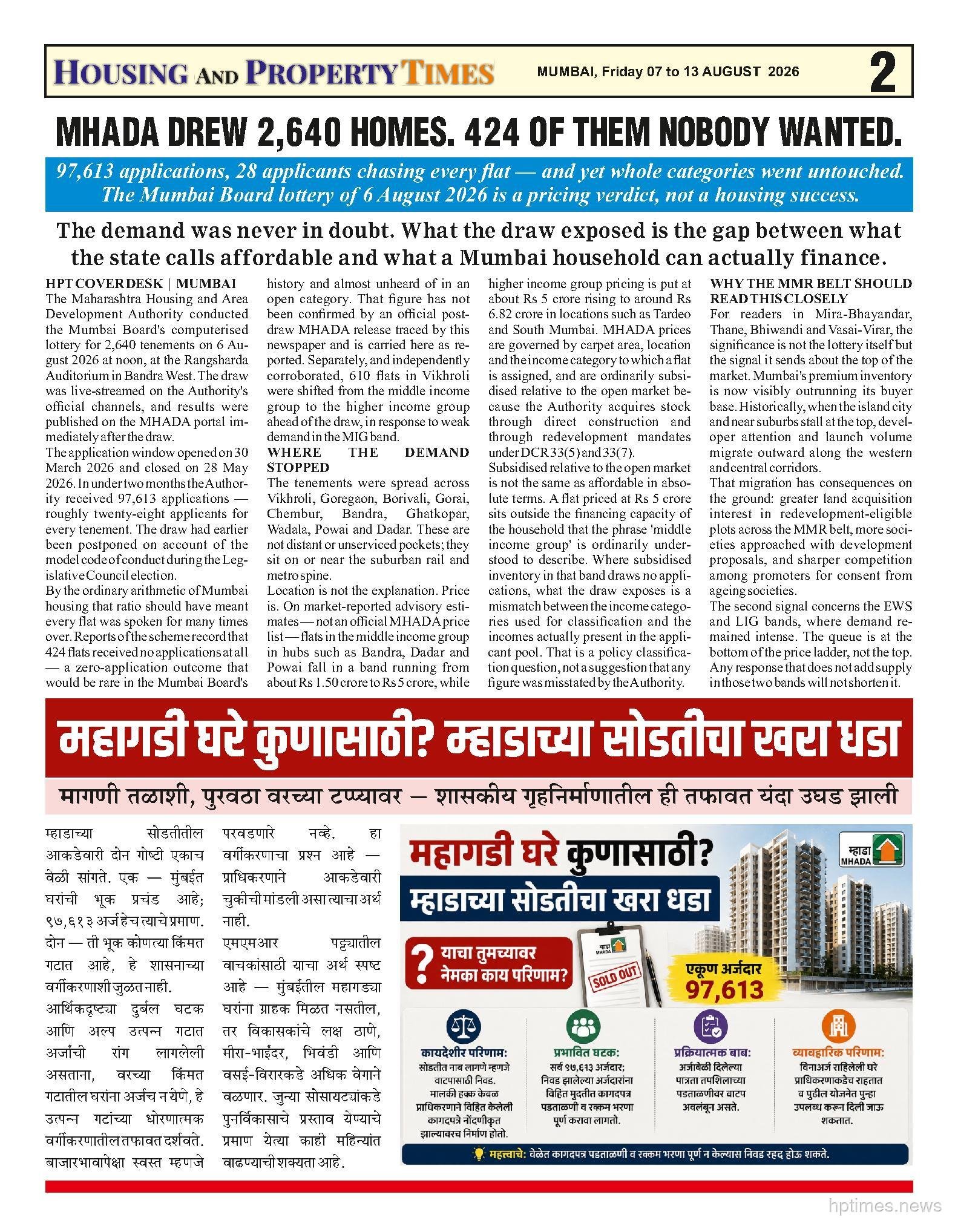
MHADA DREW 2,640 HOMES. 424 OF THEM NOBODY WANTED.
Page 2
MHADA DREW 2,640 HOMES. 424 OF THEM NOBODY WANTED.
 Page 4
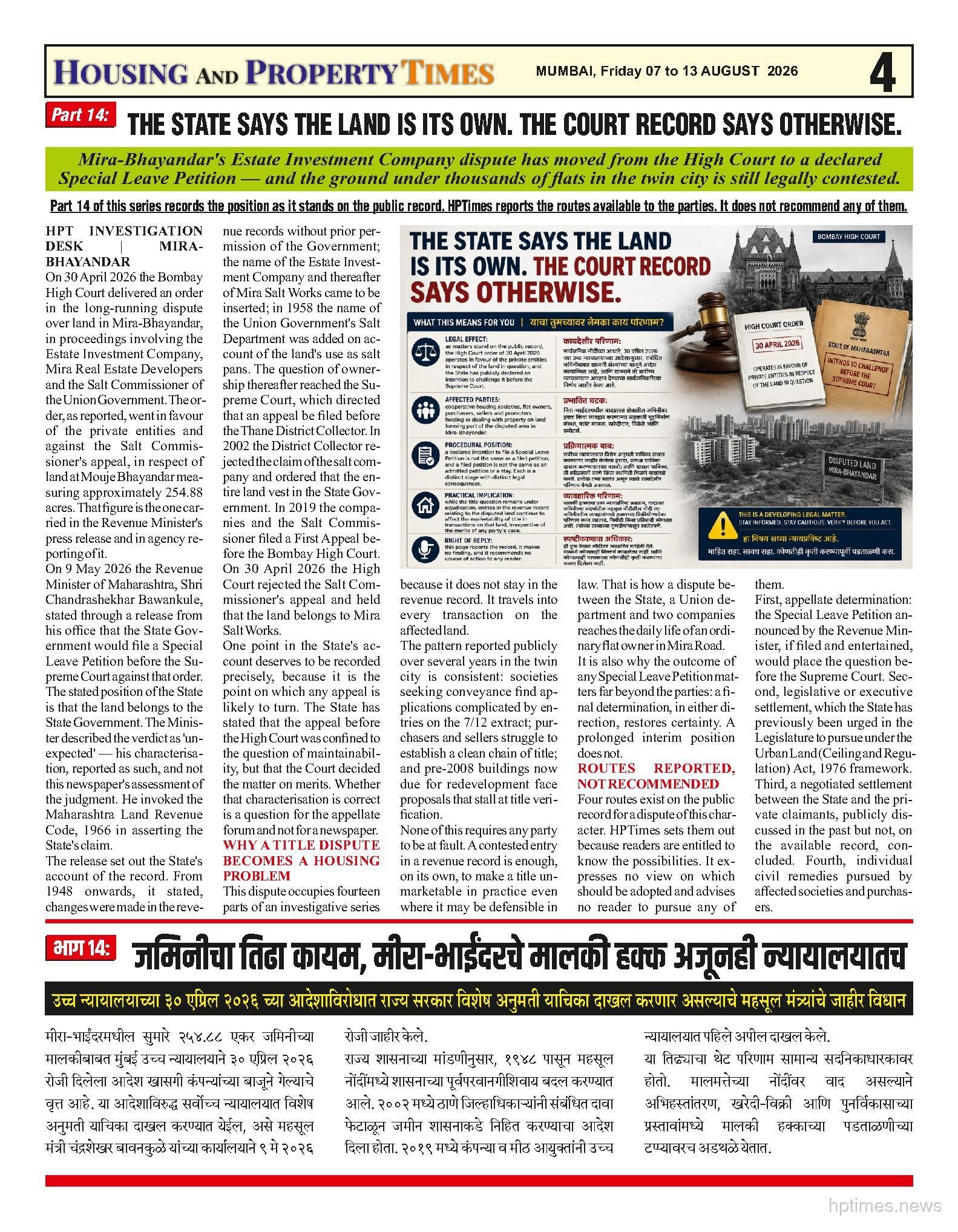
THE STATE SAYS THE LAND IS ITS OWN. THE COURT RECORD SAYS OTHERWISE.
Page 4
THE STATE SAYS THE LAND IS ITS OWN. THE COURT RECORD SAYS OTHERWISE.
 Page 5
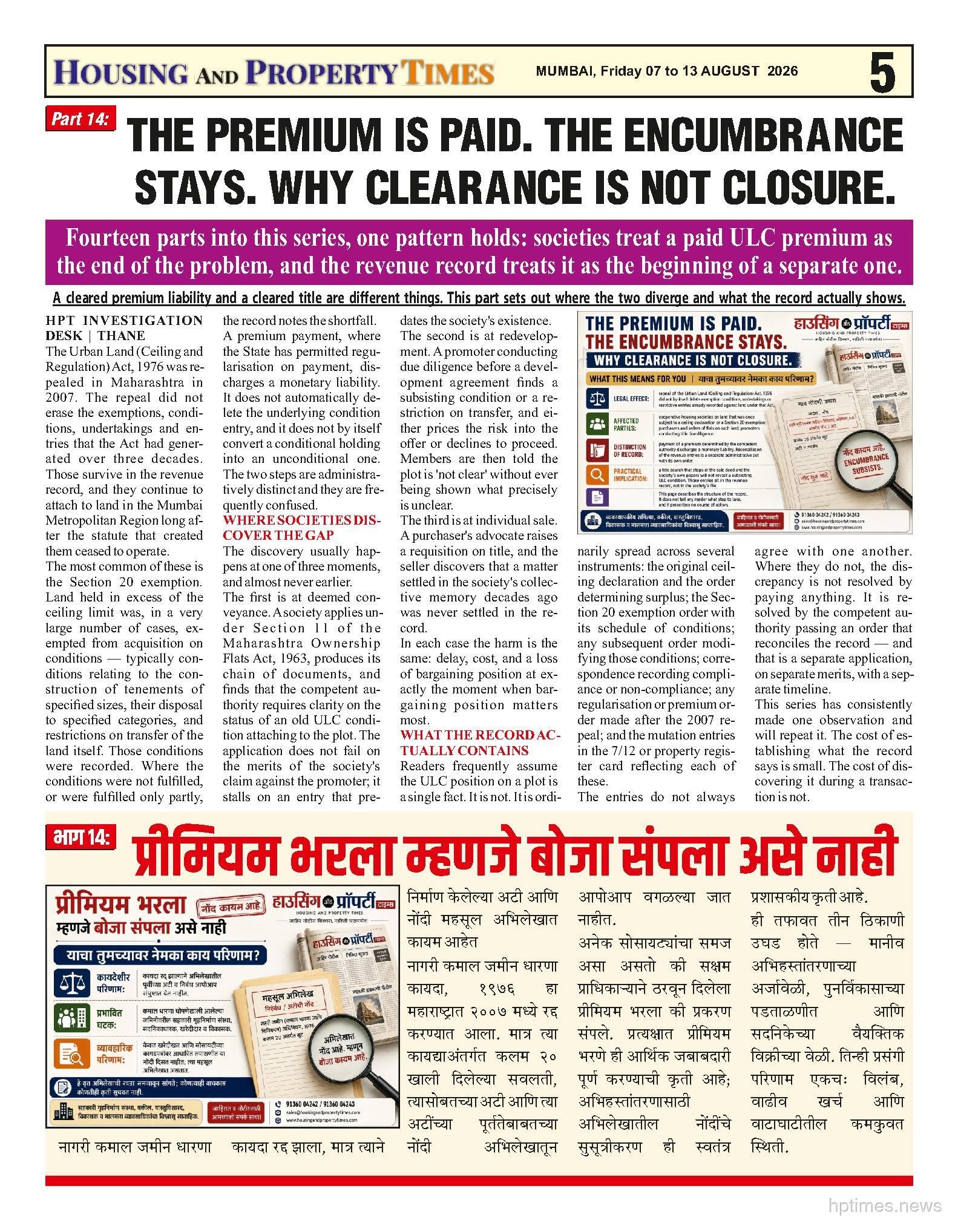
THE PREMIUM IS PAID. THE ENCUMBRANCE STAYS. WHY CLEARANCE IS NOT CLOSURE.
Page 5
THE PREMIUM IS PAID. THE ENCUMBRANCE STAYS. WHY CLEARANCE IS NOT CLOSURE.
 Page 6
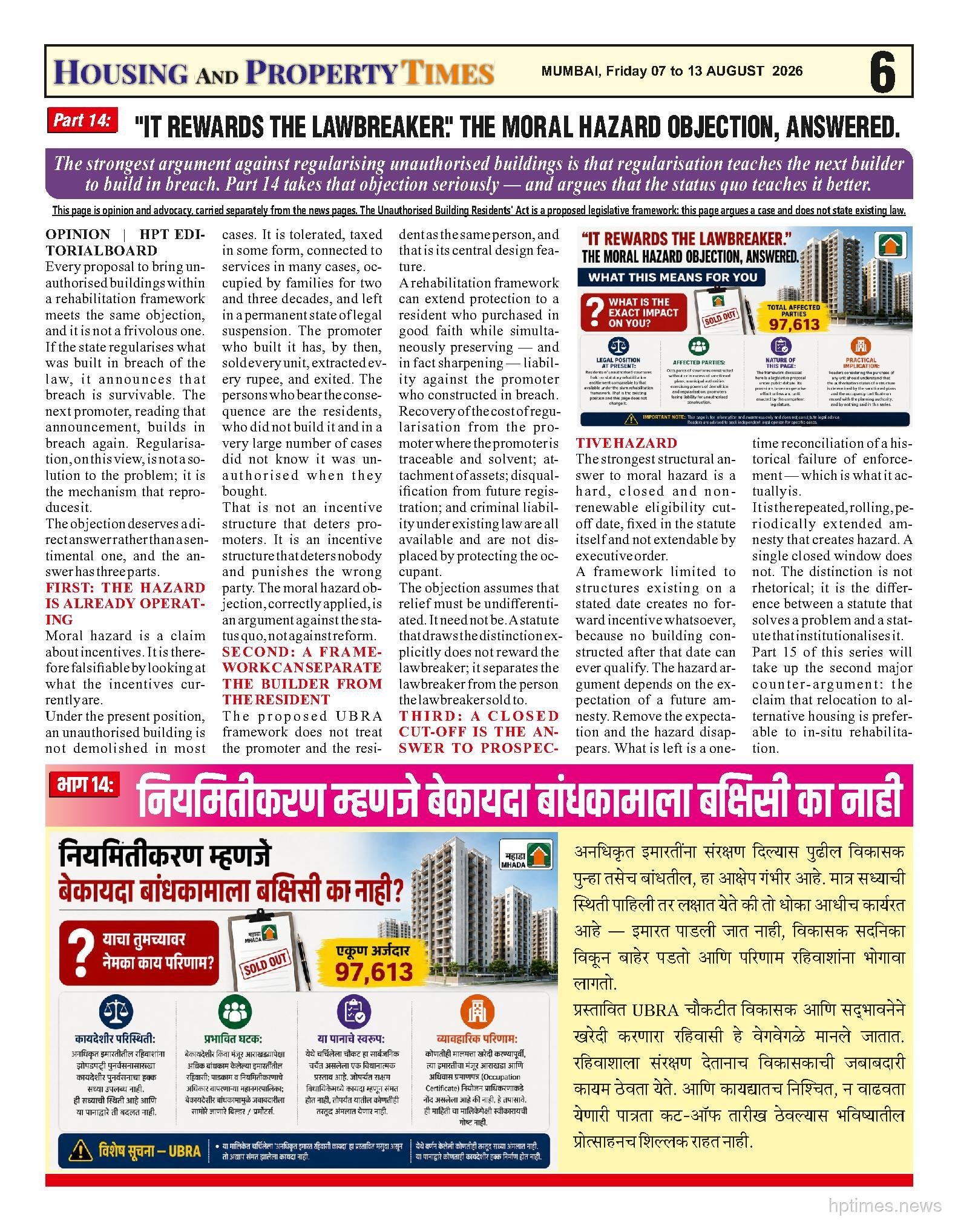
"IT REWARDS THE LAWBREAKER." THE MORAL HAZARD OBJECTION, ANSWERED.
Page 6
"IT REWARDS THE LAWBREAKER." THE MORAL HAZARD OBJECTION, ANSWERED.
 Page 7
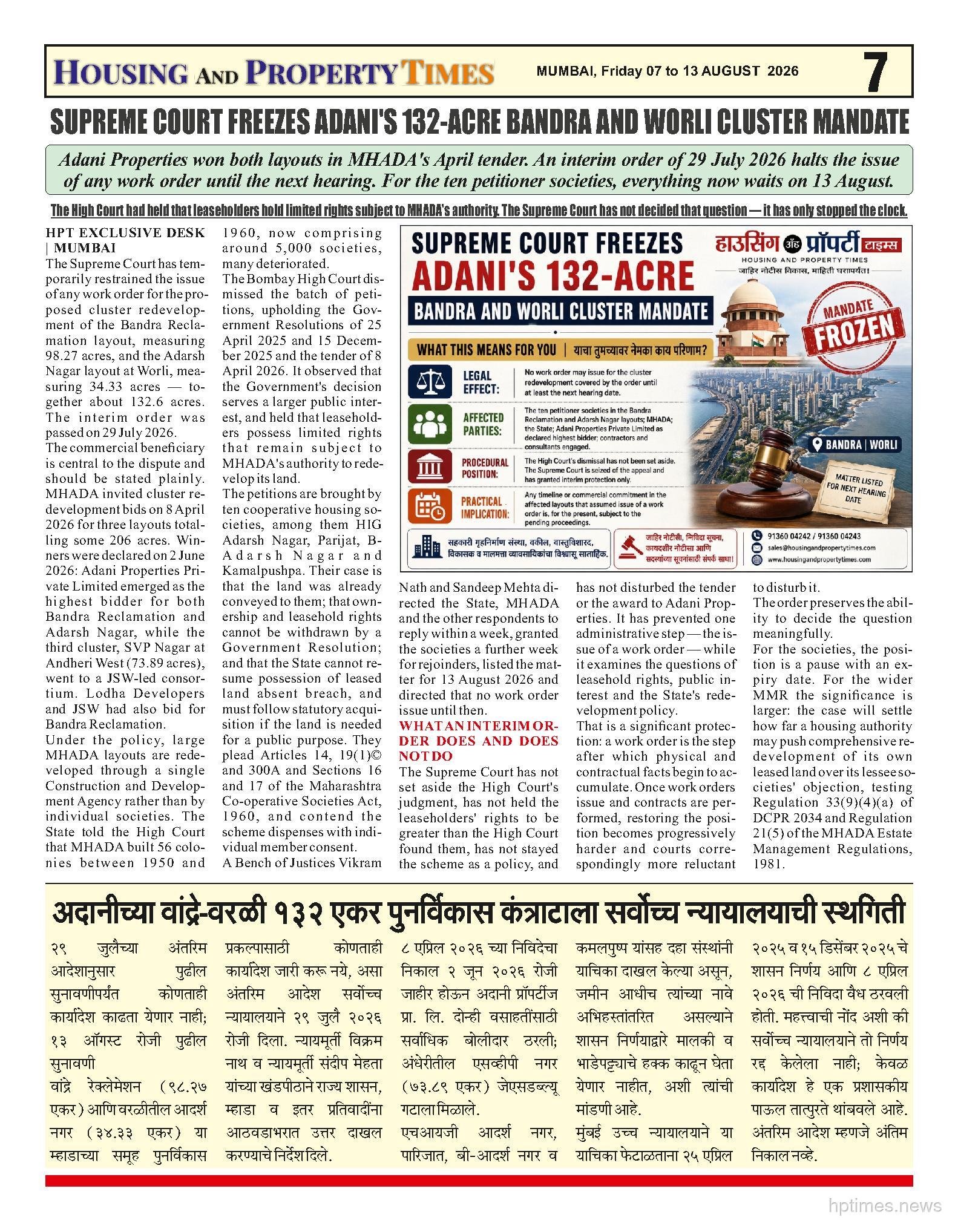
SUPREME COURT FREEZES ADANI'S 132-ACRE BANDRA AND WORLI CLUSTER MANDATE
Page 7
SUPREME COURT FREEZES ADANI'S 132-ACRE BANDRA AND WORLI CLUSTER MANDATE
Comments (0)