📖 View in Flipbook All editions
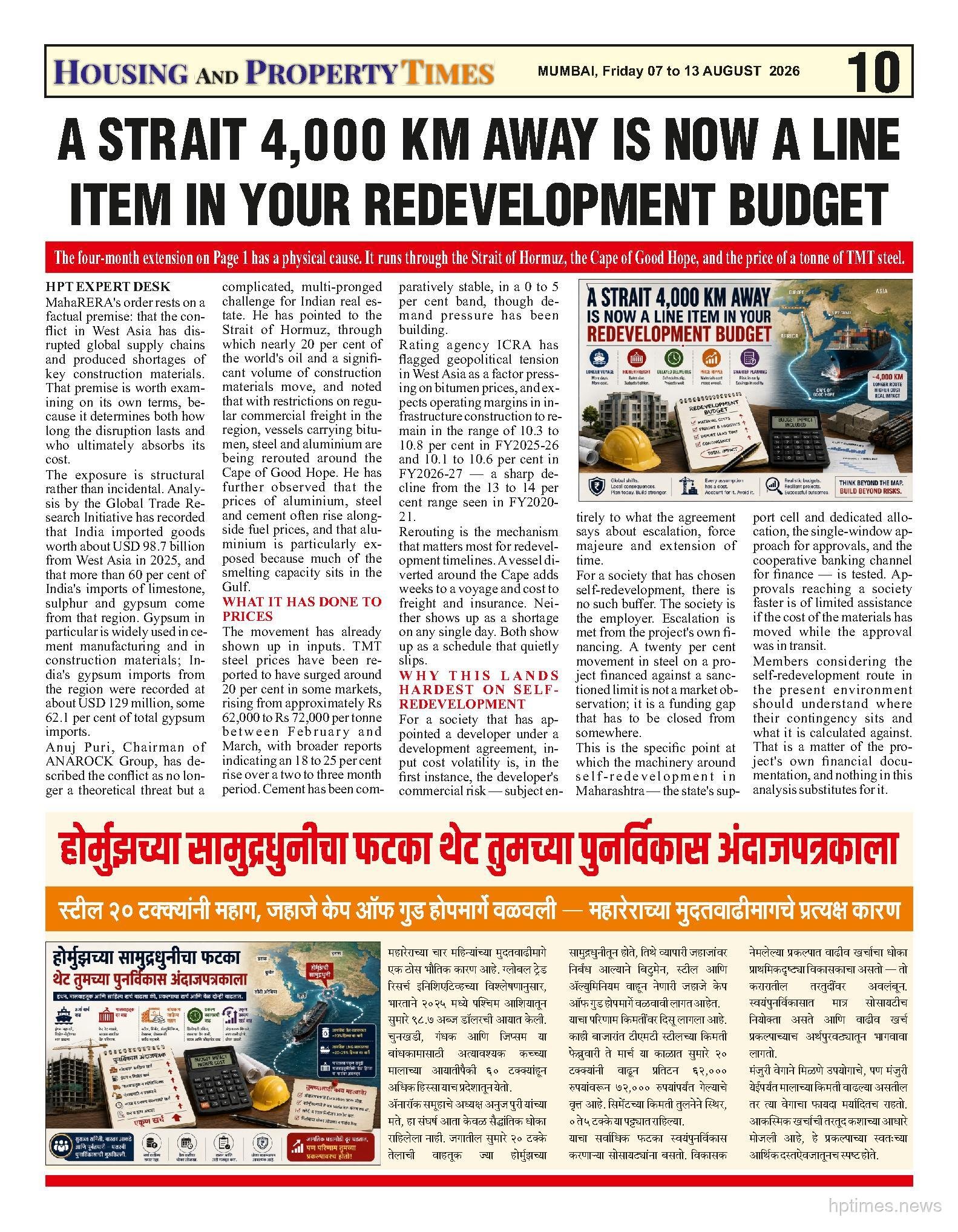
A STRAIT 4,000 KM AWAY IS NOW A LINE ITEM IN YOUR REDEVELOPMENT BUDGET
HPT EXPERT DESK | NONE MahaRERA's order rests on a factual premise: that the conflict in West Asia has disrupted global supply chains and produced shortages of key construction materials. That premise is worth examining on its own terms, because it determines both how long the disruption lasts and who ultimately absorbs its cost. The exposure is structural rather than incidental. Analysis by the Global Trade Research Initiative has recorded that India imported goods worth about USD 98.7 billion from West Asia in 2025, and that more than 60 per cent of India's imports of limestone, sulphur and gypsum come from that region. Gypsum in particular is widely used in cement manufacturing and in construction materials; India's gypsum imports from the region were recorded at about USD 129 million, some 62.1 per cent of total gypsum imports. Anuj Puri, Chairman of ANAROCK Group, has described the conflict as no longer a theoretical threat but a complicated, multi-pronged challenge for Indian real estate. He has pointed to the Strait of Hormuz, through which nearly 20 per cent of the world's oil and a significant volume of construction materials move, and noted that with restrictions on regular commercial freight in the region, vessels carrying bitumen, steel and aluminium are being rerouted around the Cape of Good Hope. He has further observed that the prices of aluminium, steel and cement often rise alongside fuel prices, and that aluminium is particularly exposed because much of the smelting capacity sits in the Gulf. The movement has already shown up in inputs. TMT steel prices have been reported to have surged around 20 per cent in some markets, rising from approximately Rs 62,000 to Rs 72,000 per tonne between February and March, with broader reports indicating an 18 to 25 per cent rise over a two to three month period. Cement has been comparatively stable, in a 0 to 5 per cent band, though demand pressure has been building. Rating agency ICRA has flagged geopolitical tension in West Asia as a factor pressing on bitumen prices, and expects operating margins in infrastructure construction to remain in the range of 10.3 to 10.8 per cent in FY2025-26 and 10.1 to 10.6 per cent in FY2026-27 — a sharp decline from the 13 to 14 per cent range seen in FY2020-21. Rerouting is the mechanism that matters most for redevelopment timelines. A vessel diverted around the Cape adds weeks to a voyage and cost to freight and insurance. Neither shows up as a shortage on any single day. Both show up as a schedule that quietly slips. For a society that has appointed a developer under a development agreement, input cost volatility is, in the first instance, the developer's commercial risk — subject entirely to what the agreement says about escalation, force majeure and extension of time. For a society that has chosen self-redevelopment, there is no such buffer. The society is the employer. Escalation is met from the project's own financing. A twenty per cent movement in steel on a project financed against a sanctioned limit is not a market observation; it is a funding gap that has to be closed from somewhere. This is the specific point at which the machinery around self-redevelopment in Maharashtra — the state's support cell and dedicated allocation, the single-window approach for approvals, and the cooperative banking channel for finance — is tested. Approvals reaching a society faster is of limited assistance if the cost of the materials has moved while the approval was in transit. Members considering the self-redevelopment route in the present environment should understand where their contingency sits and what it is calculated against. That is a matter of the project's own financial documentation, and nothing in this analysis substitutes for it.
React
More from this issue & web
 Page 1
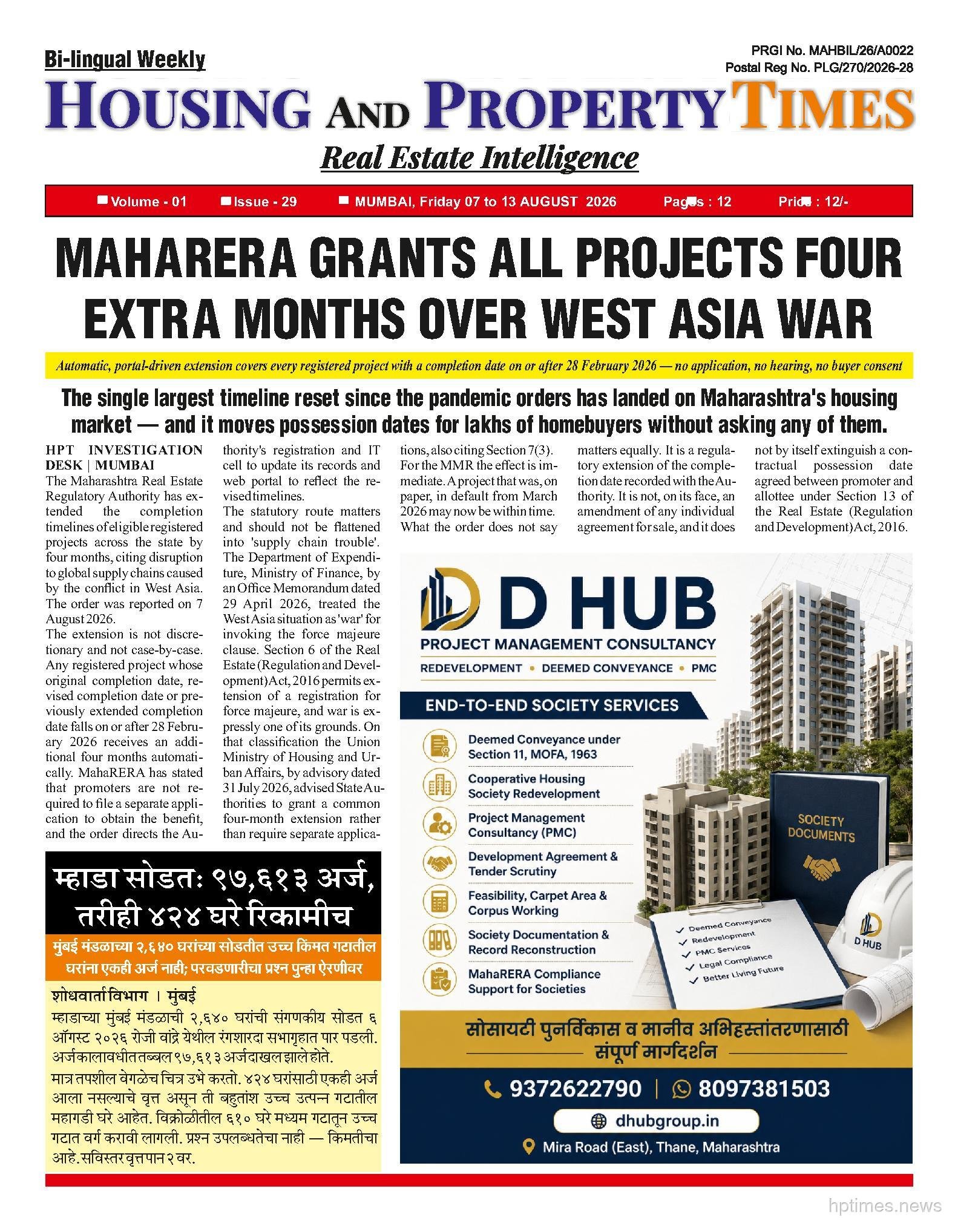
MAHARERA GRANTS ALL PROJECTS FOUR EXTRA MONTHS OVER WEST ASIA WAR
Page 1
MAHARERA GRANTS ALL PROJECTS FOUR EXTRA MONTHS OVER WEST ASIA WAR
 Page 2
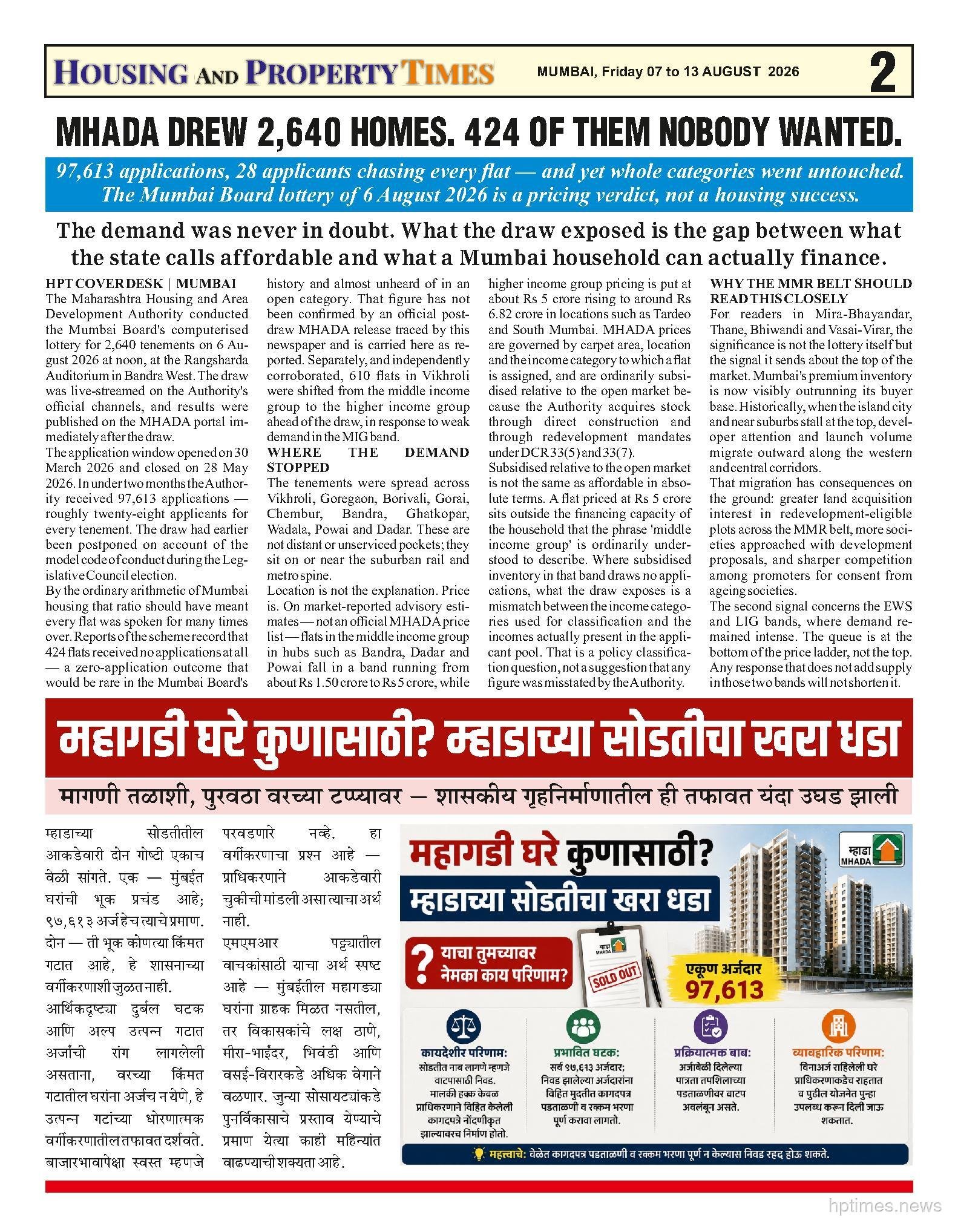
MHADA DREW 2,640 HOMES. 424 OF THEM NOBODY WANTED.
Page 2
MHADA DREW 2,640 HOMES. 424 OF THEM NOBODY WANTED.
 Page 3
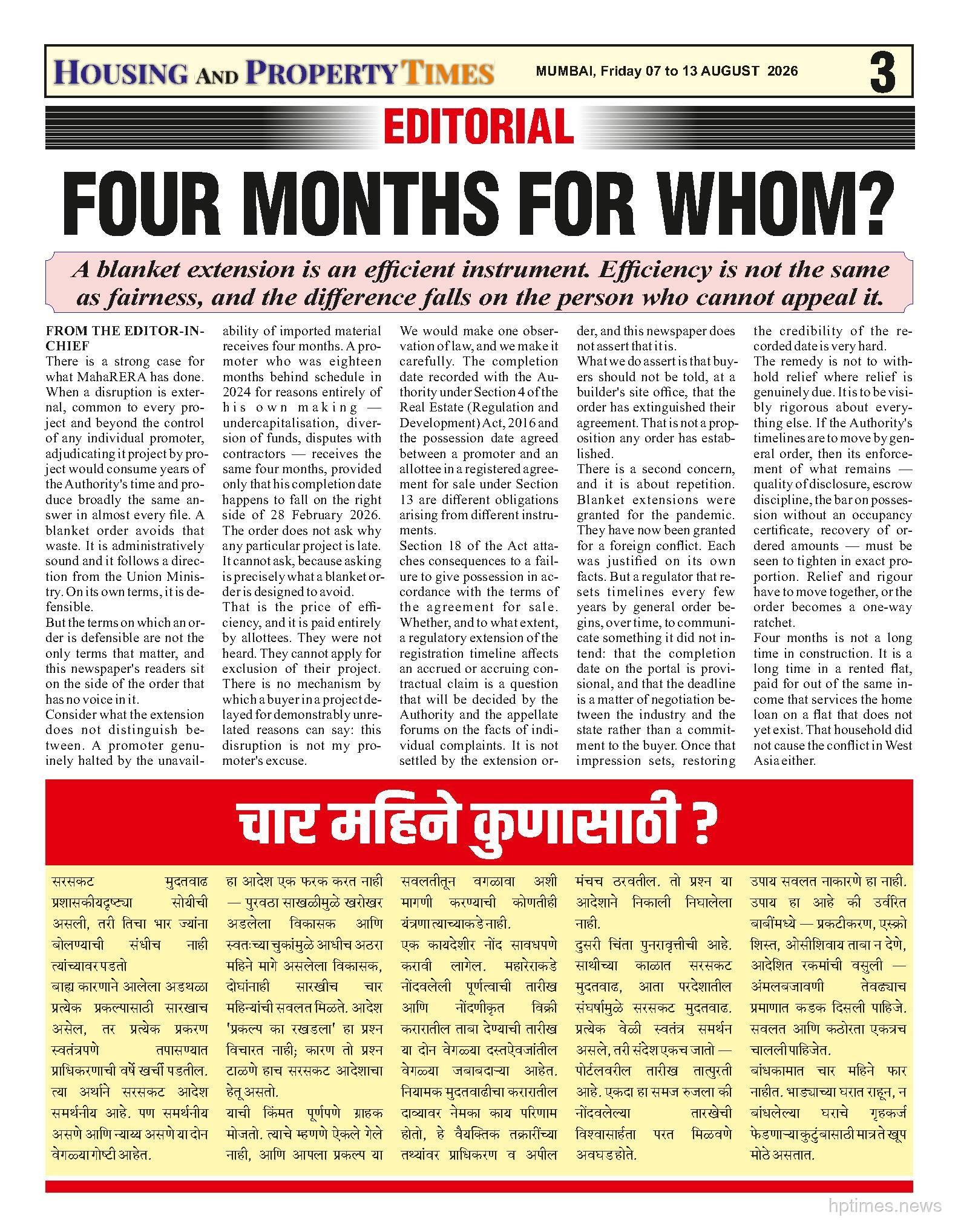
FOUR MONTHS FOR WHOM?
Page 3
FOUR MONTHS FOR WHOM?
 Page 4
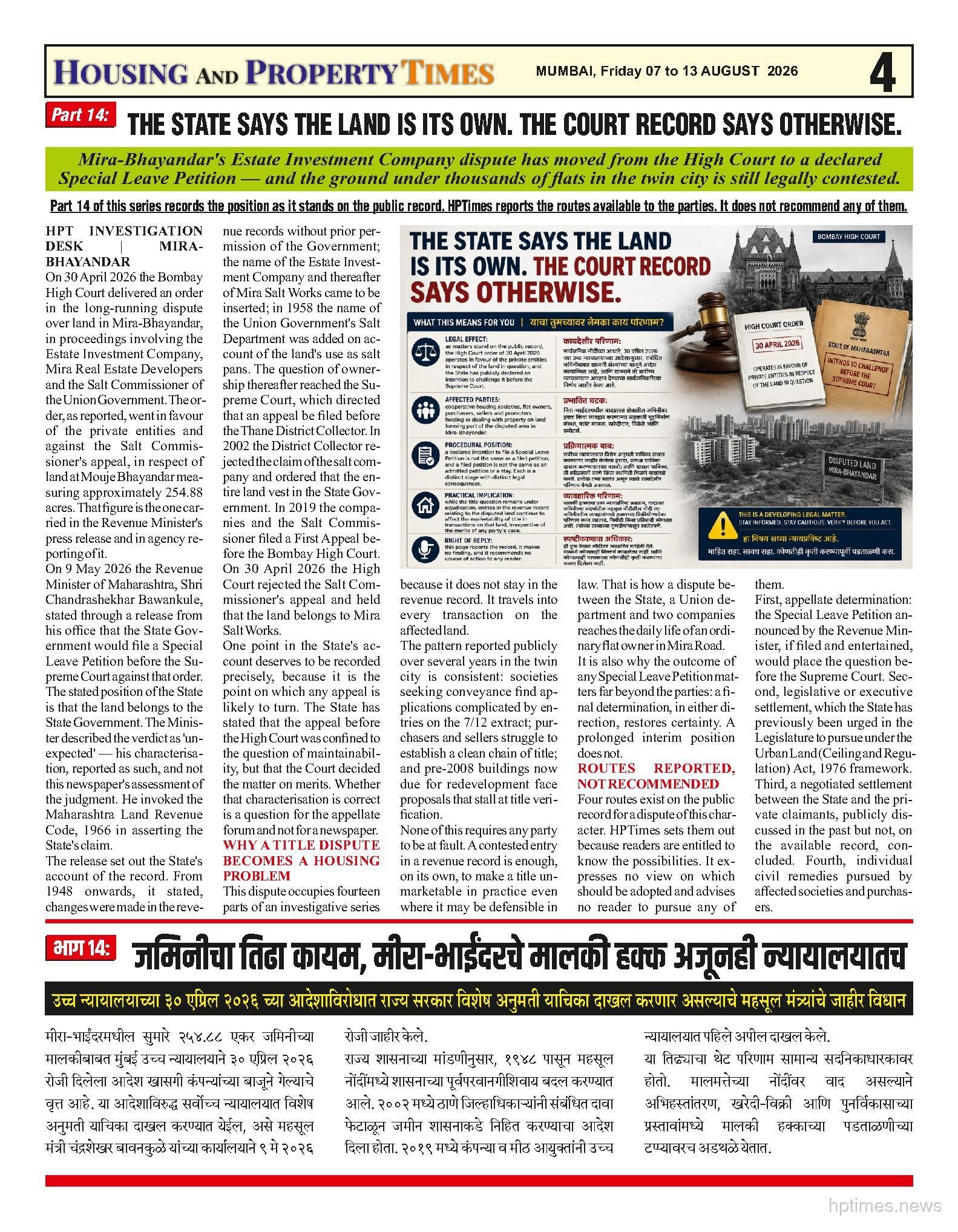
THE STATE SAYS THE LAND IS ITS OWN. THE COURT RECORD SAYS OTHERWISE.
Page 4
THE STATE SAYS THE LAND IS ITS OWN. THE COURT RECORD SAYS OTHERWISE.
 Page 5
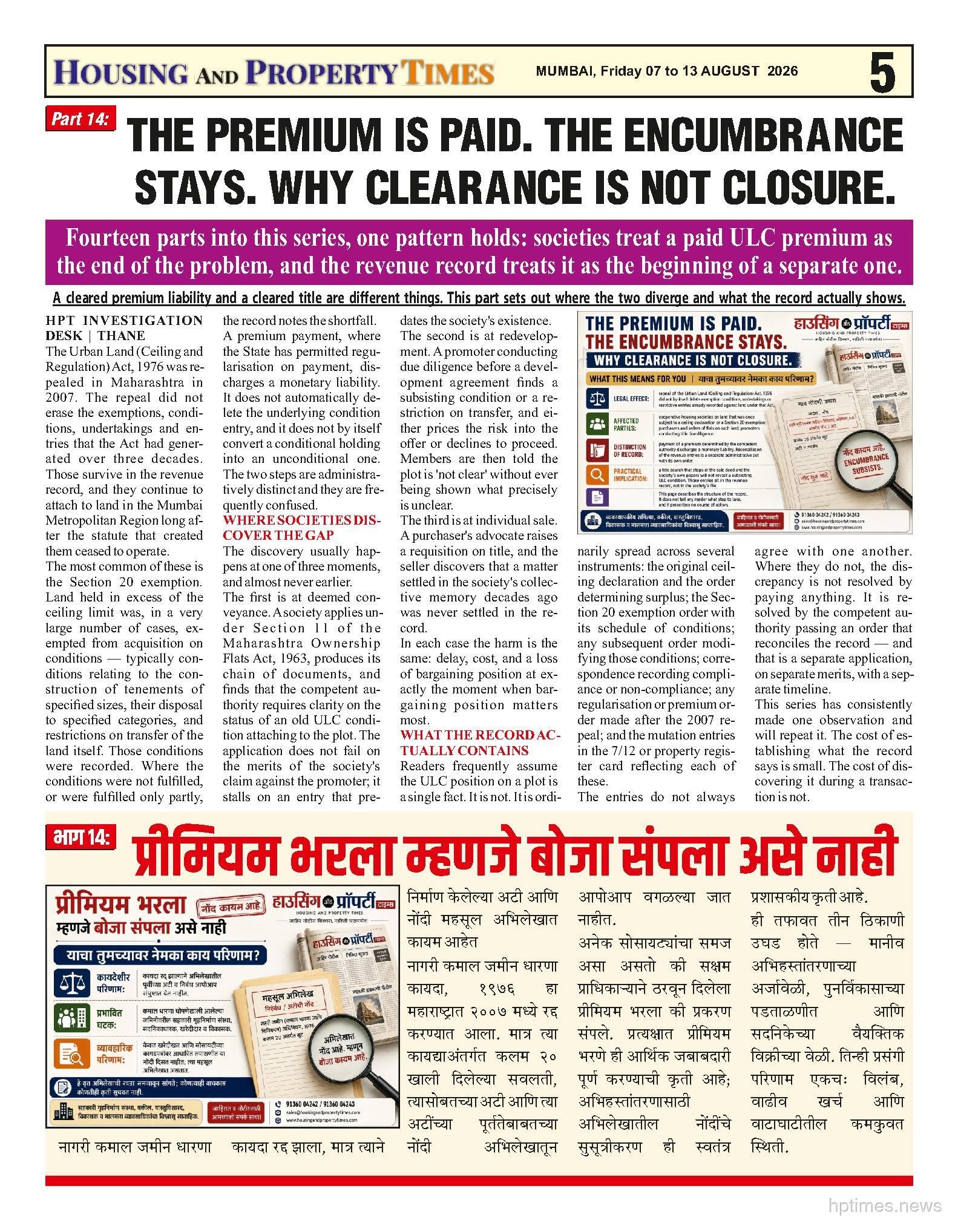
THE PREMIUM IS PAID. THE ENCUMBRANCE STAYS. WHY CLEARANCE IS NOT CLOSURE.
Page 5
THE PREMIUM IS PAID. THE ENCUMBRANCE STAYS. WHY CLEARANCE IS NOT CLOSURE.
 Page 6
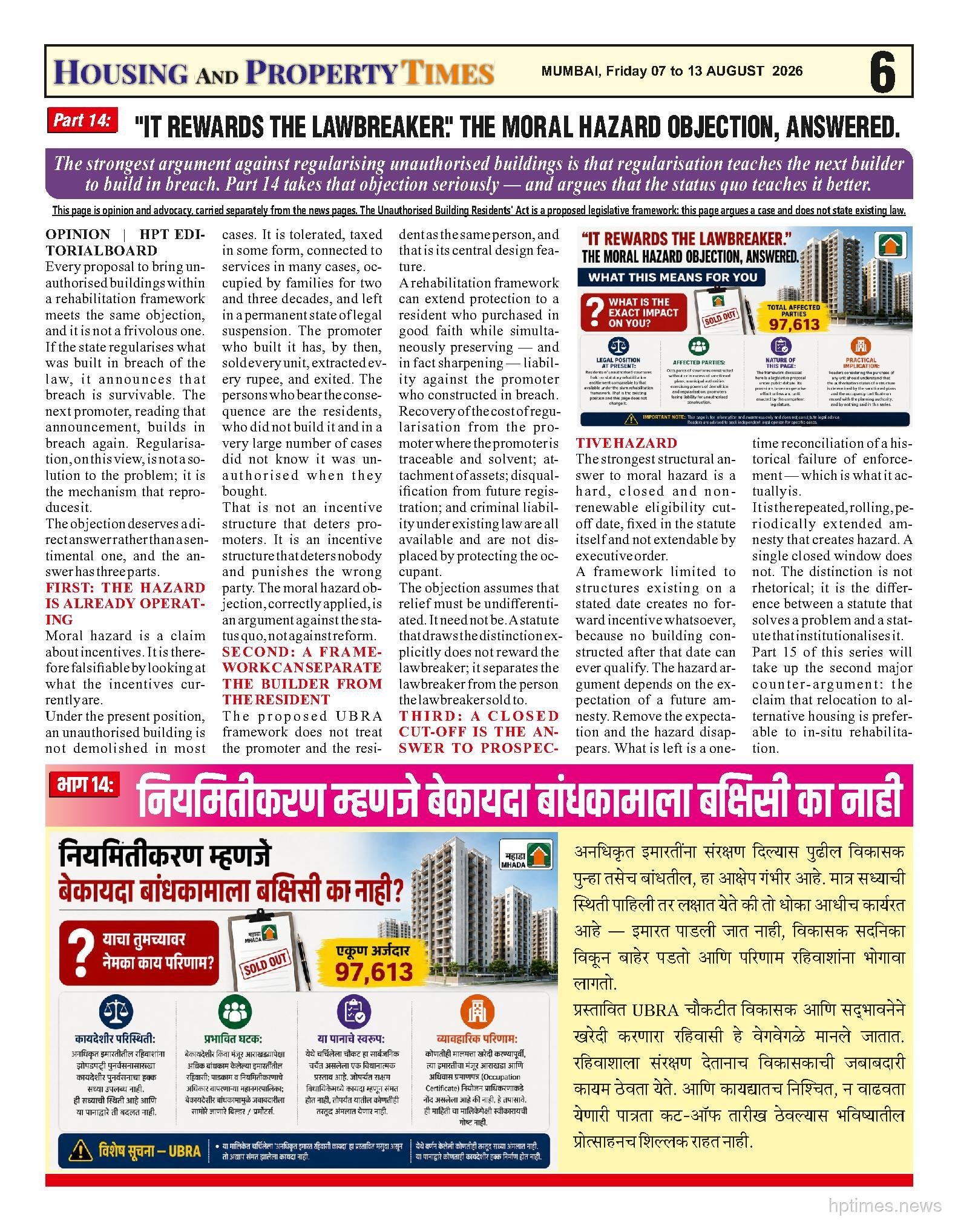
"IT REWARDS THE LAWBREAKER." THE MORAL HAZARD OBJECTION, ANSWERED.
Page 6
"IT REWARDS THE LAWBREAKER." THE MORAL HAZARD OBJECTION, ANSWERED.
Comments (0)