📖 View in Flipbook All editions
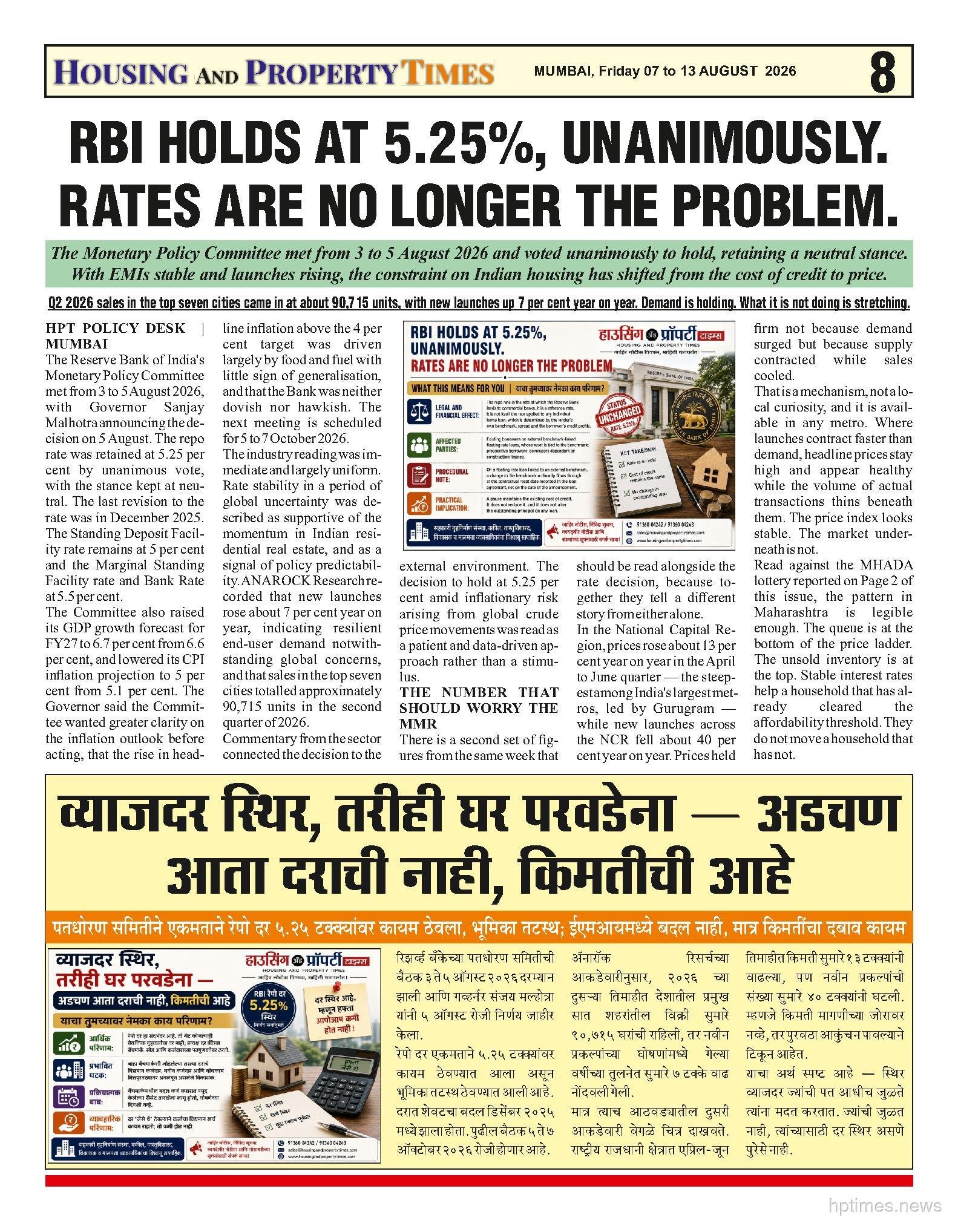
RBI HOLDS AT 5.25%, UNANIMOUSLY. RATES ARE NO LONGER THE PROBLEM.
HPT POLICY DESK | MUMBAI The Reserve Bank of India's Monetary Policy Committee met from 3 to 5 August 2026, with Governor Sanjay Malhotra announcing the decision on 5 August. The repo rate was retained at 5.25 per cent by unanimous vote, with the stance kept at neutral. The last revision to the rate was in December 2025. The Standing Deposit Facility rate remains at 5 per cent and the Marginal Standing Facility rate and Bank Rate at 5.5 per cent. The Committee also raised its GDP growth forecast for FY27 to 6.7 per cent from 6.6 per cent, and lowered its CPI inflation projection to 5 per cent from 5.1 per cent. The Governor said the Committee wanted greater clarity on the inflation outlook before acting, that the rise in headline inflation above the 4 per cent target was driven largely by food and fuel with little sign of generalisation, and that the Bank was neither dovish nor hawkish. The next meeting is scheduled for 5 to 7 October 2026. The industry reading was immediate and largely uniform. Rate stability in a period of global uncertainty was described as supportive of the momentum in Indian residential real estate, and as a signal of policy predictability. ANAROCK Research recorded that new launches rose about 7 per cent year on year, indicating resilient end-user demand notwithstanding global concerns, and that sales in the top seven cities totalled approximately 90,715 units in the second quarter of 2026. Commentary from the sector connected the decision to the external environment. The decision to hold at 5.25 per cent amid inflationary risk arising from global crude price movements was read as a patient and data-driven approach rather than a stimulus. There is a second set of figures from the same week that should be read alongside the rate decision, because together they tell a different story from either alone. In the National Capital Region, prices rose about 13 per cent year on year in the April to June quarter — the steepest among India's largest metros, led by Gurugram — while new launches across the NCR fell about 40 per cent year on year. Prices held firm not because demand surged but because supply contracted while sales cooled. That is a mechanism, not a local curiosity, and it is available in any metro. Where launches contract faster than demand, headline prices stay high and appear healthy while the volume of actual transactions thins beneath them. The price index looks stable. The market underneath is not. Read against the MHADA lottery reported on Page 2 of this issue, the pattern in Maharashtra is legible enough. The queue is at the bottom of the price ladder. The unsold inventory is at the top. Stable interest rates help a household that has already cleared the affordability threshold. They do not move a household that has not.
React
More from this issue & web
 Page 1
MAHARERA GRANTS ALL PROJECTS FOUR EXTRA MONTHS OVER WEST ASIA WAR
Page 1
MAHARERA GRANTS ALL PROJECTS FOUR EXTRA MONTHS OVER WEST ASIA WAR
 Page 2
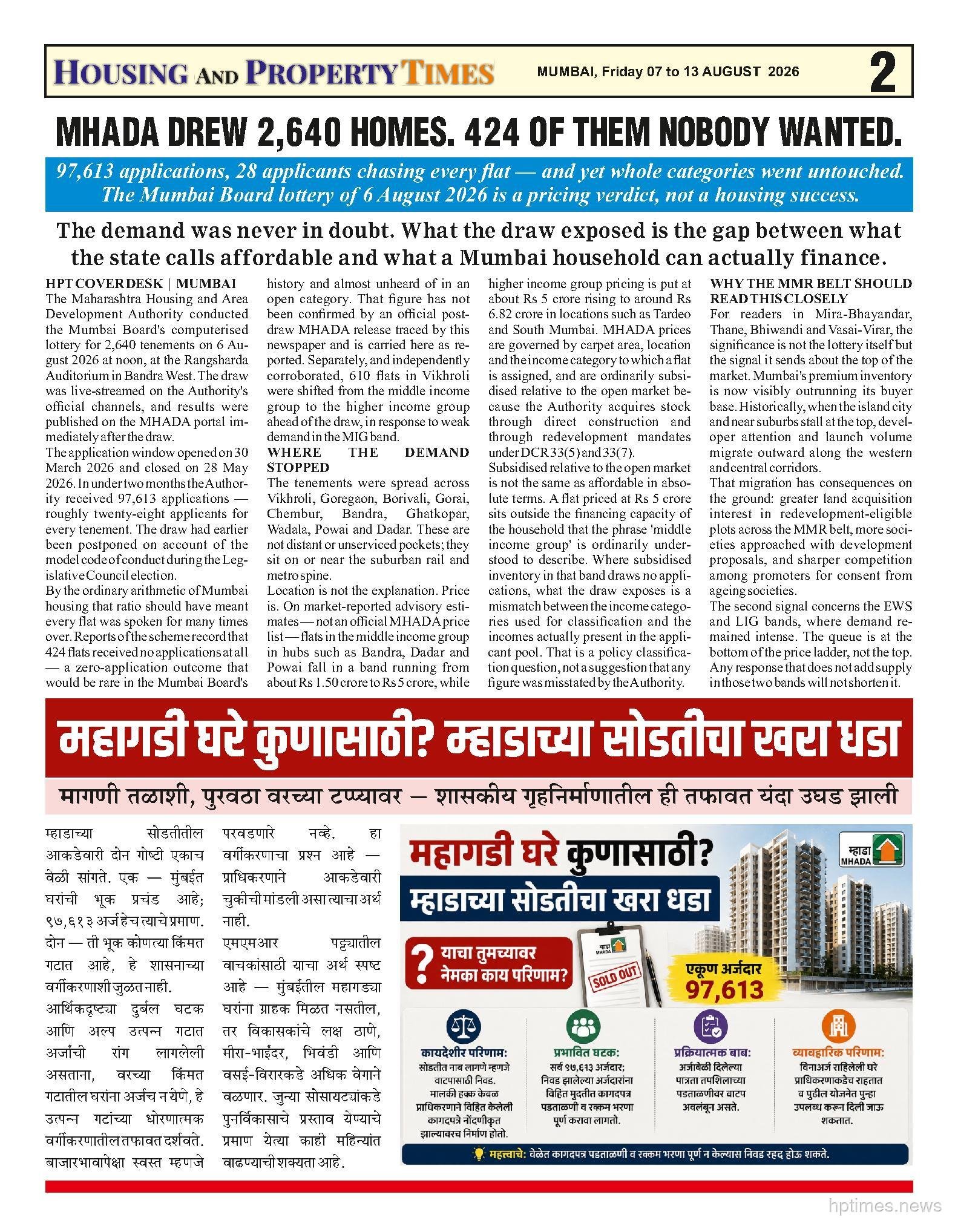
MHADA DREW 2,640 HOMES. 424 OF THEM NOBODY WANTED.
Page 2
MHADA DREW 2,640 HOMES. 424 OF THEM NOBODY WANTED.
 Page 3
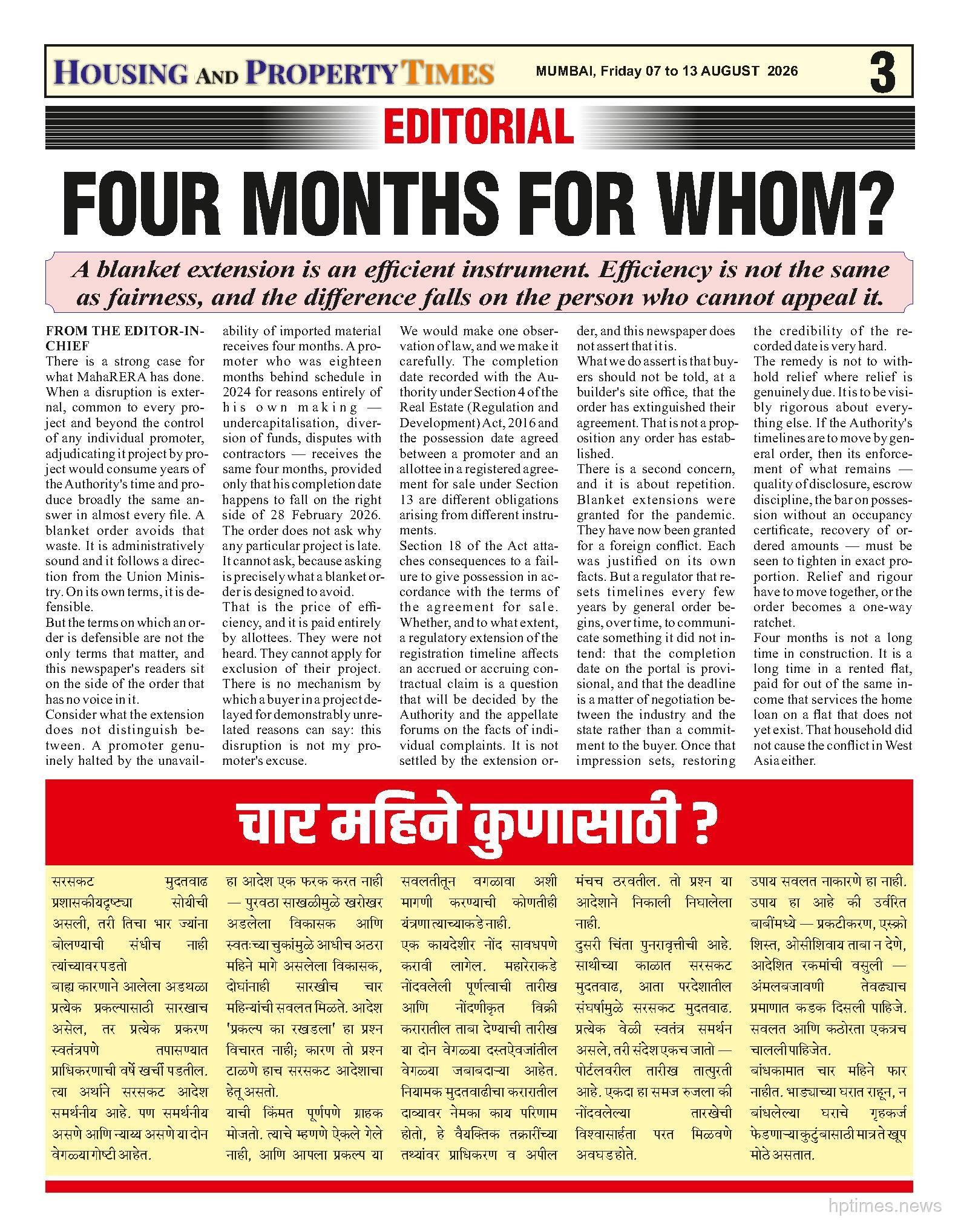
FOUR MONTHS FOR WHOM?
Page 3
FOUR MONTHS FOR WHOM?
 Page 4
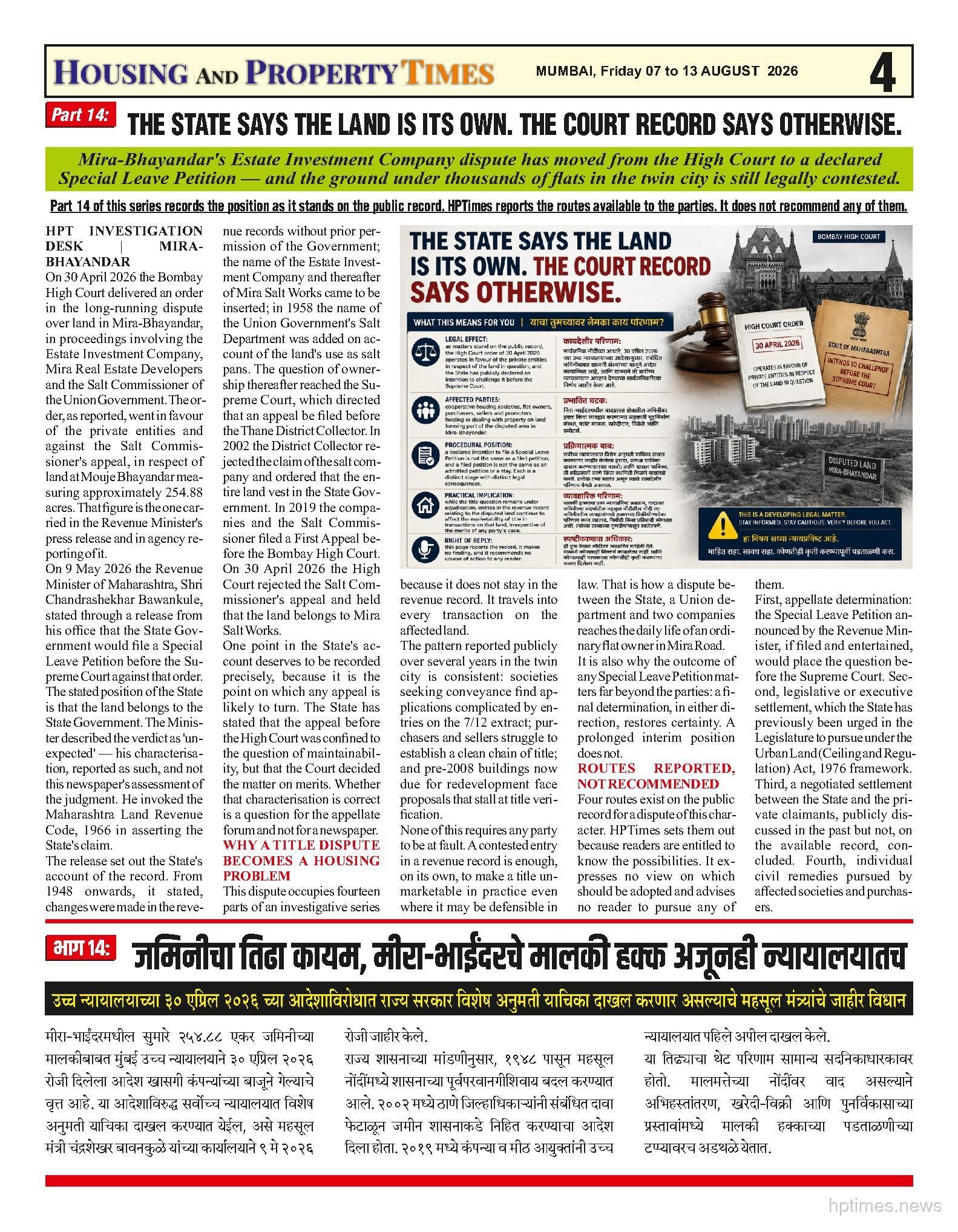
THE STATE SAYS THE LAND IS ITS OWN. THE COURT RECORD SAYS OTHERWISE.
Page 4
THE STATE SAYS THE LAND IS ITS OWN. THE COURT RECORD SAYS OTHERWISE.
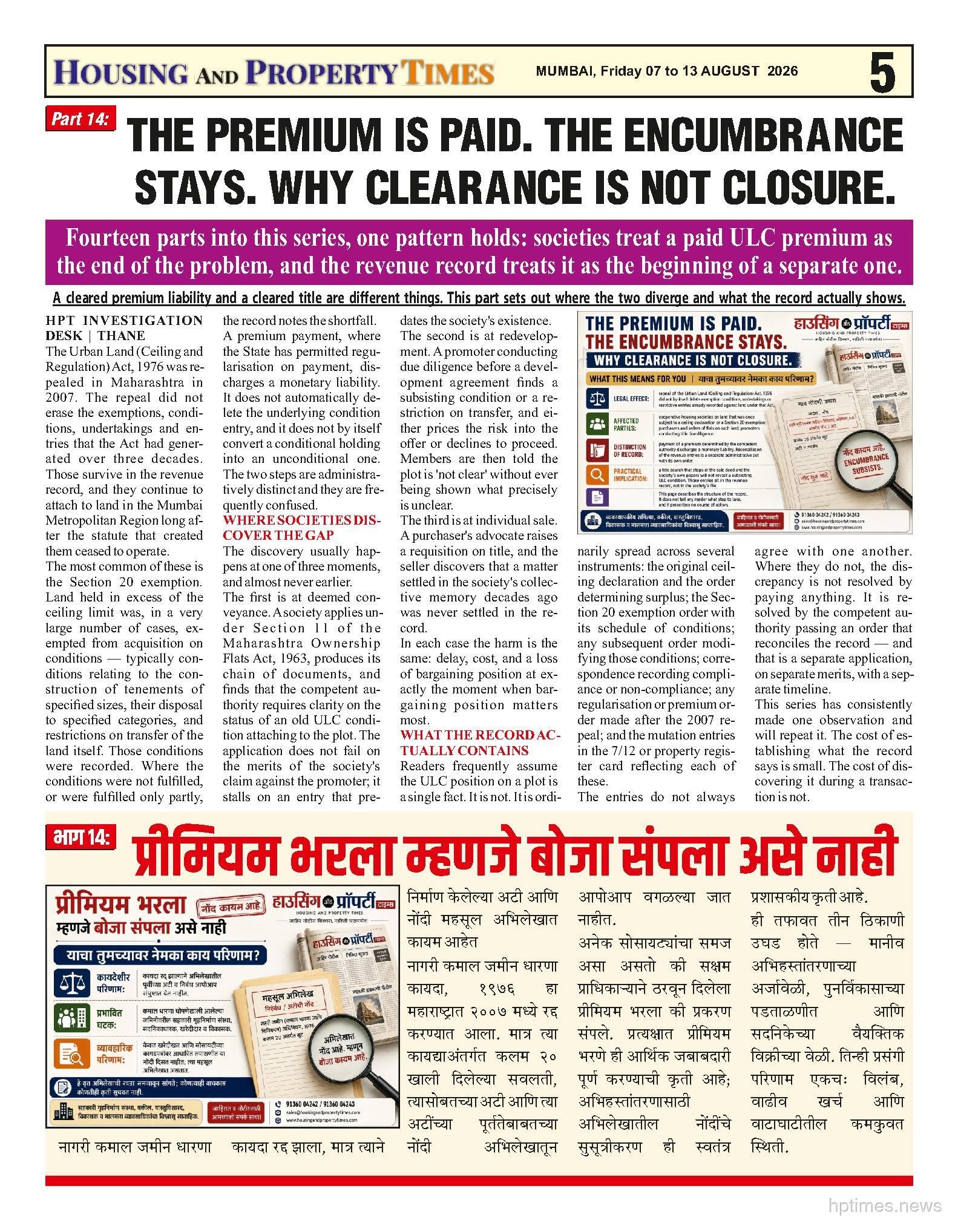 Page 5
THE PREMIUM IS PAID. THE ENCUMBRANCE STAYS. WHY CLEARANCE IS NOT CLOSURE.
Page 5
THE PREMIUM IS PAID. THE ENCUMBRANCE STAYS. WHY CLEARANCE IS NOT CLOSURE.
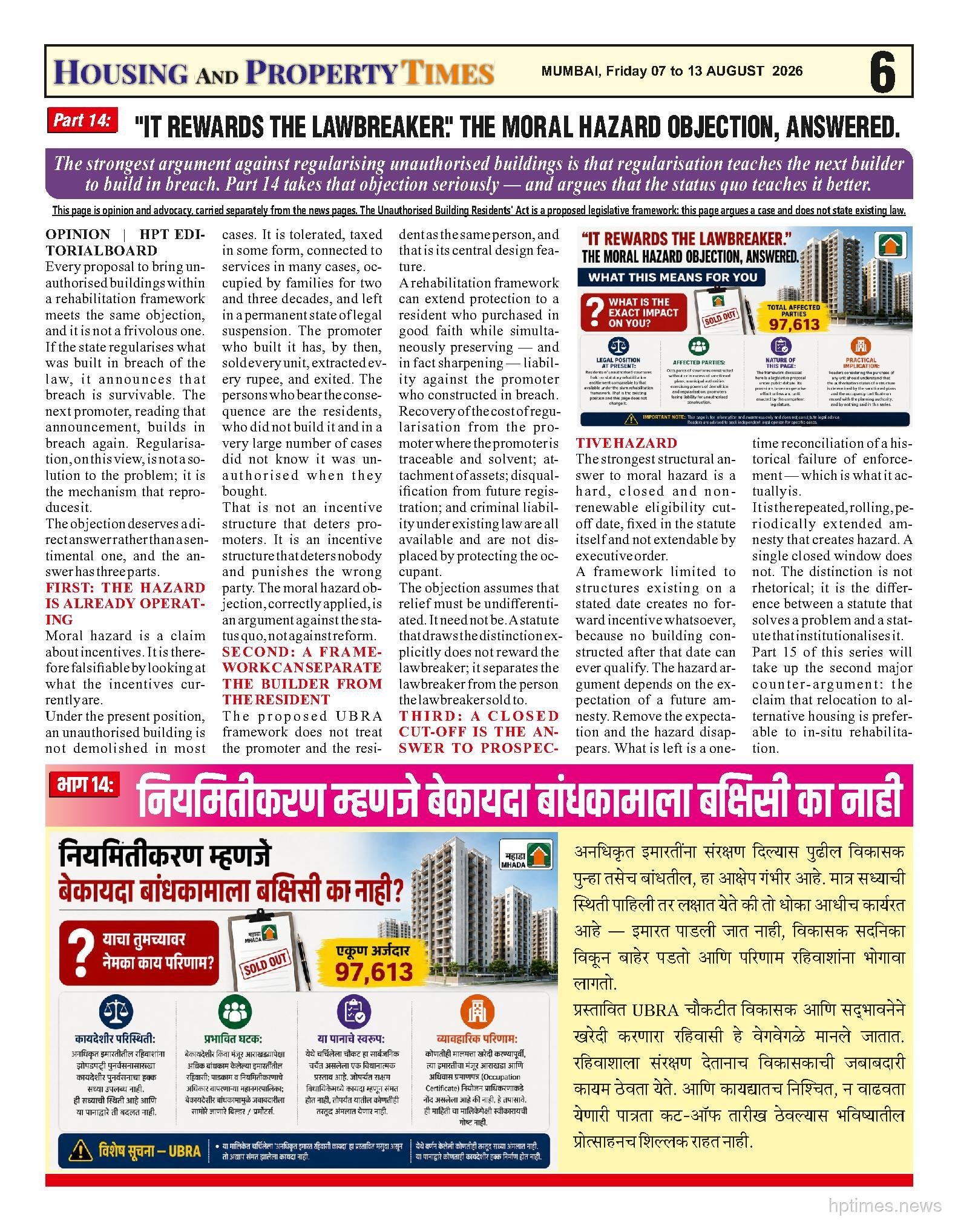 Page 6
"IT REWARDS THE LAWBREAKER." THE MORAL HAZARD OBJECTION, ANSWERED.
Page 6
"IT REWARDS THE LAWBREAKER." THE MORAL HAZARD OBJECTION, ANSWERED.
Comments (0)