📖 View in Flipbook All editions
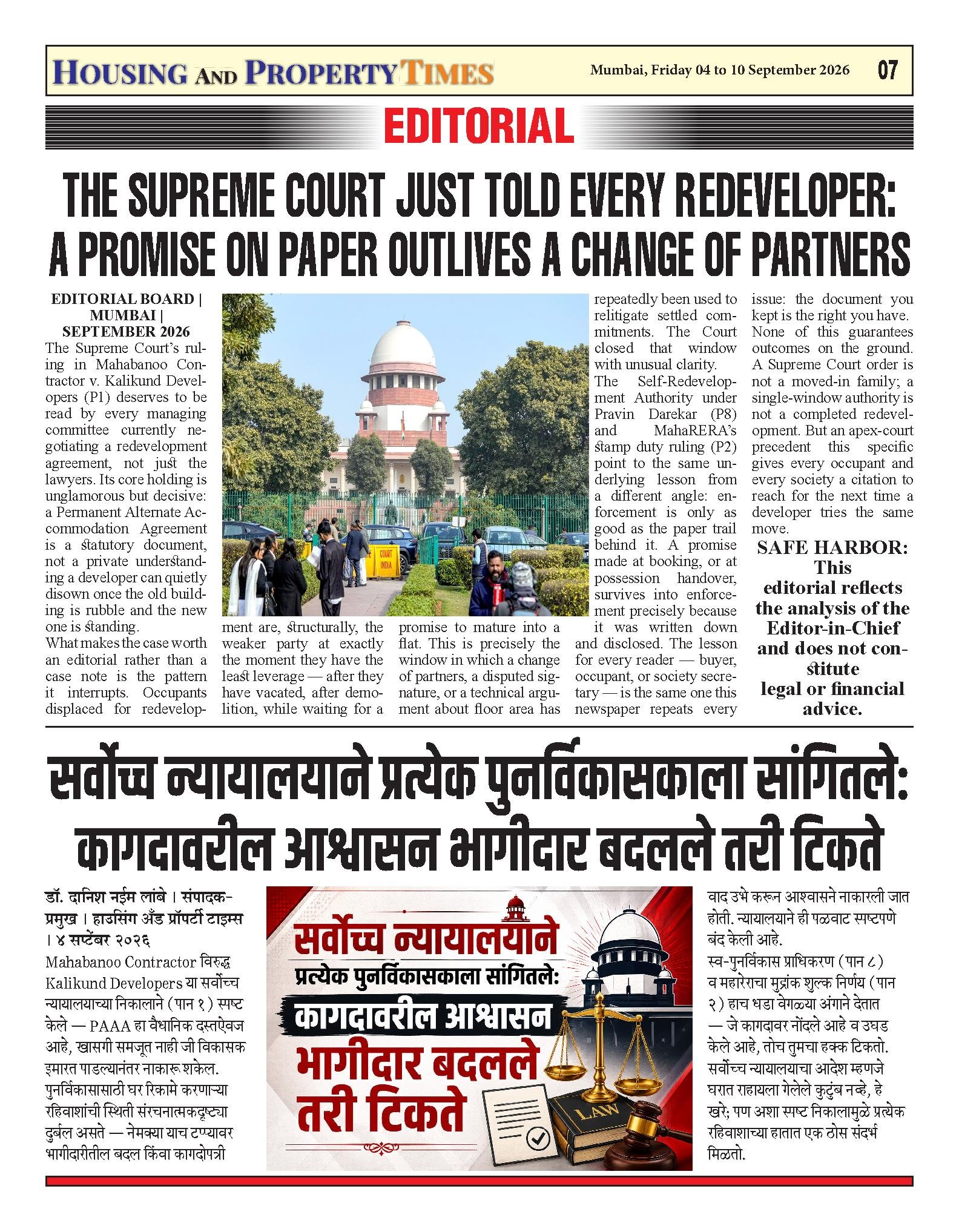
The Supreme Court Just Told Every Redeveloper: A Promise on Paper Outlives a Change of Partners
What this means for you: Encourages every reader to keep and rely on documented promises.
The Supreme Court's ruling in Mahabanoo Contractor v. Kalikund Developers (P1) deserves to be read by every managing committee currently negotiating a redevelopment agreement, not just the lawyers. Its core holding is unglamorous but decisive: a Permanent Alternate Accommodation Agreement is a statutory document, not a private understanding a developer can quietly disown once the old building is rubble and the new one is standing. What makes the case worth an editorial rather than a case note is the pattern it interrupts. Occupants displaced for redevelopment are, structurally, the weaker party at exactly the moment they have the least leverage — after they have vacated, after demolition, while waiting for a promise to mature into a flat. This is precisely the window in which a change of partners, a disputed signature, or a technical argument about floor area has repeatedly been used to relitigate settled commitments. The Court closed that window with unusual clarity. The Self-Redevelopment Authority under Pravin Darekar (P8) and MahaRERA's stamp duty ruling (P2) point to the same underlying lesson from a different angle: enforcement is only as good as the paper trail behind it. A promise made at booking, or at possession handover, survives into enforcement precisely because it was written down and disclosed. The lesson for every reader — buyer, occupant, or society secretary — is the same one this newspaper repeats every issue: the document you kept is the right you have. None of this guarantees outcomes on the ground. A Supreme Court order is not a moved-in family; a single-window authority is not a completed redevelopment. But an apex-court precedent this specific gives every occupant and every society a citation to reach for the next time a developer tries the same move.
React
More from this issue & web
 Page 1
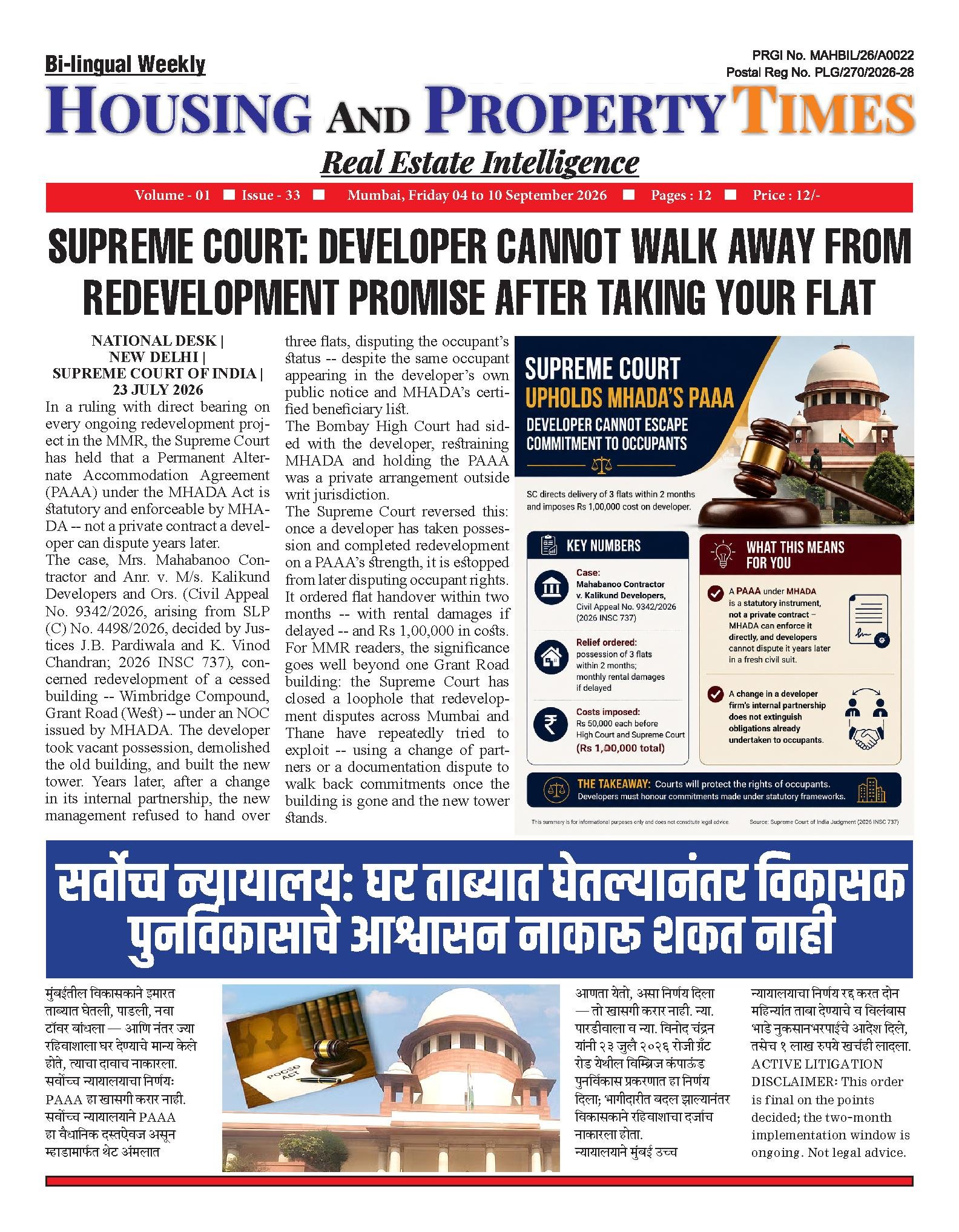
Supreme Court: Developer Cannot Walk Away From Redevelopment Promise After Taking Your Flat
Page 1
Supreme Court: Developer Cannot Walk Away From Redevelopment Promise After Taking Your Flat
 Page 2
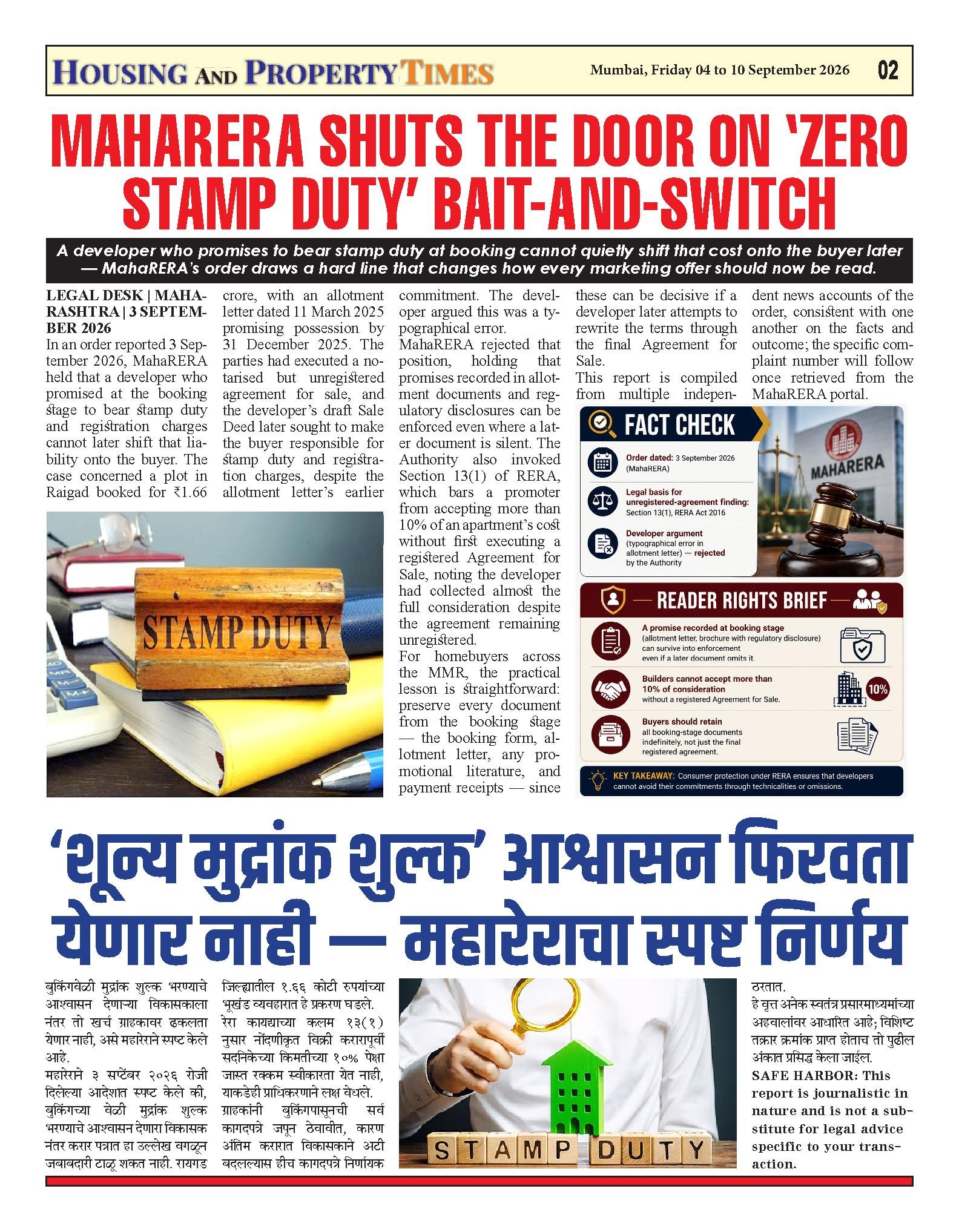
MahaRERA Shuts the Door on 'Zero Stamp Duty' Bait-and-Switch
Page 2
MahaRERA Shuts the Door on 'Zero Stamp Duty' Bait-and-Switch
 Page 3
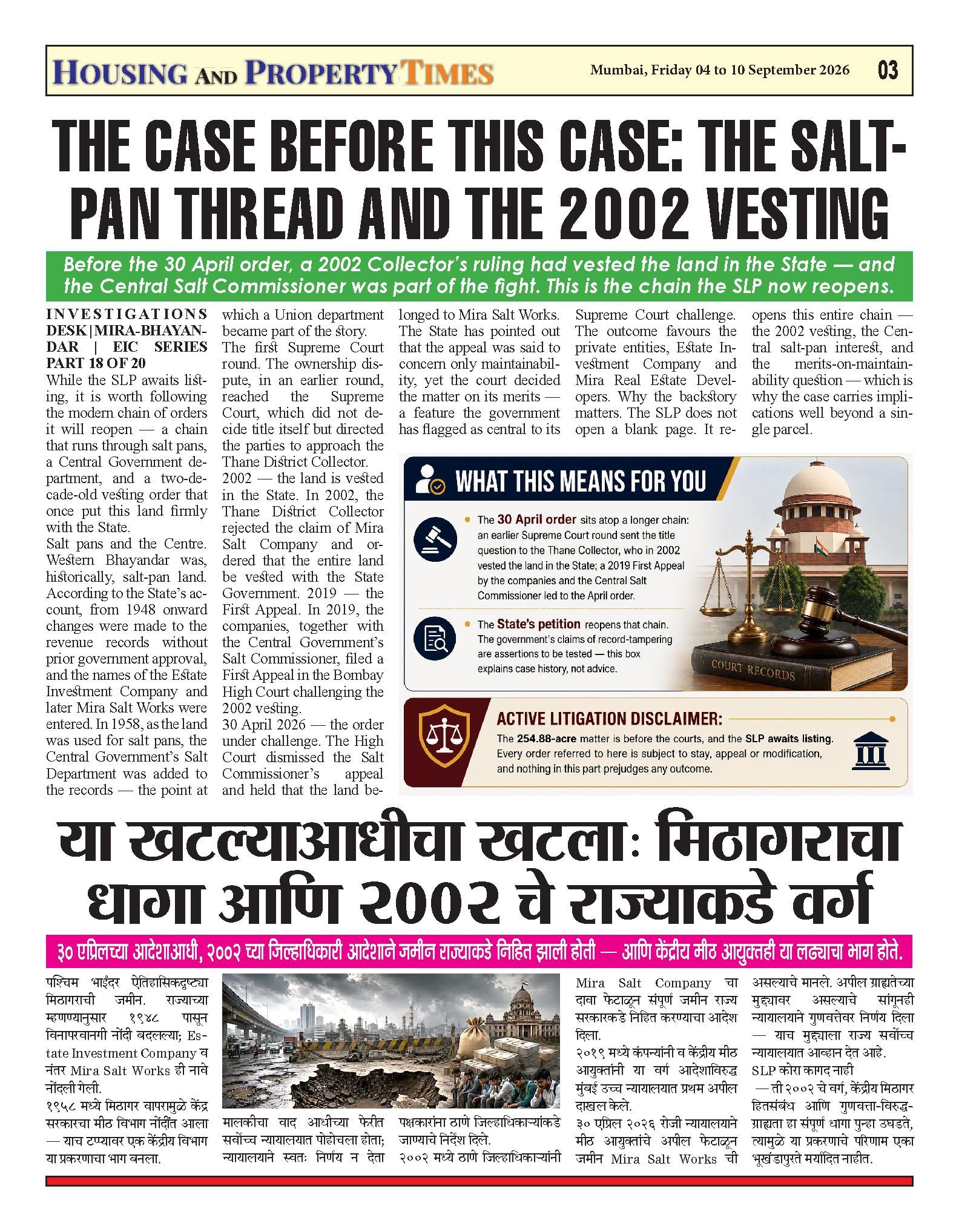
The Case Before This Case: The Salt-Pan Thread and the 2002 Vesting
Page 3
The Case Before This Case: The Salt-Pan Thread and the 2002 Vesting
 Page 4
A ULC Litigation Watch: The Rulings That Decide Who Pays and Who Is Paid Back
Page 4
A ULC Litigation Watch: The Rulings That Decide Who Pays and Who Is Paid Back
 Page 5
UBRA Series Part 18 of 20 — Building the Dashboard Before the Buildings
Page 5
UBRA Series Part 18 of 20 — Building the Dashboard Before the Buildings
 Page 6
1,094 Societies, 432 Acres: Mumbai's Redevelopment Pipeline Crosses a Threshold
Page 6
1,094 Societies, 432 Acres: Mumbai's Redevelopment Pipeline Crosses a Threshold
Comments (0)