📖 View in Flipbook All editions
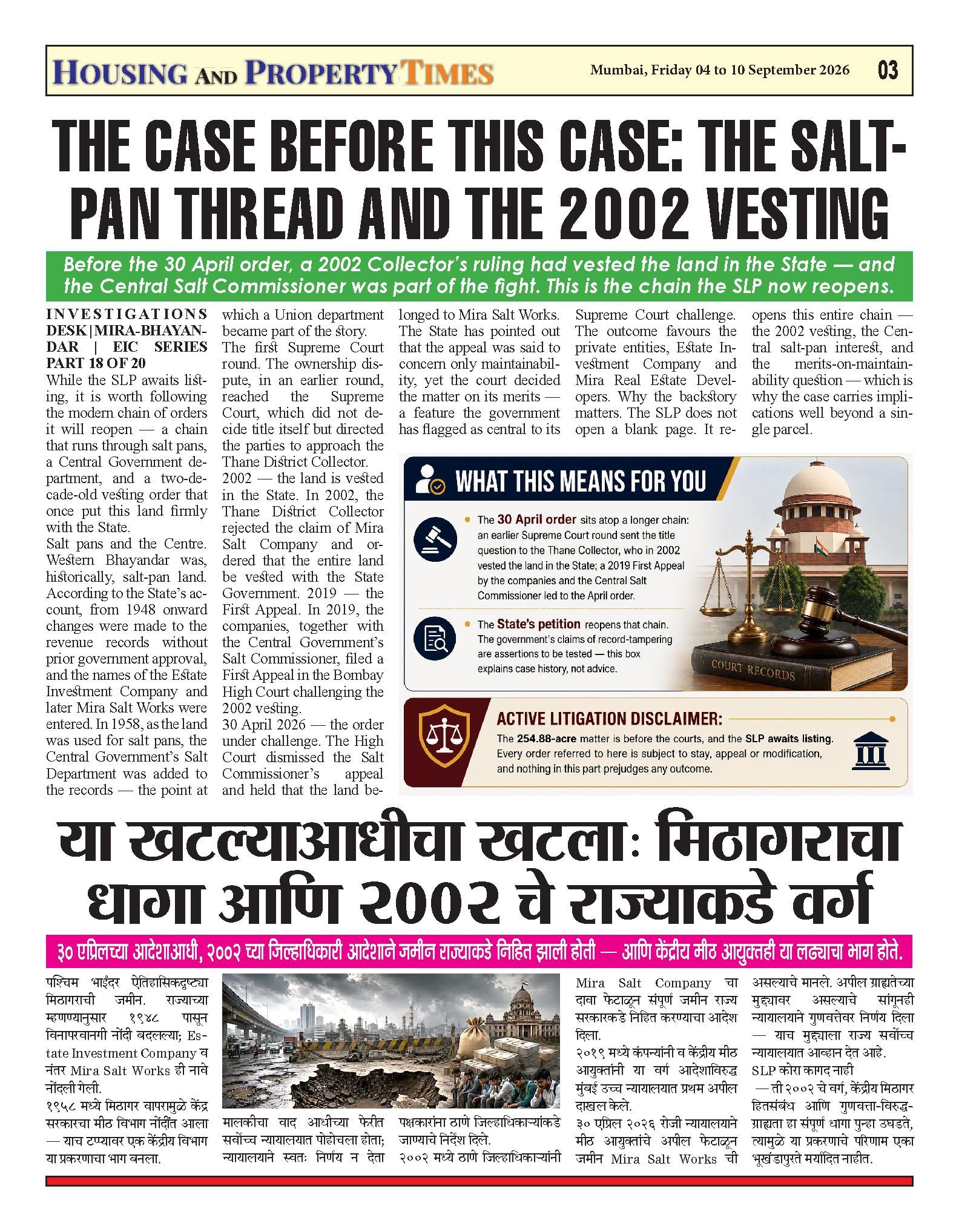
The Case Before This Case: The Salt-Pan Thread and the 2002 Vesting
What this means for you: This case history explains why the pending SLP could affect 254.88 acres of Mira-Bhayandar land.
While the SLP awaits listing, it is worth following the modern chain of orders it will reopen — a chain that runs through salt pans, a Central Government department, and a two-decade-old vesting order that once put this land firmly with the State. Salt pans and the Centre. Western Bhayandar was, historically, salt-pan land. According to the State's account, from 1948 onward changes were made to the revenue records without prior government approval, and the names of the Estate Investment Company and later Mira Salt Works were entered. In 1958, as the land was used for salt pans, the Central Government's Salt Department was added to the records — the point at which a Union department became part of the story. The first Supreme Court round. The ownership dispute, in an earlier round, reached the Supreme Court, which did not decide title itself but directed the parties to approach the Thane District Collector. 2002 — the land is vested in the State. In 2002, the Thane District Collector rejected the claim of Mira Salt Company and ordered that the entire land be vested with the State Government. 2019 — the First Appeal. In 2019, the companies, together with the Central Government's Salt Commissioner, filed a First Appeal in the Bombay High Court challenging the 2002 vesting. 30 April 2026 — the order under challenge. The High Court dismissed the Salt Commissioner's appeal and held that the land belonged to Mira Salt Works. The State has pointed out that the appeal was said to concern only maintainability, yet the court decided the matter on its merits — a feature the government has flagged as central to its Supreme Court challenge. The outcome favours the private entities, Estate Investment Company and Mira Real Estate Developers. Why the backstory matters. The SLP does not open a blank page. It reopens this entire chain — the 2002 vesting, the Central salt-pan interest, and the merits-on-maintainability question — which is why the case carries implications well beyond a single parcel.
React
More from this issue & web
 Page 1
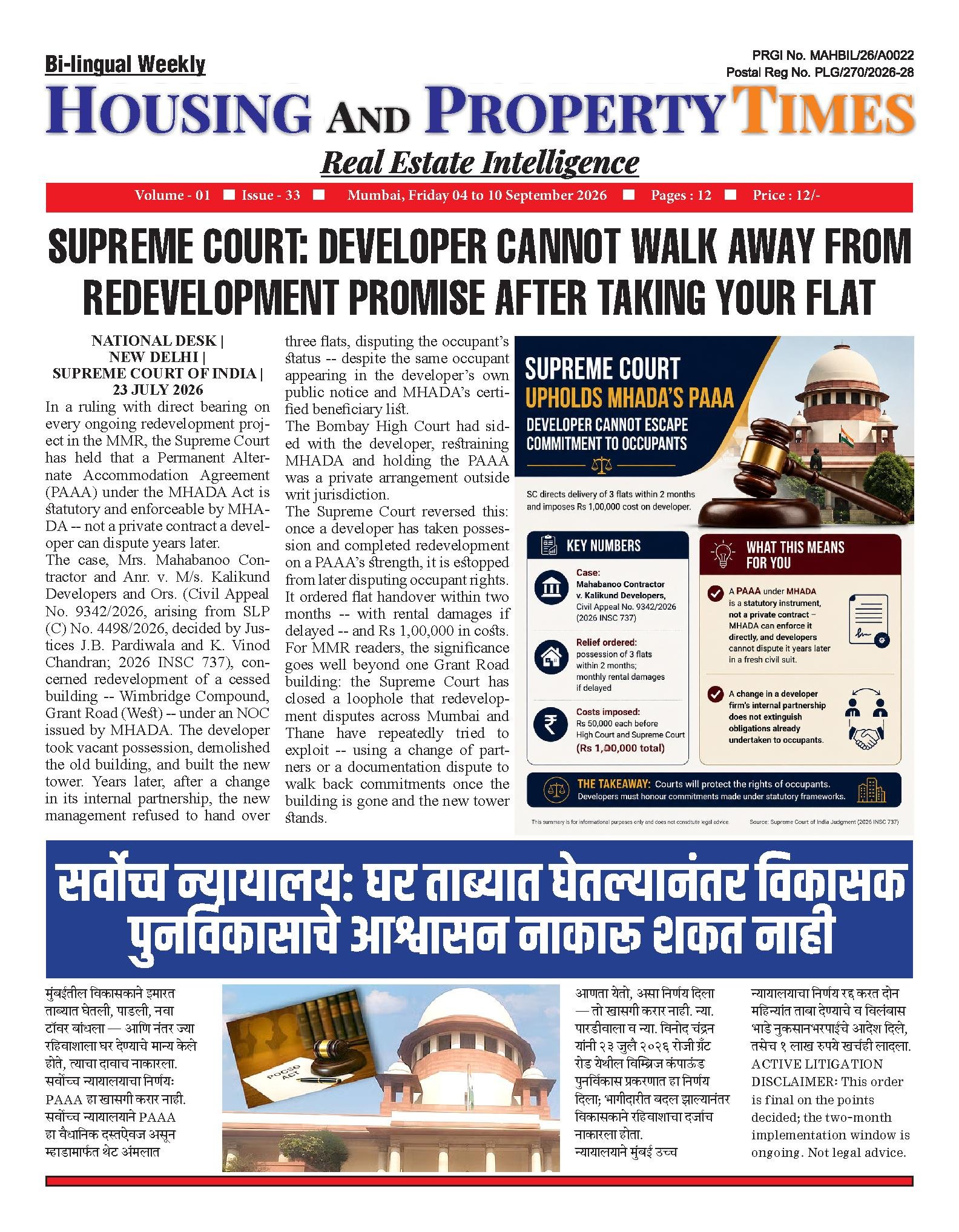
Supreme Court: Developer Cannot Walk Away From Redevelopment Promise After Taking Your Flat
Page 1
Supreme Court: Developer Cannot Walk Away From Redevelopment Promise After Taking Your Flat
 Page 2
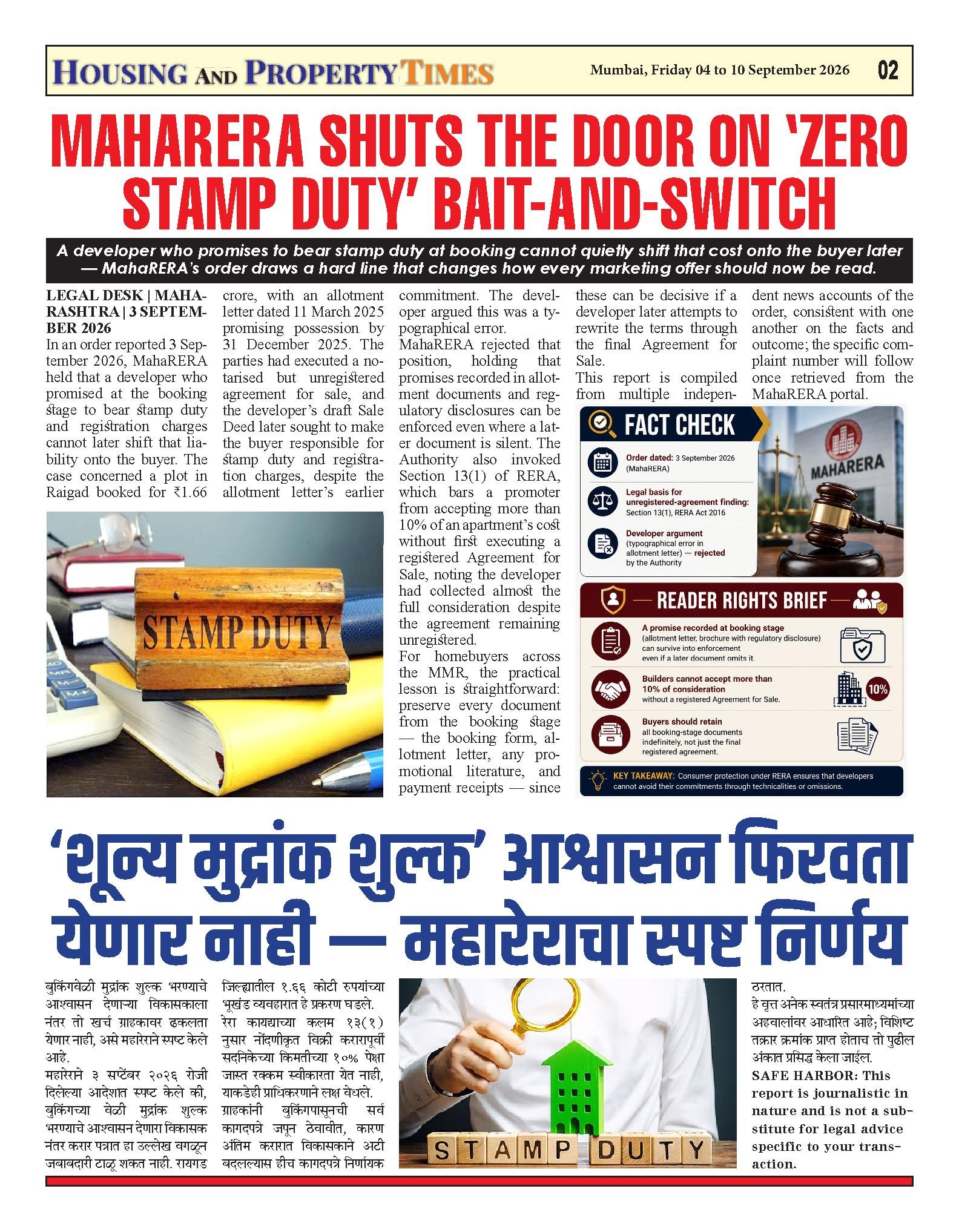
MahaRERA Shuts the Door on 'Zero Stamp Duty' Bait-and-Switch
Page 2
MahaRERA Shuts the Door on 'Zero Stamp Duty' Bait-and-Switch
 Page 4
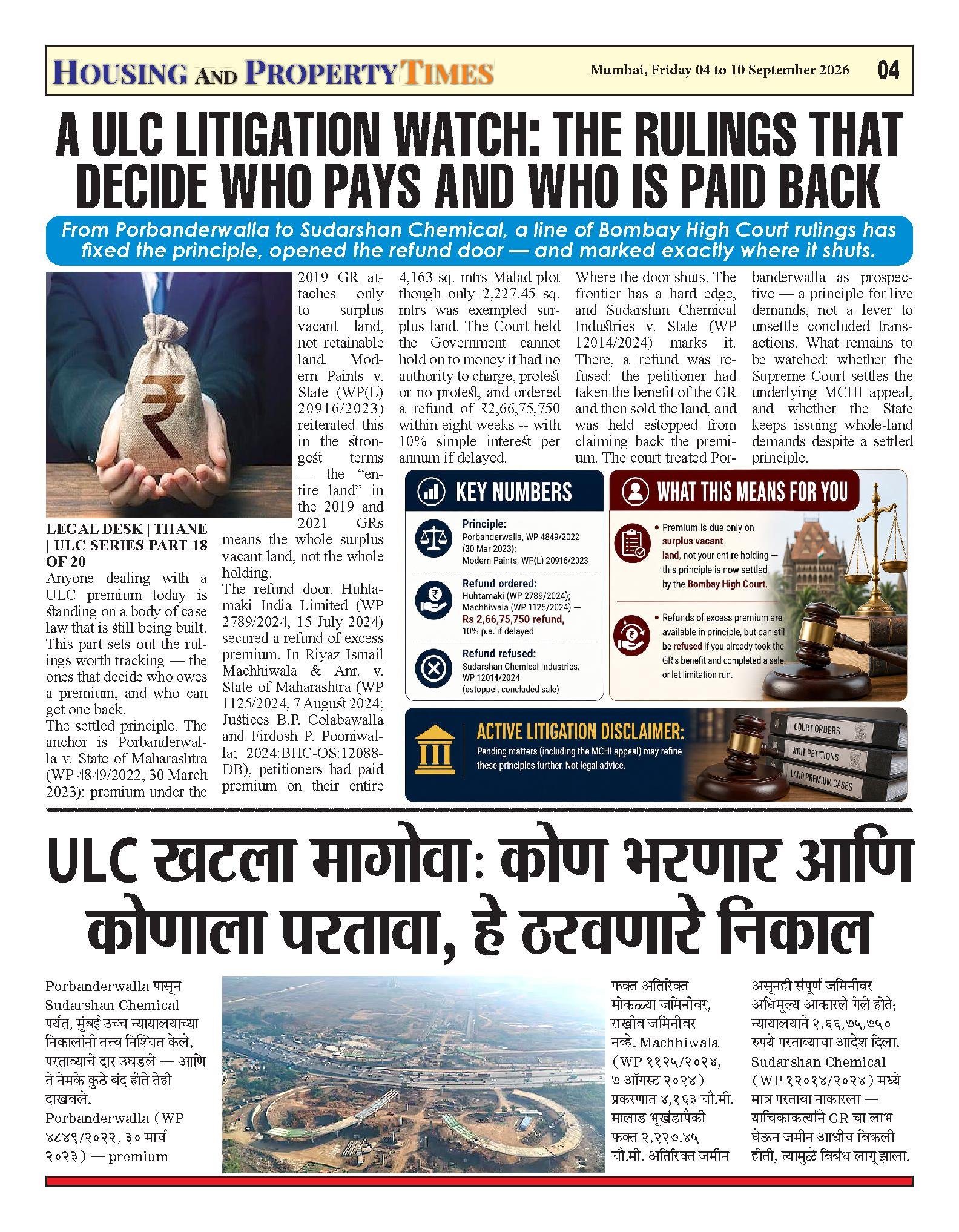
A ULC Litigation Watch: The Rulings That Decide Who Pays and Who Is Paid Back
Page 4
A ULC Litigation Watch: The Rulings That Decide Who Pays and Who Is Paid Back
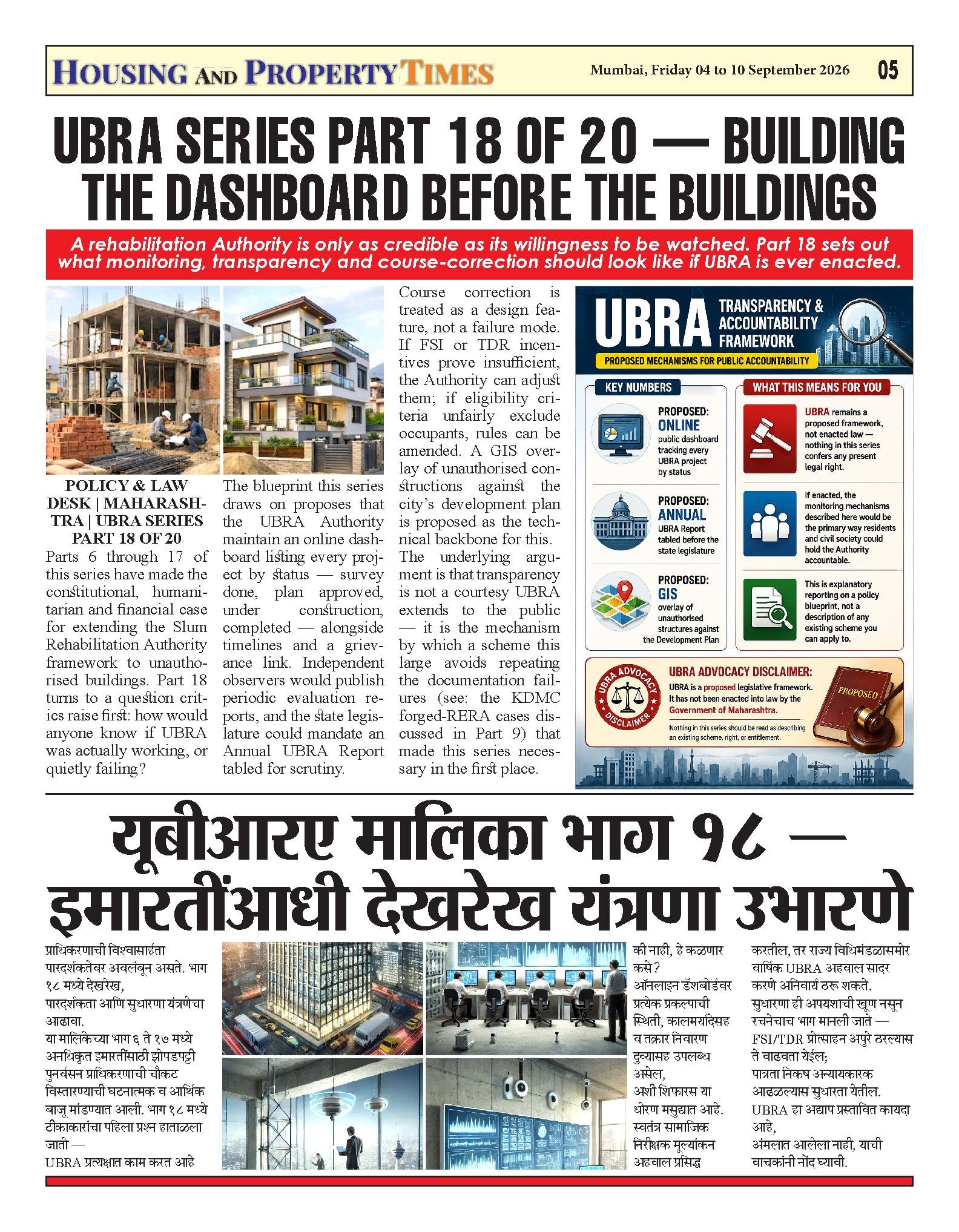 Page 5
UBRA Series Part 18 of 20 — Building the Dashboard Before the Buildings
Page 5
UBRA Series Part 18 of 20 — Building the Dashboard Before the Buildings
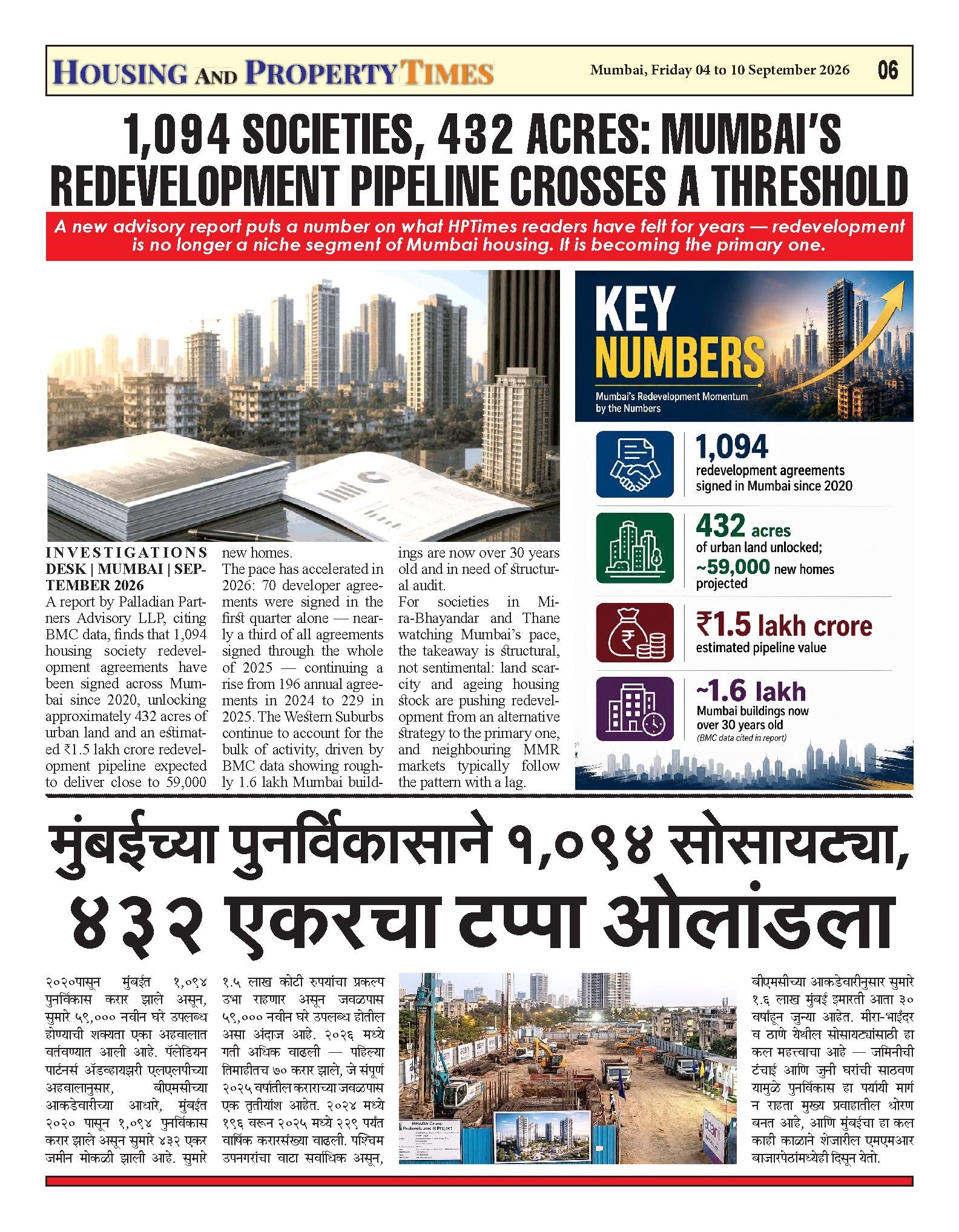 Page 6
1,094 Societies, 432 Acres: Mumbai's Redevelopment Pipeline Crosses a Threshold
Page 6
1,094 Societies, 432 Acres: Mumbai's Redevelopment Pipeline Crosses a Threshold
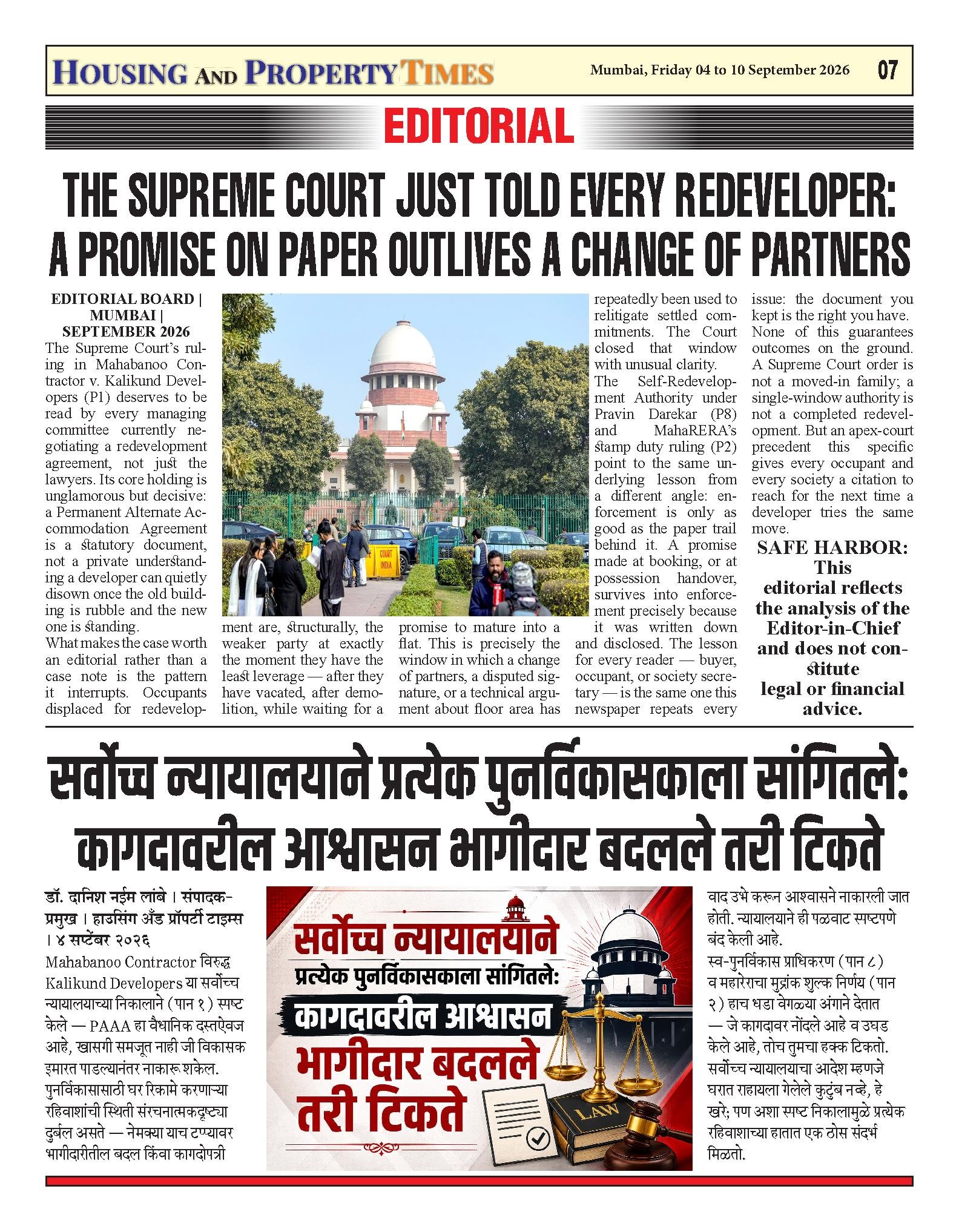 Page 7
The Supreme Court Just Told Every Redeveloper: A Promise on Paper Outlives a Change of Partners
Page 7
The Supreme Court Just Told Every Redeveloper: A Promise on Paper Outlives a Change of Partners
Comments (0)