📖 View in Flipbook All editions
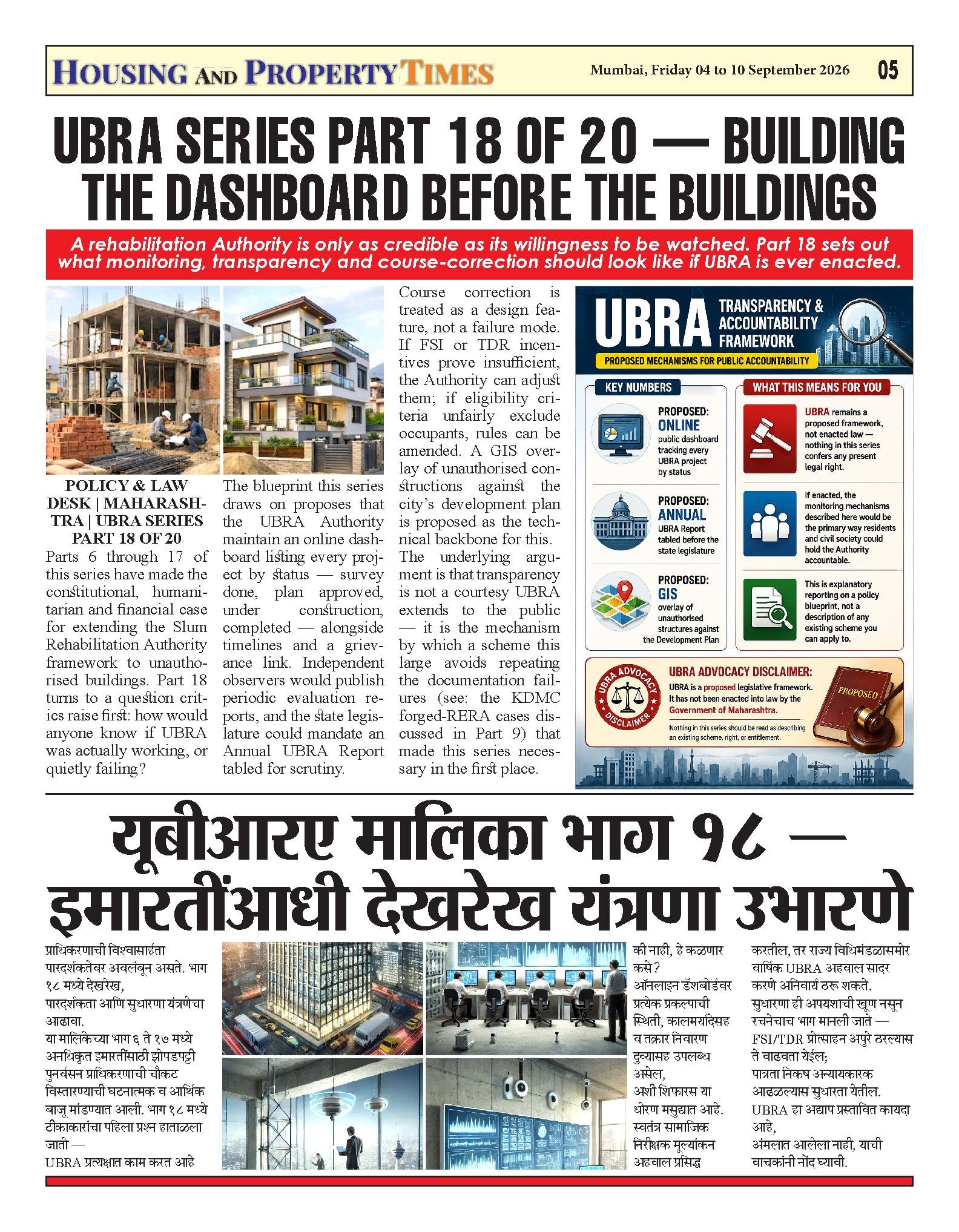
UBRA Series Part 18 of 20 — Building the Dashboard Before the Buildings
What this means for you: Readers should note UBRA remains a proposed framework, not enacted law.
Parts 6 through 17 of this series have made the constitutional, humanitarian and financial case for extending the Slum Rehabilitation Authority framework to unauthorised buildings. Part 18 turns to a question critics raise first: how would anyone know if UBRA was actually working, or quietly failing? The blueprint this series draws on proposes that the UBRA Authority maintain an online dashboard listing every project by status — survey done, plan approved, under construction, completed — alongside timelines and a grievance link. Independent observers would publish periodic evaluation reports, and the state legislature could mandate an Annual UBRA Report tabled for scrutiny. Course correction is treated as a design feature, not a failure mode. If FSI or TDR incentives prove insufficient, the Authority can adjust them; if eligibility criteria unfairly exclude occupants, rules can be amended. A GIS overlay of unauthorised constructions against the city's development plan is proposed as the technical backbone for this. The underlying argument is that transparency is not a courtesy UBRA extends to the public — it is the mechanism by which a scheme this large avoids repeating the documentation failures (see: the KDMC forged-RERA cases discussed in Part 9) that made this series necessary in the first place.
React
More from this issue & web
 Page 1
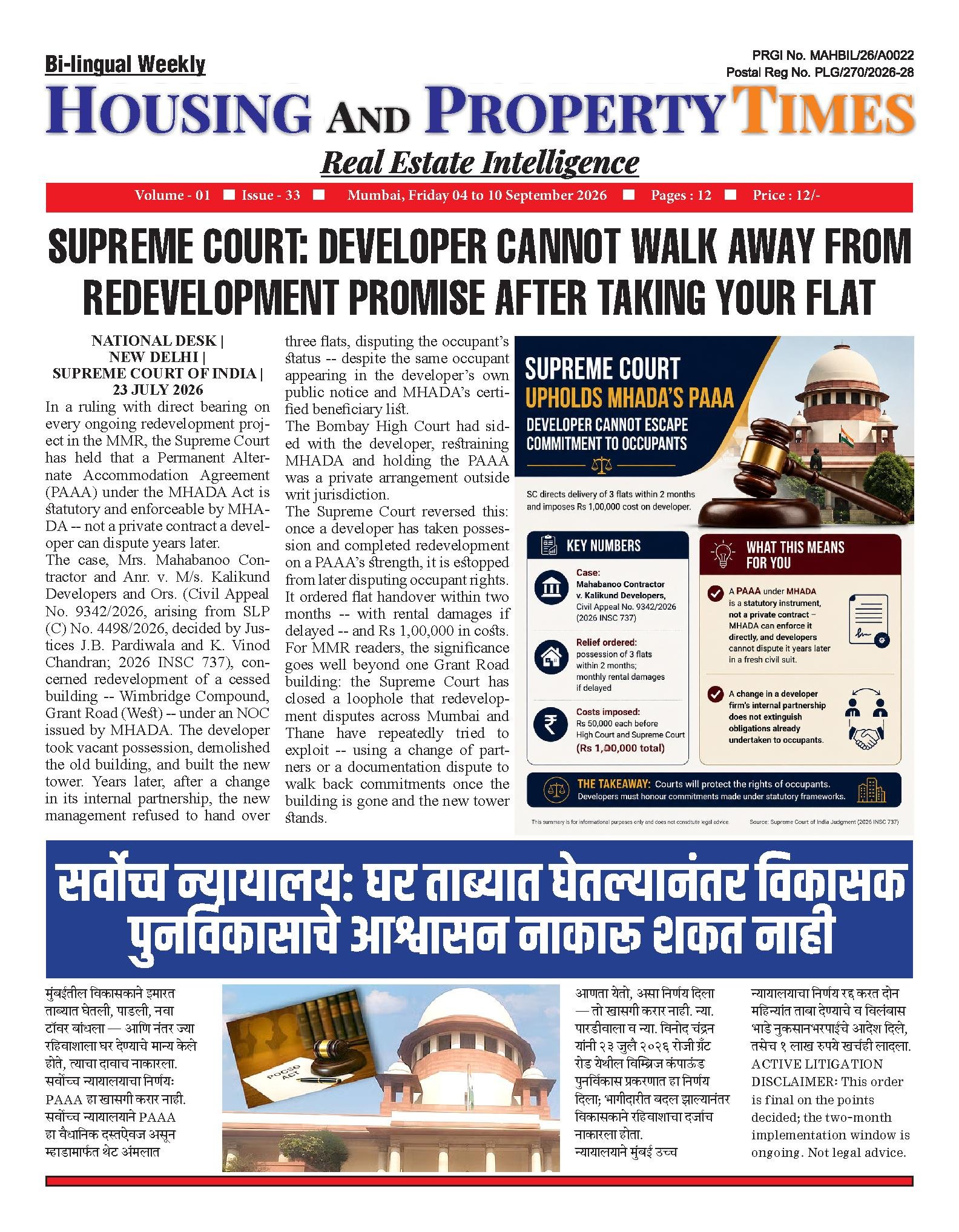
Supreme Court: Developer Cannot Walk Away From Redevelopment Promise After Taking Your Flat
Page 1
Supreme Court: Developer Cannot Walk Away From Redevelopment Promise After Taking Your Flat
 Page 2
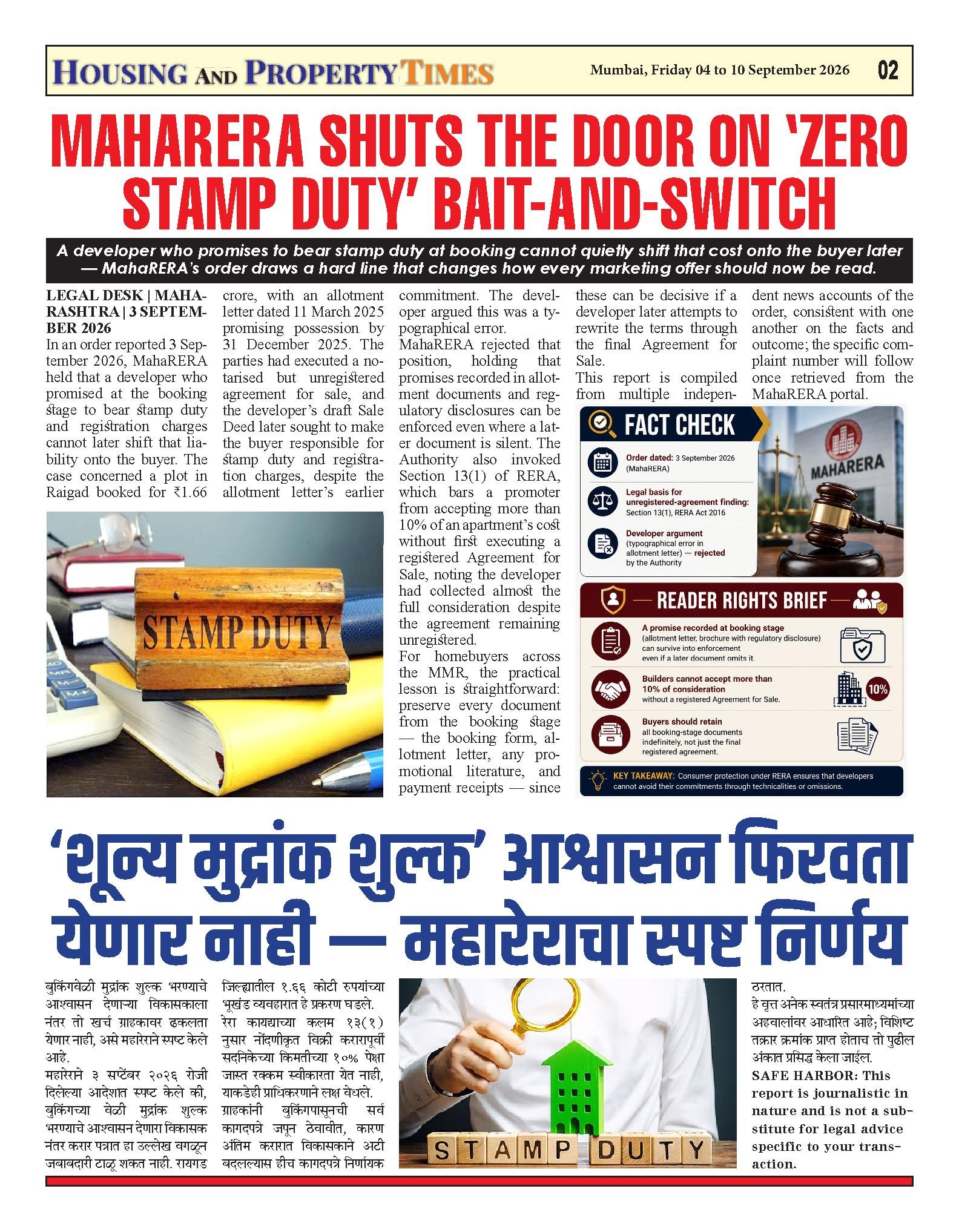
MahaRERA Shuts the Door on 'Zero Stamp Duty' Bait-and-Switch
Page 2
MahaRERA Shuts the Door on 'Zero Stamp Duty' Bait-and-Switch
 Page 3
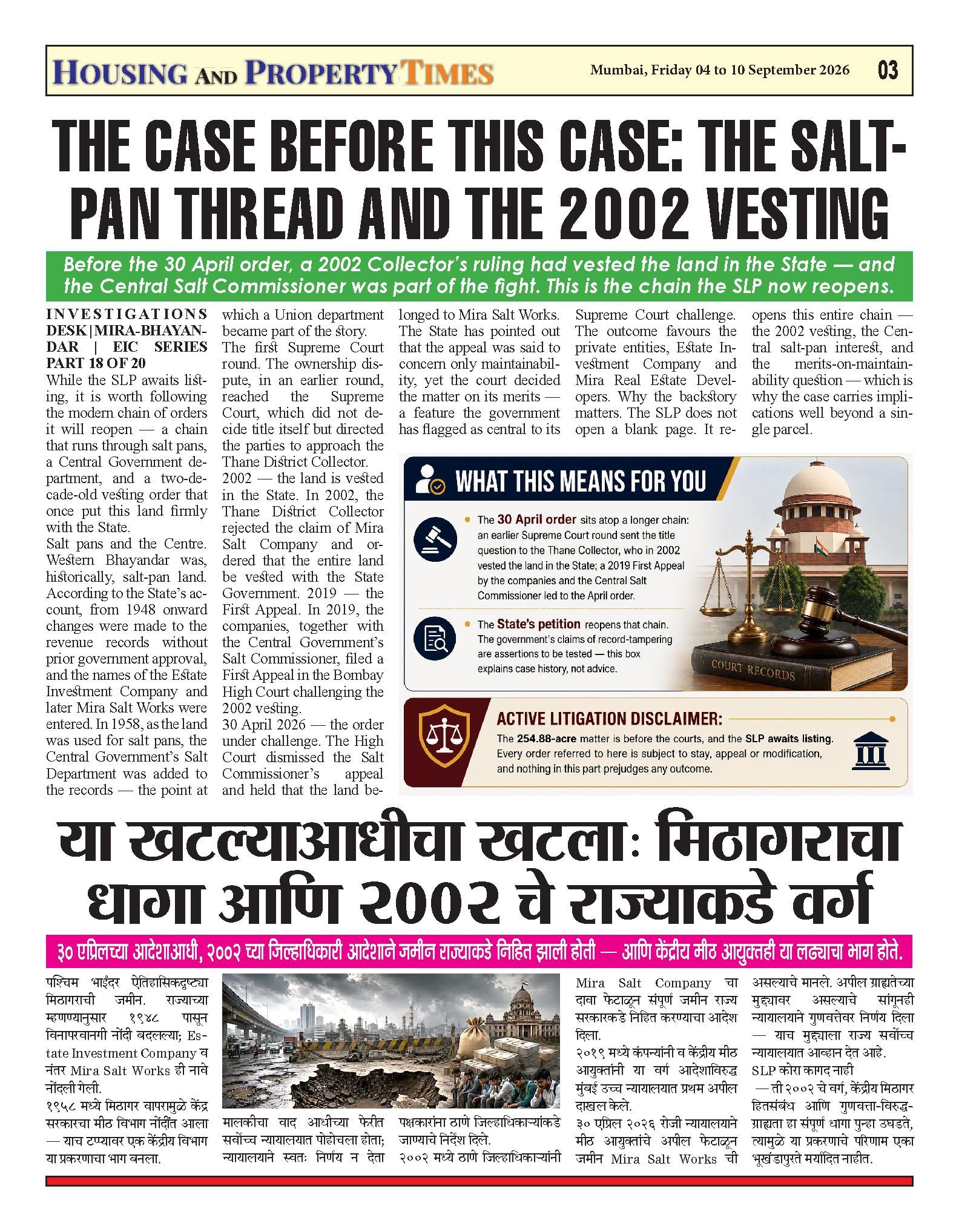
The Case Before This Case: The Salt-Pan Thread and the 2002 Vesting
Page 3
The Case Before This Case: The Salt-Pan Thread and the 2002 Vesting
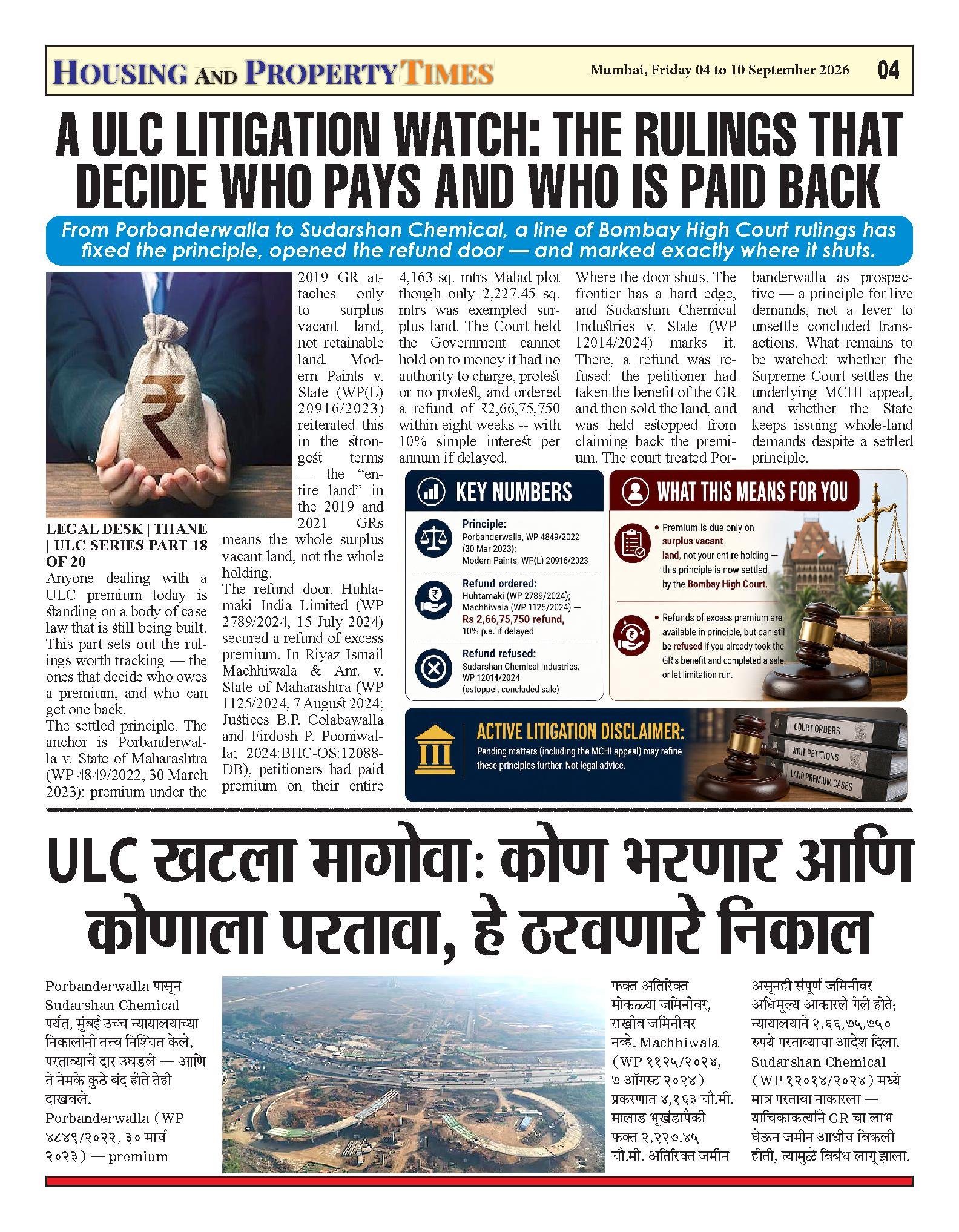 Page 4
A ULC Litigation Watch: The Rulings That Decide Who Pays and Who Is Paid Back
Page 4
A ULC Litigation Watch: The Rulings That Decide Who Pays and Who Is Paid Back
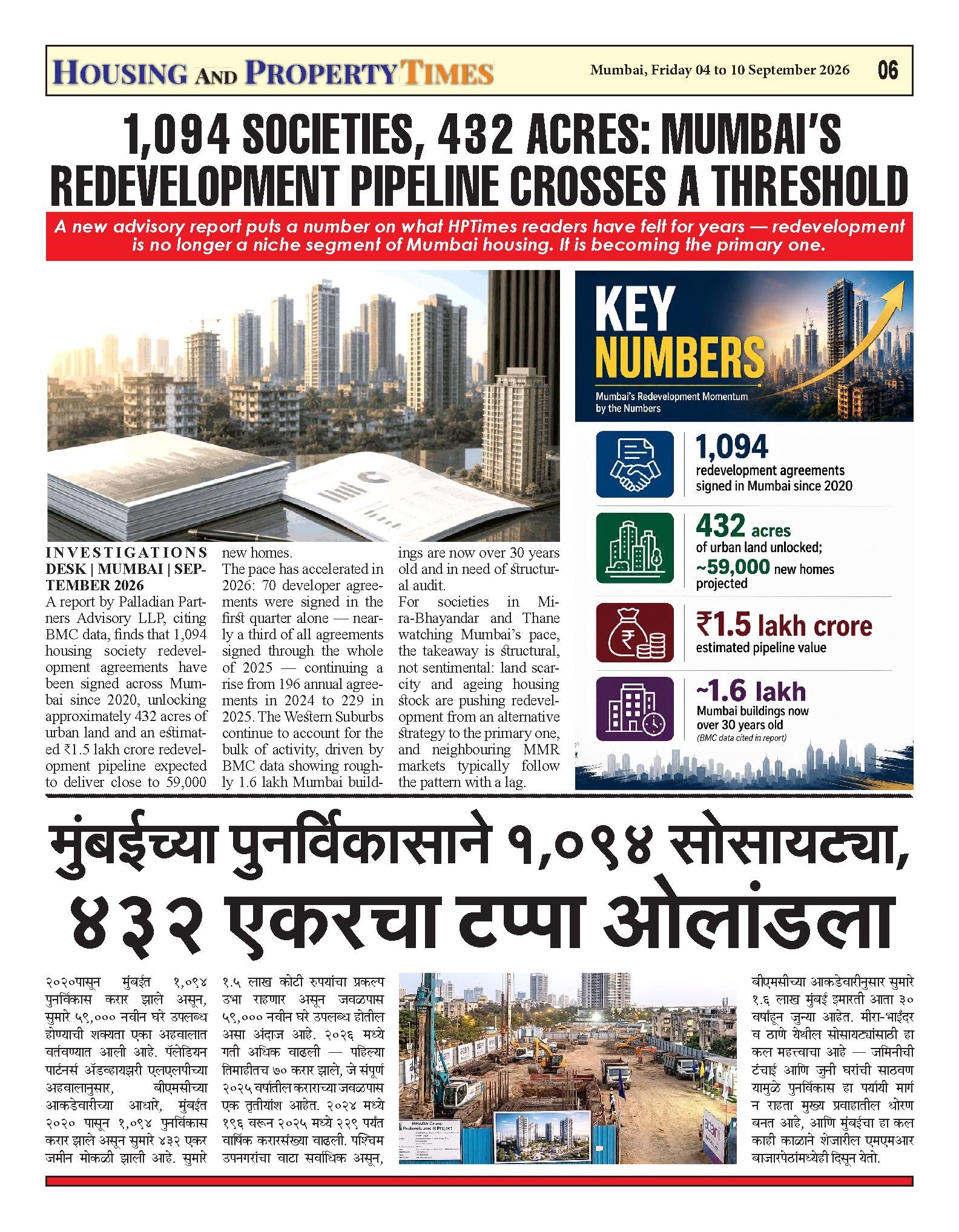 Page 6
1,094 Societies, 432 Acres: Mumbai's Redevelopment Pipeline Crosses a Threshold
Page 6
1,094 Societies, 432 Acres: Mumbai's Redevelopment Pipeline Crosses a Threshold
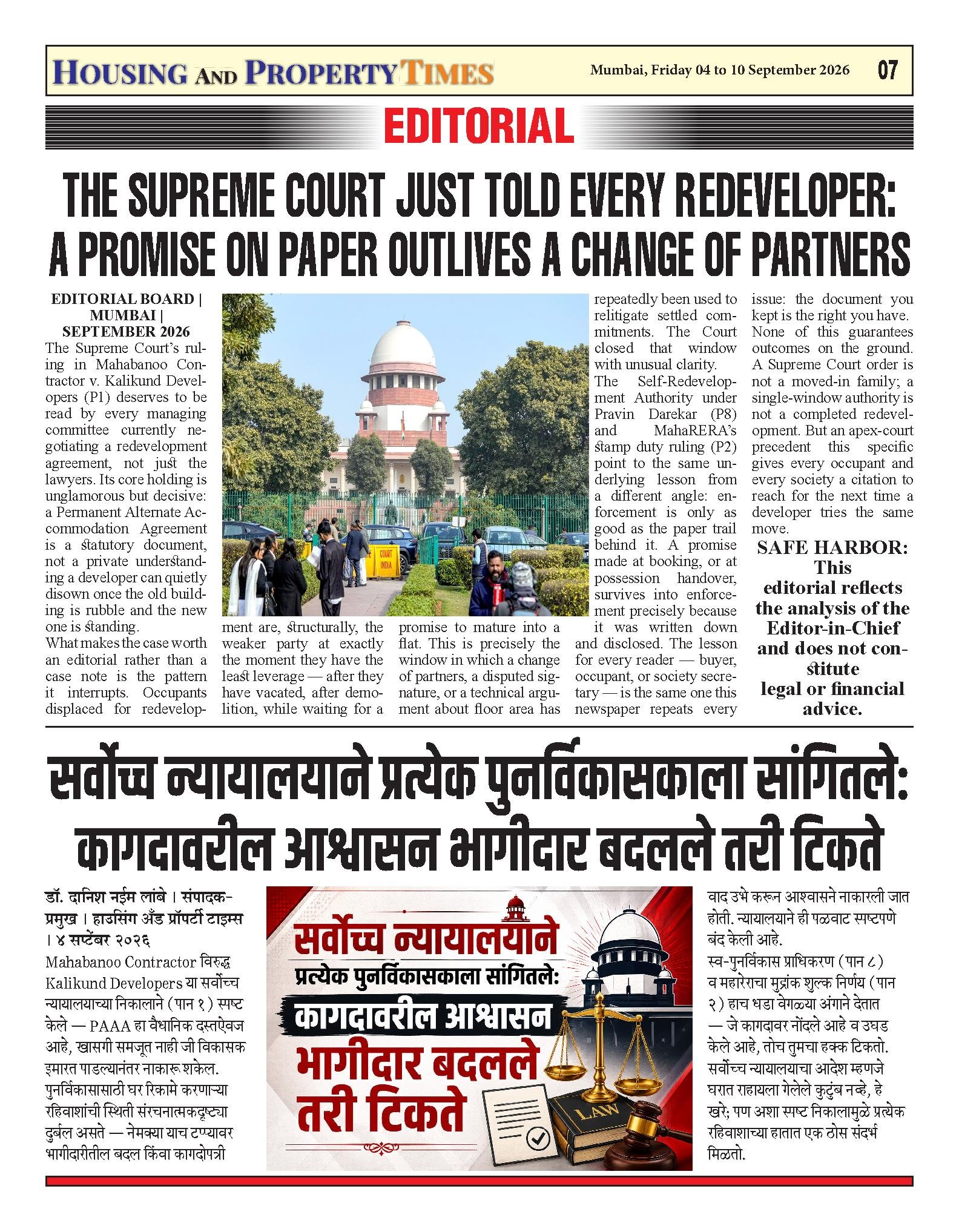 Page 7
The Supreme Court Just Told Every Redeveloper: A Promise on Paper Outlives a Change of Partners
Page 7
The Supreme Court Just Told Every Redeveloper: A Promise on Paper Outlives a Change of Partners
Comments (0)