📖 View in Flipbook All editions
STEEL COSTS CLIMB AS GULF TENSIONS HIT SUPPLY CHAINS
Global supply-chain disruption is filtering into MMR construction costs, with implications for redevelopment timelines across the region this publication has been tracking. Heidelberg Materials has flagged rising energy costs linked to the Iran conflict, trimming its 2026 profit outlook to Euro 3.4-3.65 billion. Industry trackers report Gulf tensions disrupting steel, PVC, glass and ceramics supply chains, with ANAROCK estimating a roughly 20 per cent rise in steel prices adding pressure on Mumbai construction costs. Separately reported vessel-routing changes in the Red Sea, tied to regional tensions, have added to the caution among industry trackers watching input costs for cement additives and finished steel bound for Indian ports. Redevelopment agreements with fixed-cost clauses may face renegotiation pressure if input costs continue rising. Societies partway through redevelopment should ask developers for documented cost pass-through mechanisms rather than informal timeline extensions, and should request written confirmation of any claimed delay before accepting it. A well-drafted redevelopment agreement typically caps how much of a genuine input-cost rise can be passed through to the society, ties any escalation to a named, verifiable index rather than the developer's own estimate, and requires supporting invoices before an escalation claim is accepted. Societies without such a clause in their existing agreement have comparatively little recourse if costs rise sharply mid-project.
React
More from this issue & web
 Page 1
BOMBAY HC RESTRAINS POSTS ON SAMTA NAGAR REDEVELOPMENT ROW
Page 1
BOMBAY HC RESTRAINS POSTS ON SAMTA NAGAR REDEVELOPMENT ROW
 Page 2
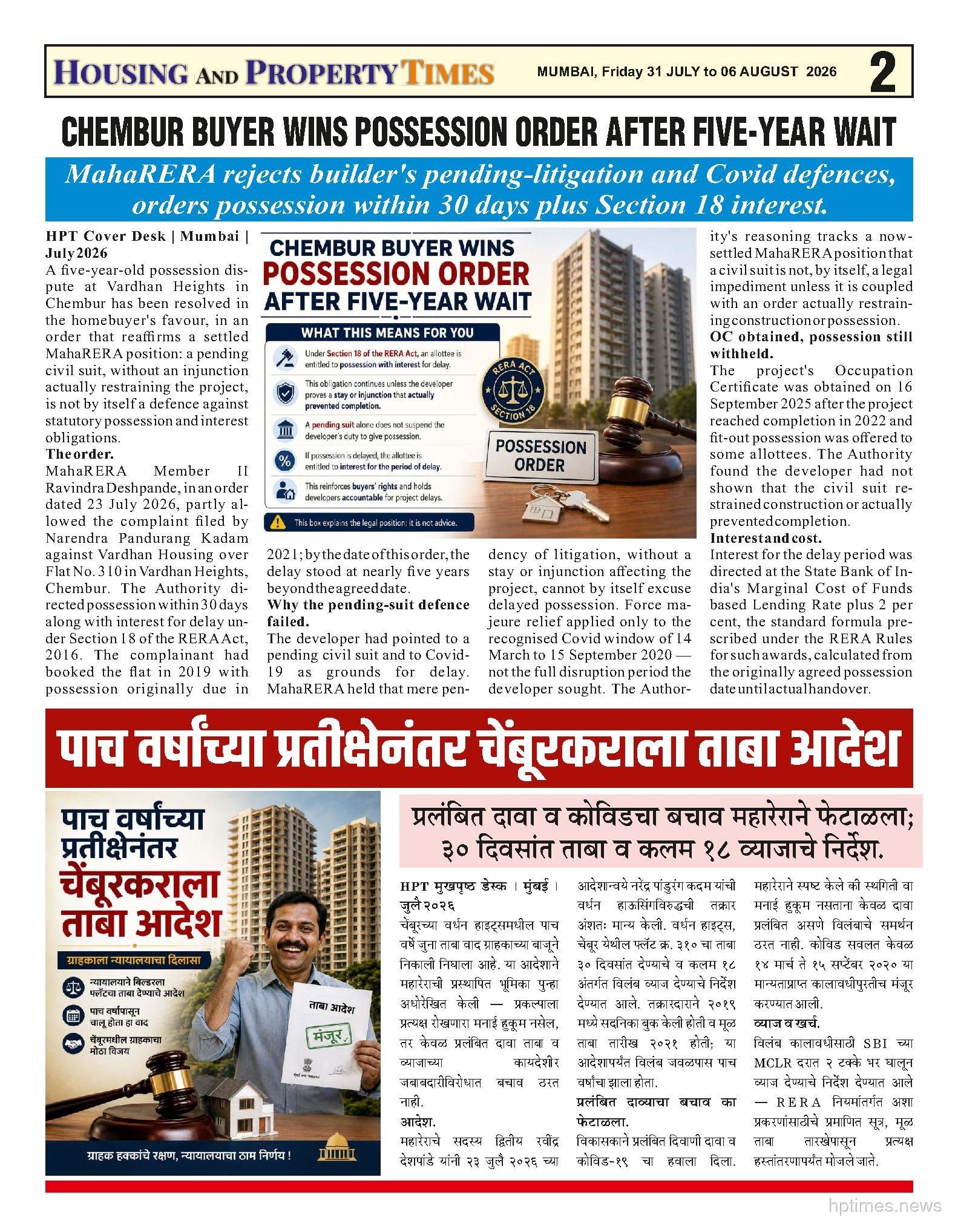
CHEMBUR BUYER WINS POSSESSION ORDER AFTER FIVE-YEAR WAIT
Page 2
CHEMBUR BUYER WINS POSSESSION ORDER AFTER FIVE-YEAR WAIT
 Page 3
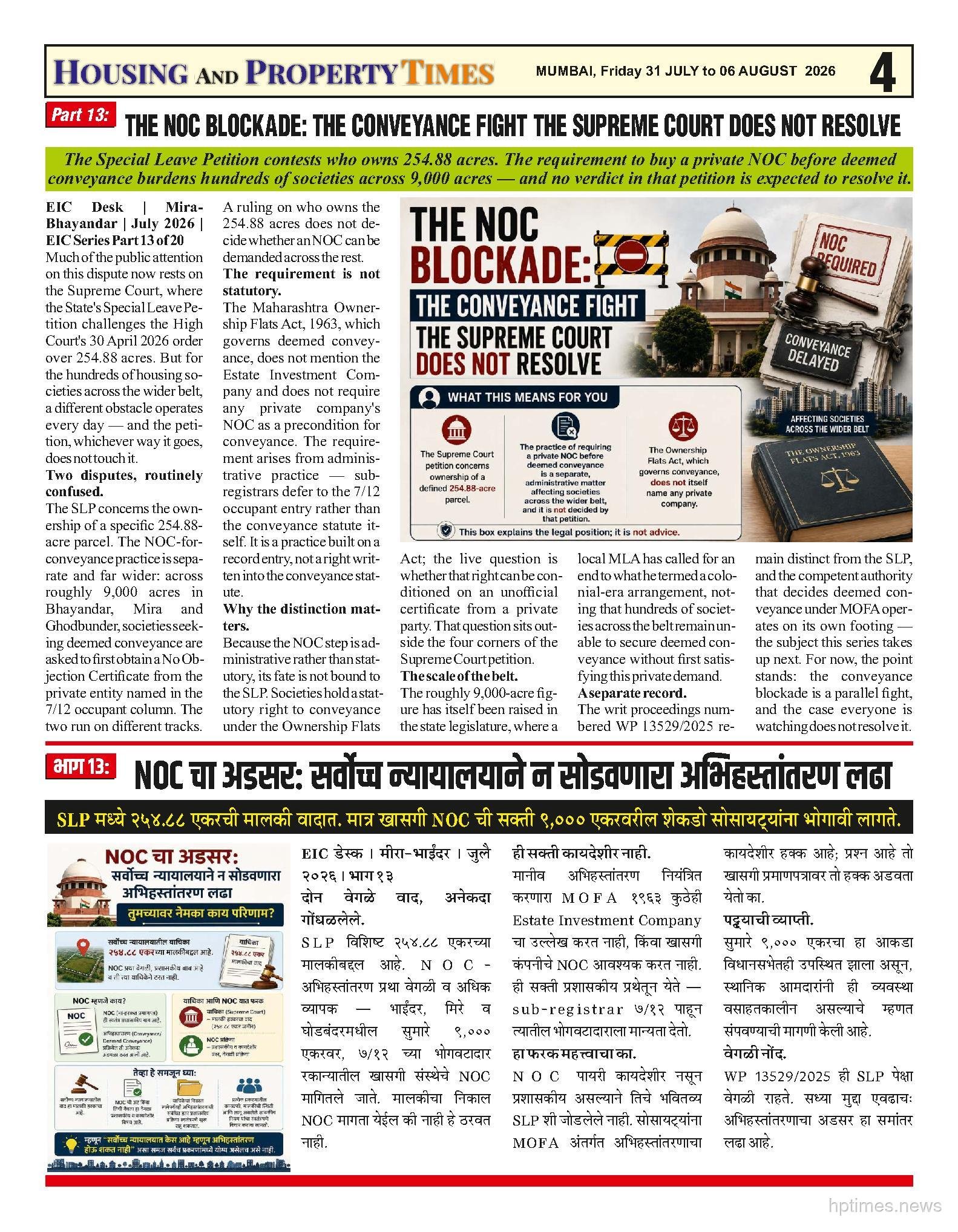
THE NOC BLOCKADE: THE CONVEYANCE FIGHT THE SUPREME COURT DOES NOT RESOLVE
Page 3
THE NOC BLOCKADE: THE CONVEYANCE FIGHT THE SUPREME COURT DOES NOT RESOLVE
 Page 4
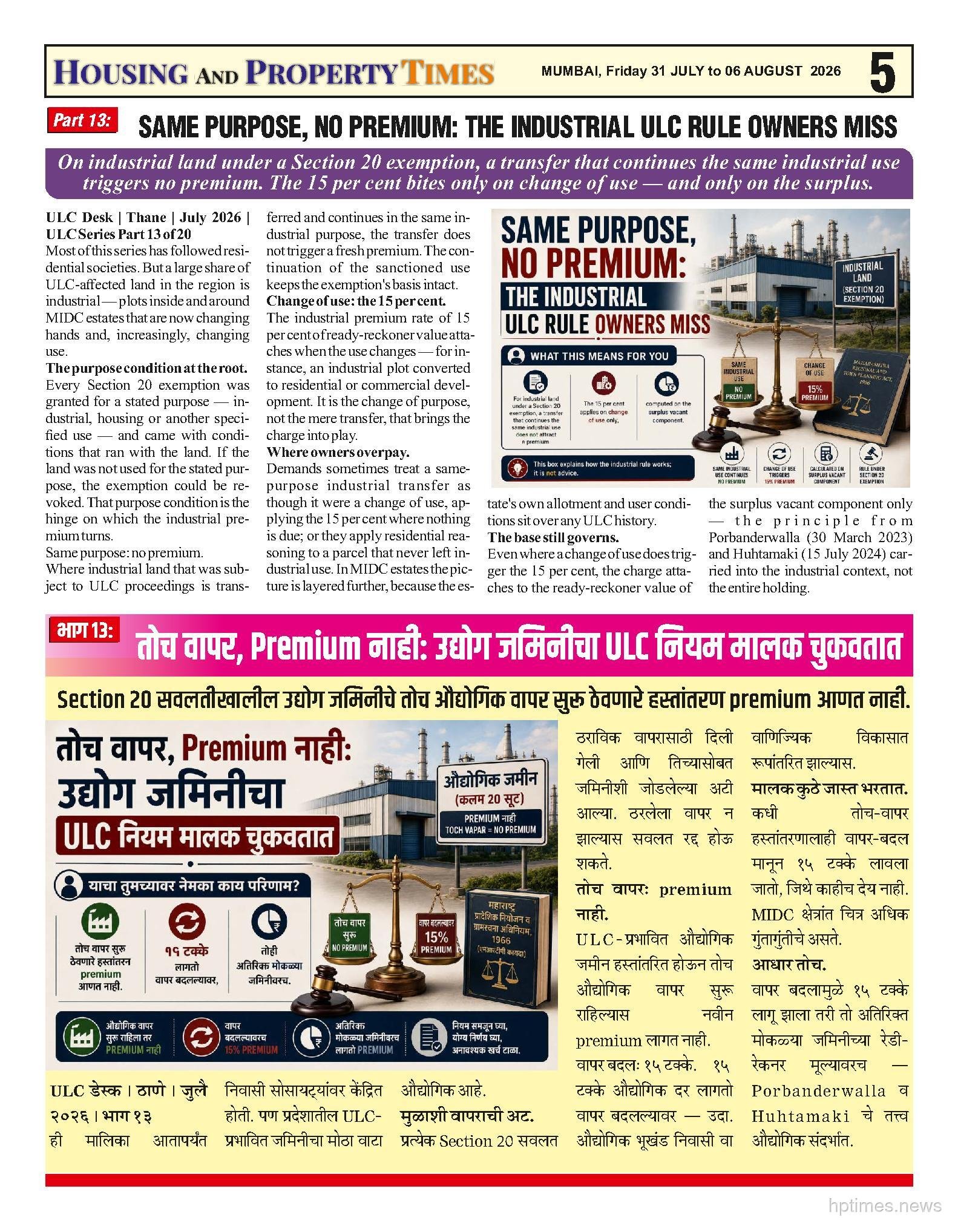
SAME PURPOSE, NO PREMIUM: THE INDUSTRIAL ULC RULE OWNERS MISS
Page 4
SAME PURPOSE, NO PREMIUM: THE INDUSTRIAL ULC RULE OWNERS MISS
 Page 5
WHO QUALIFIES: THE CUT-OFF, GOOD FAITH AND THE CRZ RED LINE
Page 5
WHO QUALIFIES: THE CUT-OFF, GOOD FAITH AND THE CRZ RED LINE
 Page 6
DEVELOPER CANNOT RESILE AFTER TAKING POSSESSION: SUPREME COURT
Page 6
DEVELOPER CANNOT RESILE AFTER TAKING POSSESSION: SUPREME COURT
Comments (0)