📖 View in Flipbook All editions
SAME PURPOSE, NO PREMIUM: THE INDUSTRIAL ULC RULE OWNERS MISS
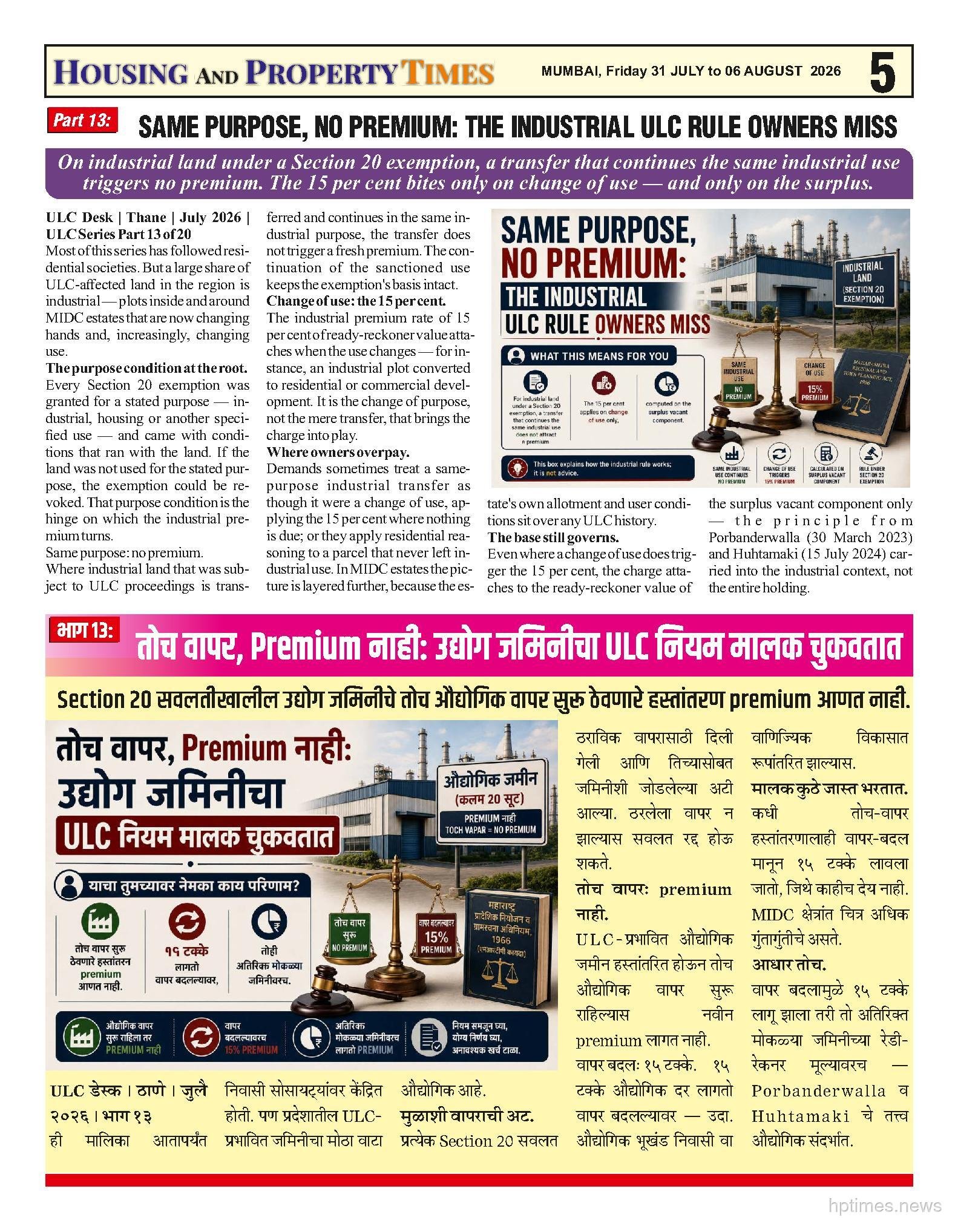
Most of this series has followed residential societies. But a large share of ULC-affected land in the region is industrial — plots inside and around MIDC estates that are now changing hands and, increasingly, changing use. Every Section 20 exemption was granted for a stated purpose — industrial, housing or another specified use — and came with conditions that ran with the land. If the land was not used for the stated purpose, the exemption could be revoked. That purpose condition is the hinge on which the industrial premium turns. Where industrial land that was subject to ULC proceedings is transferred and continues in the same industrial purpose, the transfer does not trigger a fresh premium. The continuation of the sanctioned use keeps the exemption's basis intact. The industrial premium rate of 15 per cent of ready-reckoner value attaches when the use changes — for instance, an industrial plot converted to residential or commercial development. It is the change of purpose, not the mere transfer, that brings the charge into play. Demands sometimes treat a same-purpose industrial transfer as though it were a change of use, applying the 15 per cent where nothing is due; or they apply residential reasoning to a parcel that never left industrial use. In MIDC estates the picture is layered further, because the estate's own allotment and user conditions sit over any ULC history. Even where a change of use does trigger the 15 per cent, the charge attaches to the ready-reckoner value of the surplus vacant component only — the principle from Porbanderwalla (30 March 2023) and Huhtamaki (15 July 2024) carried into the industrial context, not the entire holding.
React
More from this issue & web
 Page 1
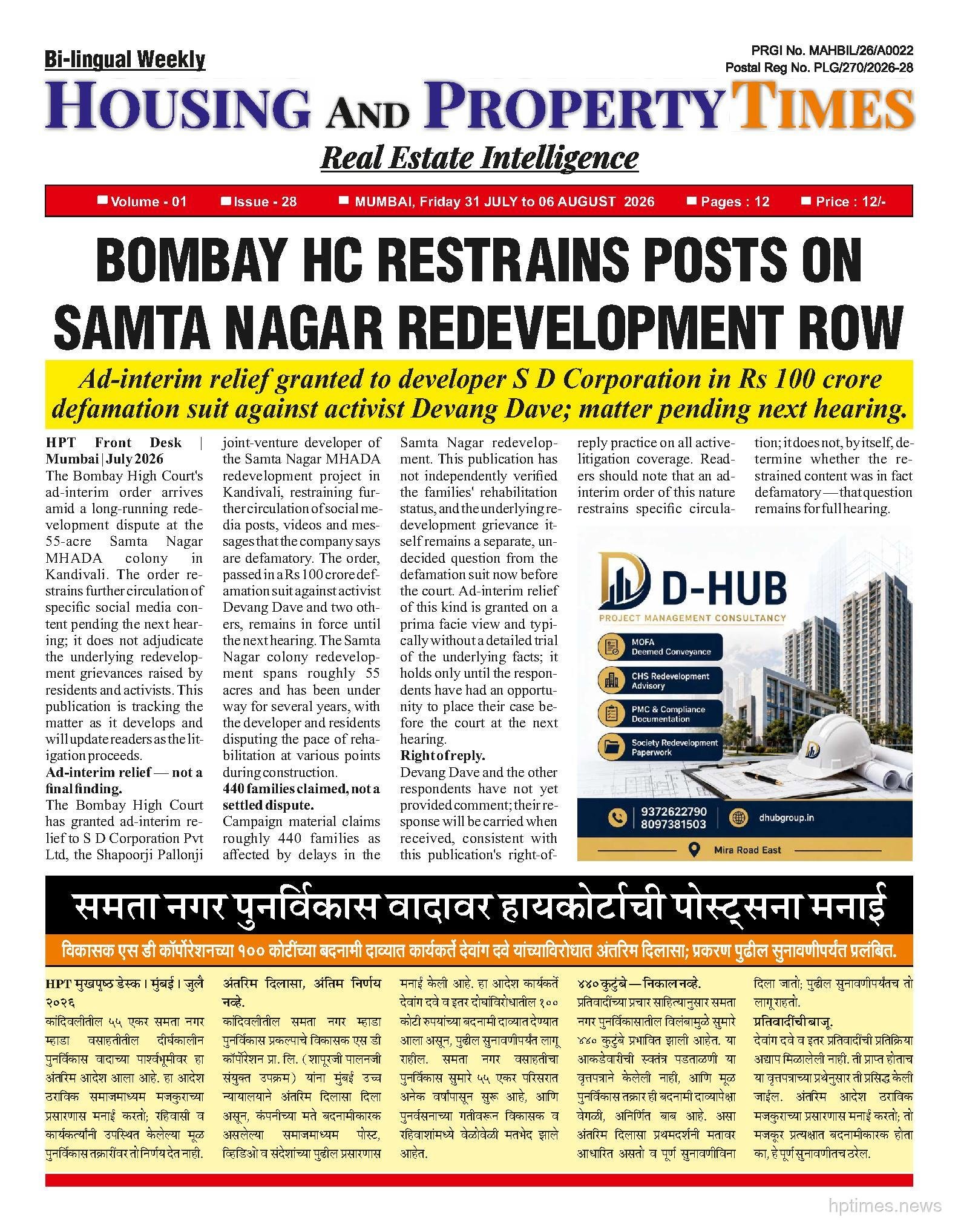
BOMBAY HC RESTRAINS POSTS ON SAMTA NAGAR REDEVELOPMENT ROW
Page 1
BOMBAY HC RESTRAINS POSTS ON SAMTA NAGAR REDEVELOPMENT ROW
 Page 2
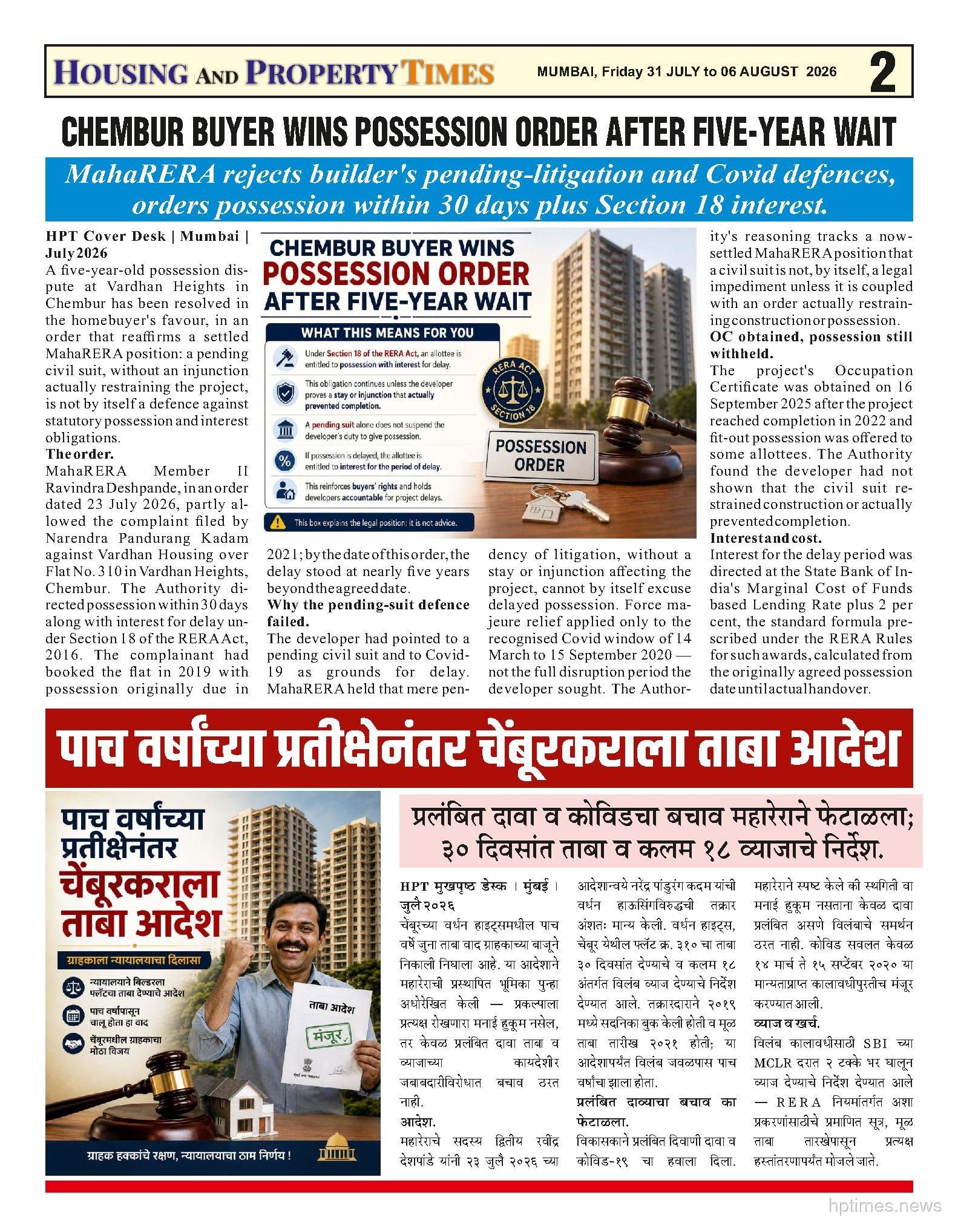
CHEMBUR BUYER WINS POSSESSION ORDER AFTER FIVE-YEAR WAIT
Page 2
CHEMBUR BUYER WINS POSSESSION ORDER AFTER FIVE-YEAR WAIT
 Page 3
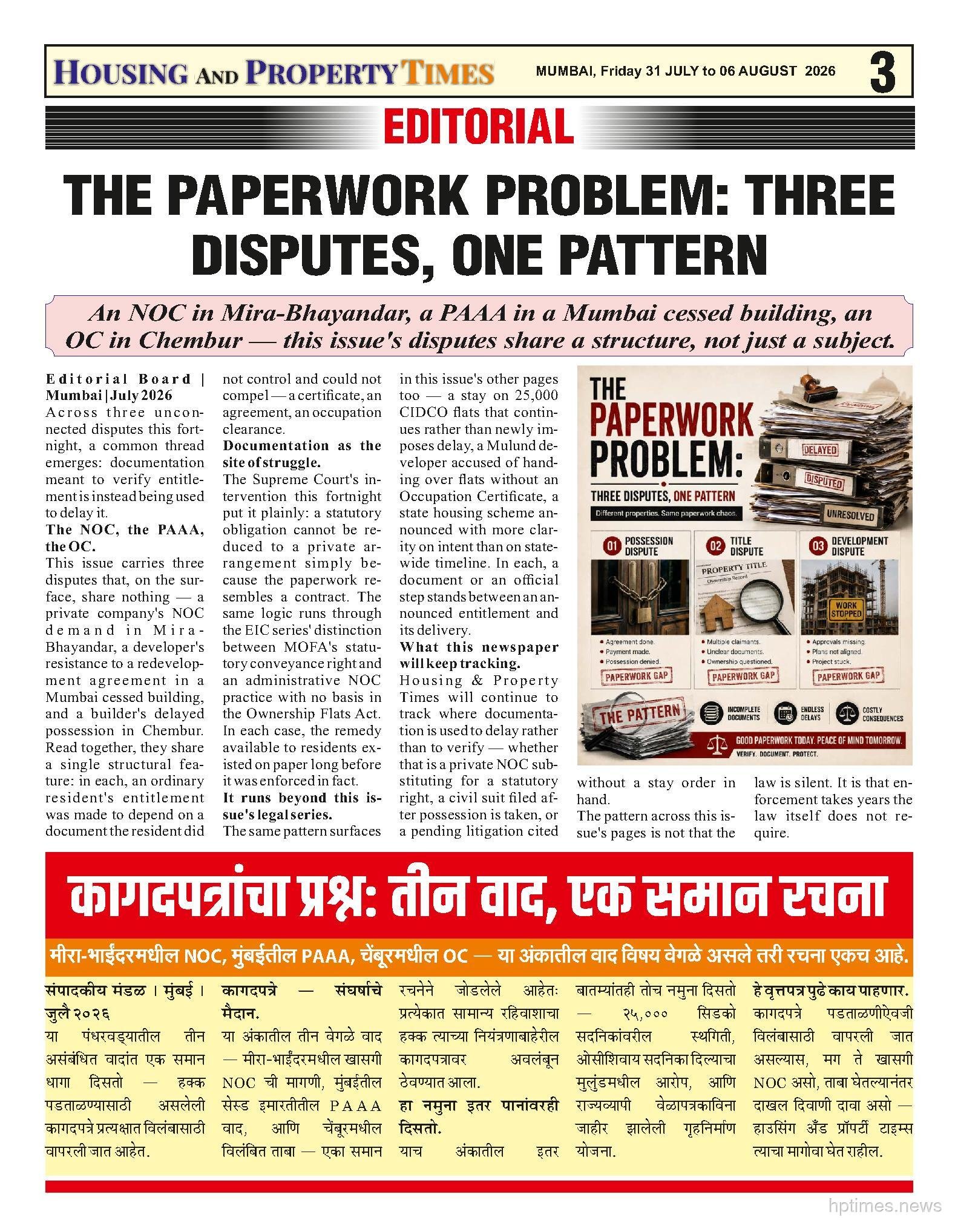
THE NOC BLOCKADE: THE CONVEYANCE FIGHT THE SUPREME COURT DOES NOT RESOLVE
Page 3
THE NOC BLOCKADE: THE CONVEYANCE FIGHT THE SUPREME COURT DOES NOT RESOLVE
 Page 5
WHO QUALIFIES: THE CUT-OFF, GOOD FAITH AND THE CRZ RED LINE
Page 5
WHO QUALIFIES: THE CUT-OFF, GOOD FAITH AND THE CRZ RED LINE
 Page 6
DEVELOPER CANNOT RESILE AFTER TAKING POSSESSION: SUPREME COURT
Page 6
DEVELOPER CANNOT RESILE AFTER TAKING POSSESSION: SUPREME COURT
 Page 7
THE PAPERWORK PROBLEM: THREE DISPUTES, ONE PATTERN
Page 7
THE PAPERWORK PROBLEM: THREE DISPUTES, ONE PATTERN
Comments (0)