📖 View in Flipbook All editions
AFTER THE ULC ENCUMBRANCE IS CLEARED: THE EXACT DOCUMENTATION SEQUENCE FOR DEEMED CONVEYANCE ON A DOUBLE-ENCUMBERED PLOT.
Step 1 — ULC Clearance Comes First The ULC encumbrance sits in revenue records — on the 7/12 extract, the property card, and the Index of Title. Clearing it requires the GR August 1, 2019 pathway: assessment of premium by the District Deputy Collector, payment of the assessed amount by challan, and formal application to the Tahsildar for deletion of the Section 20 remark. The documentation for this step is fixed: the original ULC exemption order (from the 1970s or 1980s depending on the property), the DDC assessment letter specifying the premium amount and the basis of calculation — with specific note of whether the Bombay HC March 30, 2023 ruling on surplus-only calculation was applied — the challan receipt, and the Tahsildar's written confirmation of application receipt with date. The GR is mandatory on the Tahsildar. The word used is 'shall' — not 'may.' Once premium payment is confirmed, the deletion is not discretionary. If the deletion is not effected within the expected timeline, the legal tool is a formal written representation citing the GR by exact date and subject line, specifying a 30-day deadline, and stating that non-compliance will be followed by a Writ Petition under Article 226 before the Bombay High Court. Part 7 documented two cases where this approach produced deletion within 19 days. Step 2 — Revenue Record Verification Before MOFA Filing Once the Tahsildar effects deletion, the updated 7/12 and property card must be physically obtained — not assumed. The remark deletion must appear in the official extract before the MOFA deemed conveyance application is filed. Filing deemed conveyance with a 7/12 that still reflects the old ULC remark — even if the Tahsildar has issued a deletion confirmation letter — gives the DDR office grounds to raise an objection and stall the proceedings. Step 3 — The EIC 7/12 Entry Is Addressed Through MOFA, Not Revenue The EIC entry is not a ULC remark. It is a revenue entry for fiscal purposes, reflecting the 2008 Collector Thane order on Superior Holder status. It does not extinguish flat owner rights under MOFA. The DDR-MOFA Competent Authority's jurisdiction is to verify MOFA compliance and grant deemed conveyance. Title disputes — including the EIC claim — belong in civil court, not in a MOFA proceeding. The documentation for the MOFA filing after ULC clearance: the updated 7/12 (showing remark deleted), the GR premium payment challan, the share certificates, the society registration certificate, the developer's default notice record, and the Competent Authority's jurisdiction statement as established in the counter-argument record developed through Parts 6–8 of this series. Attempting to resolve the ULC and the MOFA pathways simultaneously creates procedural confusion at both offices. The revenue office and the DDR office do not coordinate on pending applications. Sequential resolution is the only approach that allows each step to produce a clean document before the next step begins. KEY NUMBERS: GR Date: August 1, 2019. GR2 Date: June 23, 2021. Circular: January 12, 2022. HC Correction on Surplus: March 30, 2023 — Salim Alimahomed Porbanderwalla v. State of Maharashtra. Premium Rate (Residential): 13% of Ready Reckoner Rate on surplus vacant land. Premium Rate (Industrial): 15% of Ready Reckoner Rate on surplus vacant land. Premium Basis: Surplus vacant portion only — not the retainable area below ULC ceiling. Tahsildar Obligation: Mandatory upon confirmed payment — 'shall', not 'may'.
React
More from this issue & web
 Page 1
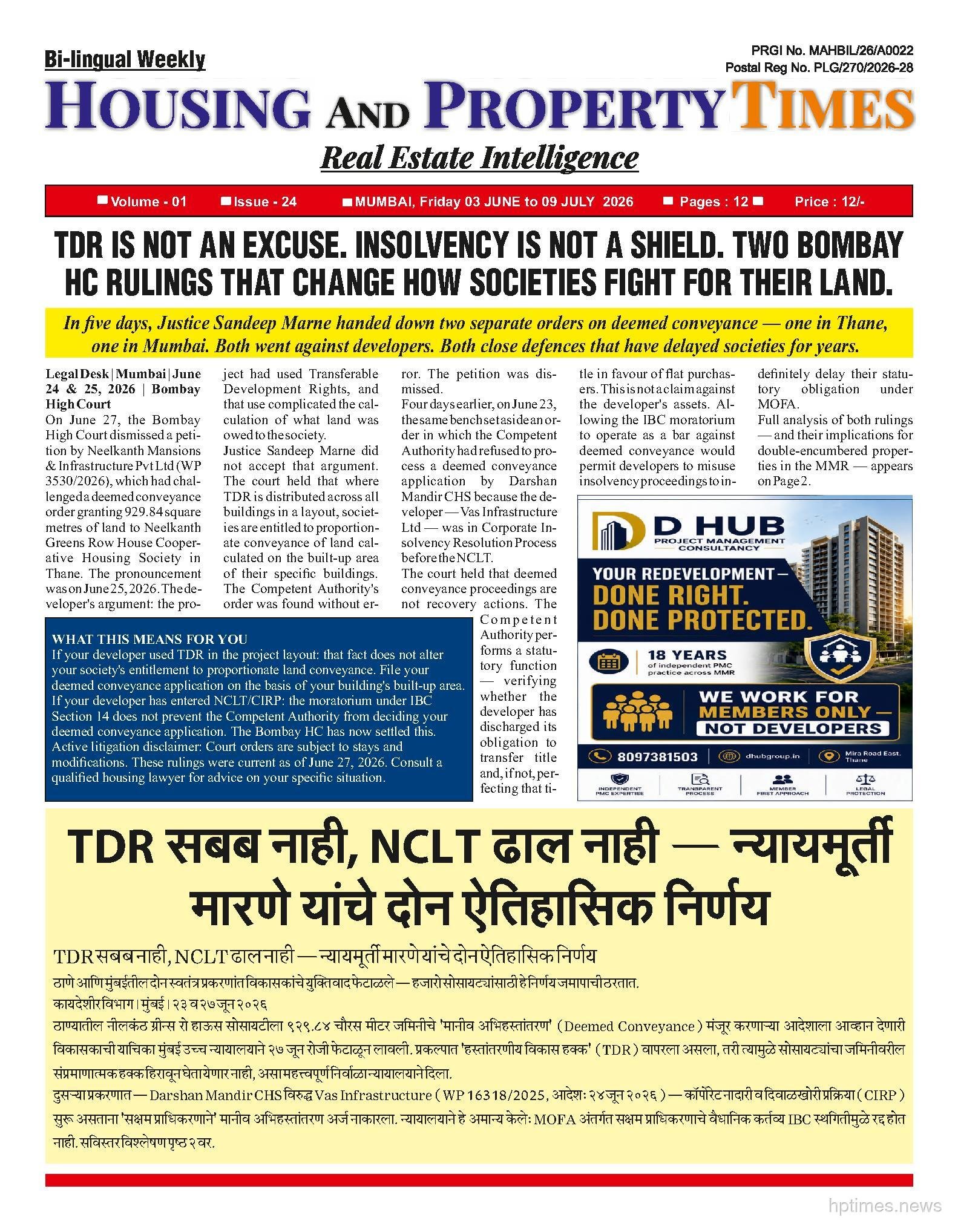
TDR IS NOT AN EXCUSE. INSOLVENCY IS NOT A SHIELD. TWO BOMBAY HC RULINGS THAT CHANGE HOW SOCIETIES FIGHT FOR THEIR LAND.
Page 1
TDR IS NOT AN EXCUSE. INSOLVENCY IS NOT A SHIELD. TWO BOMBAY HC RULINGS THAT CHANGE HOW SOCIETIES FIGHT FOR THEIR LAND.
 Page 2
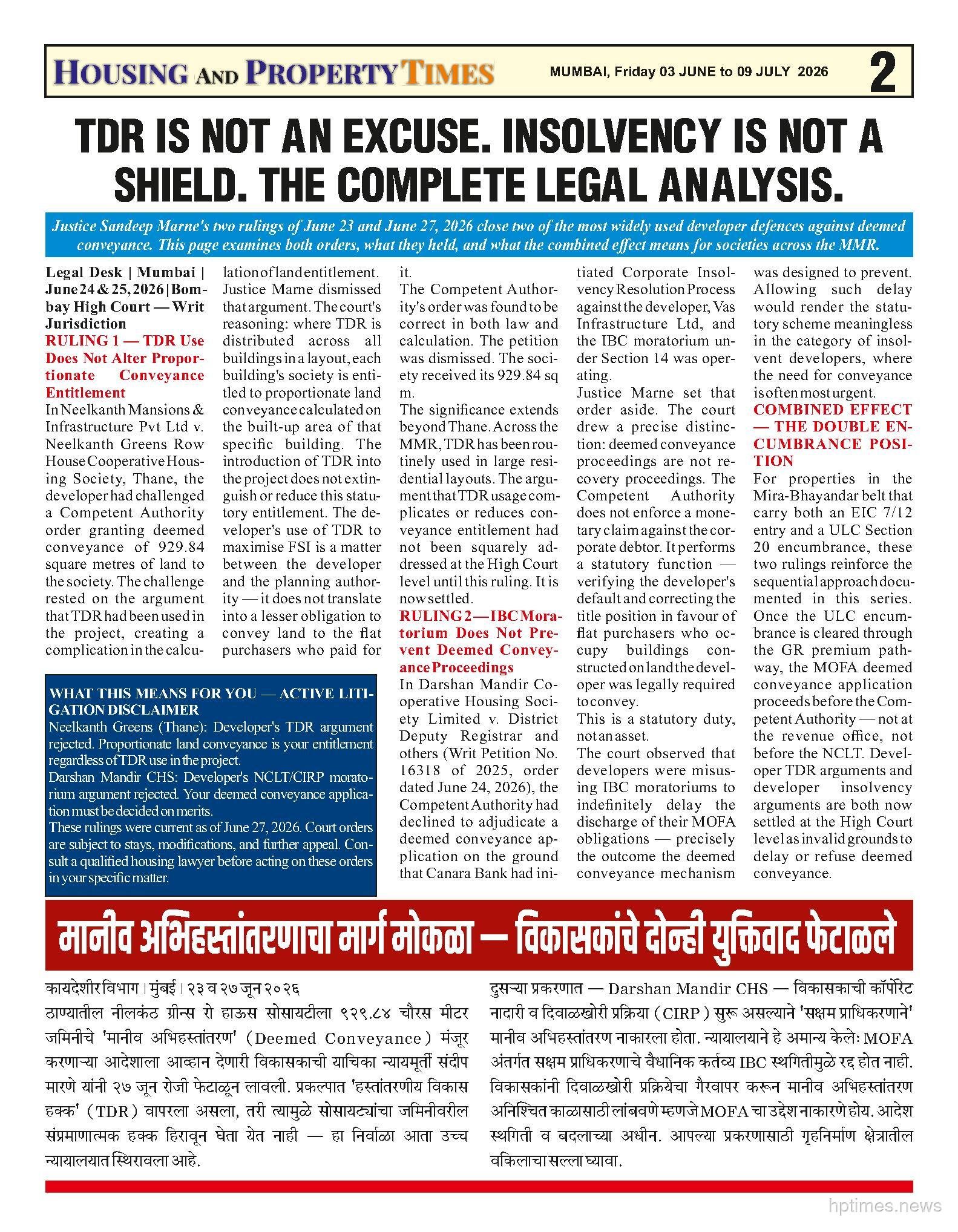
TDR IS NOT AN EXCUSE. INSOLVENCY IS NOT A SHIELD. THE COMPLETE LEGAL ANALYSIS.
Page 2
TDR IS NOT AN EXCUSE. INSOLVENCY IS NOT A SHIELD. THE COMPLETE LEGAL ANALYSIS.
 Page 3
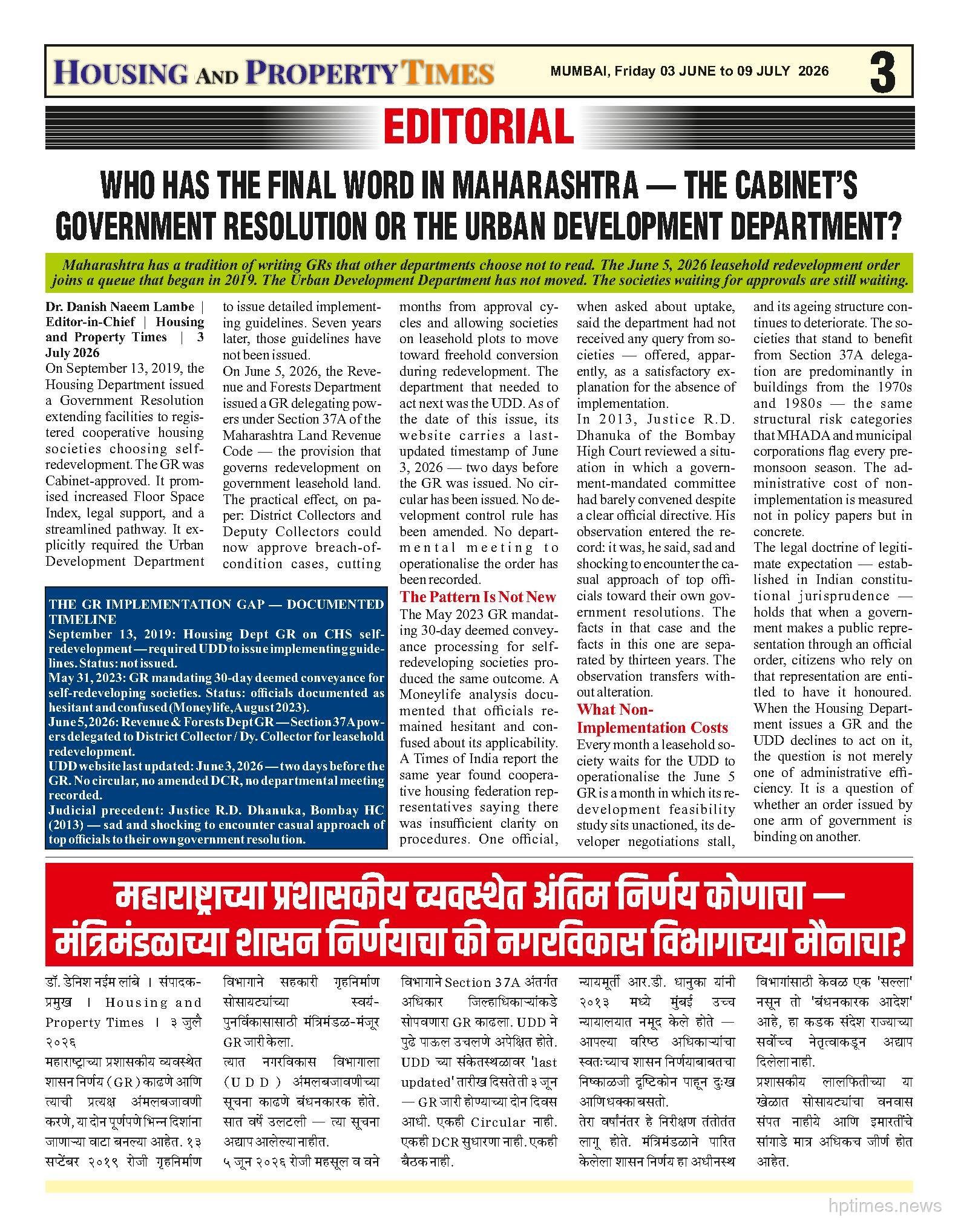
THE STATE MOVES. THE SUPREME COURT IS NOW THE BATTLEFIELD FOR 254.88 ACRES OF MIRA-BHAYANDAR.
Page 3
THE STATE MOVES. THE SUPREME COURT IS NOW THE BATTLEFIELD FOR 254.88 ACRES OF MIRA-BHAYANDAR.
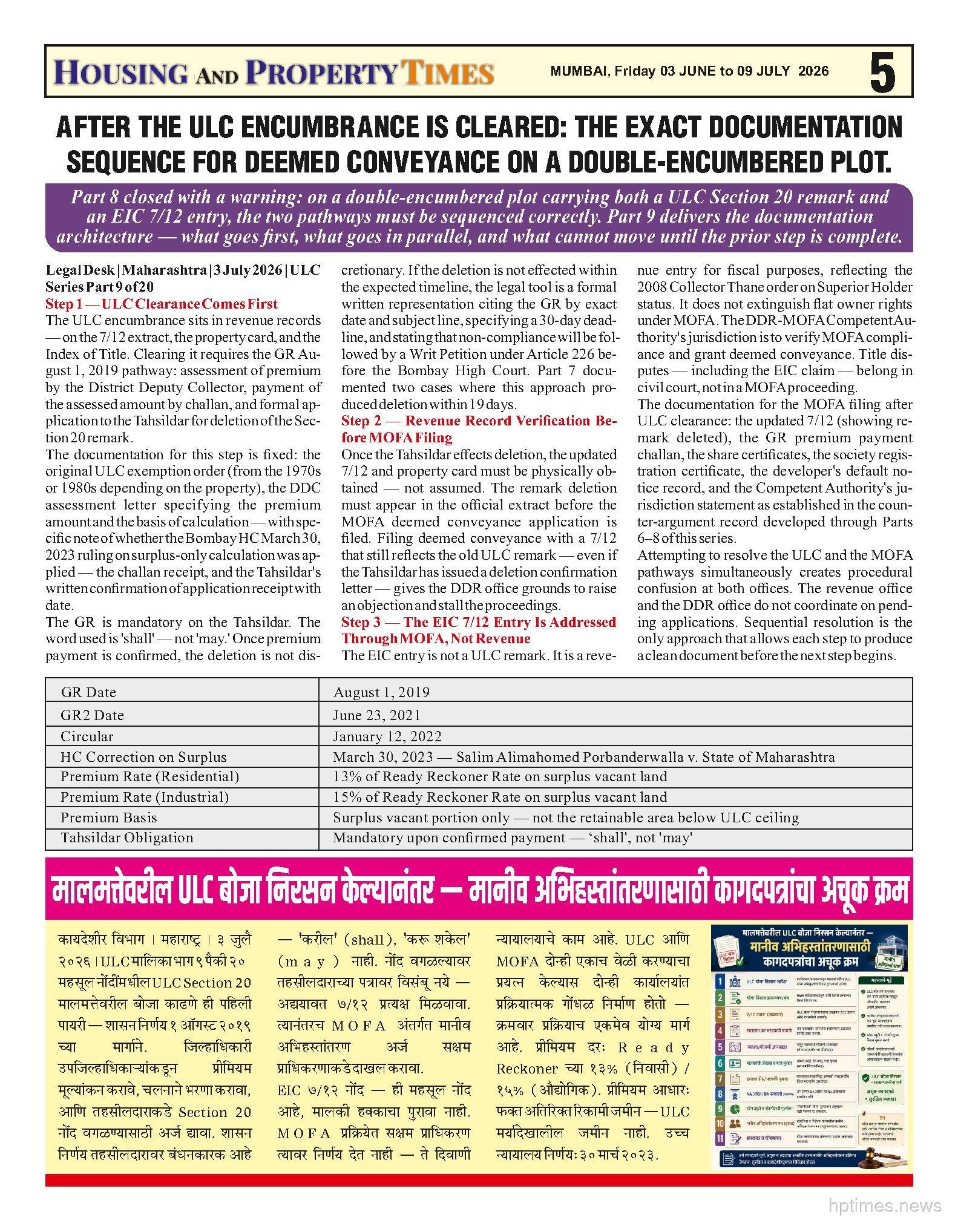 Page 5
KDMC APPROVED WHAT DID NOT EXIST. FAMILIES BOUGHT WHAT WAS NEVER LEGAL. NOW DELHI HAS A REHABILITATION FRAMEWORK. MAHARASHTRA DOES NOT.
Page 5
KDMC APPROVED WHAT DID NOT EXIST. FAMILIES BOUGHT WHAT WAS NEVER LEGAL. NOW DELHI HAS A REHABILITATION FRAMEWORK. MAHARASHTRA DOES NOT.
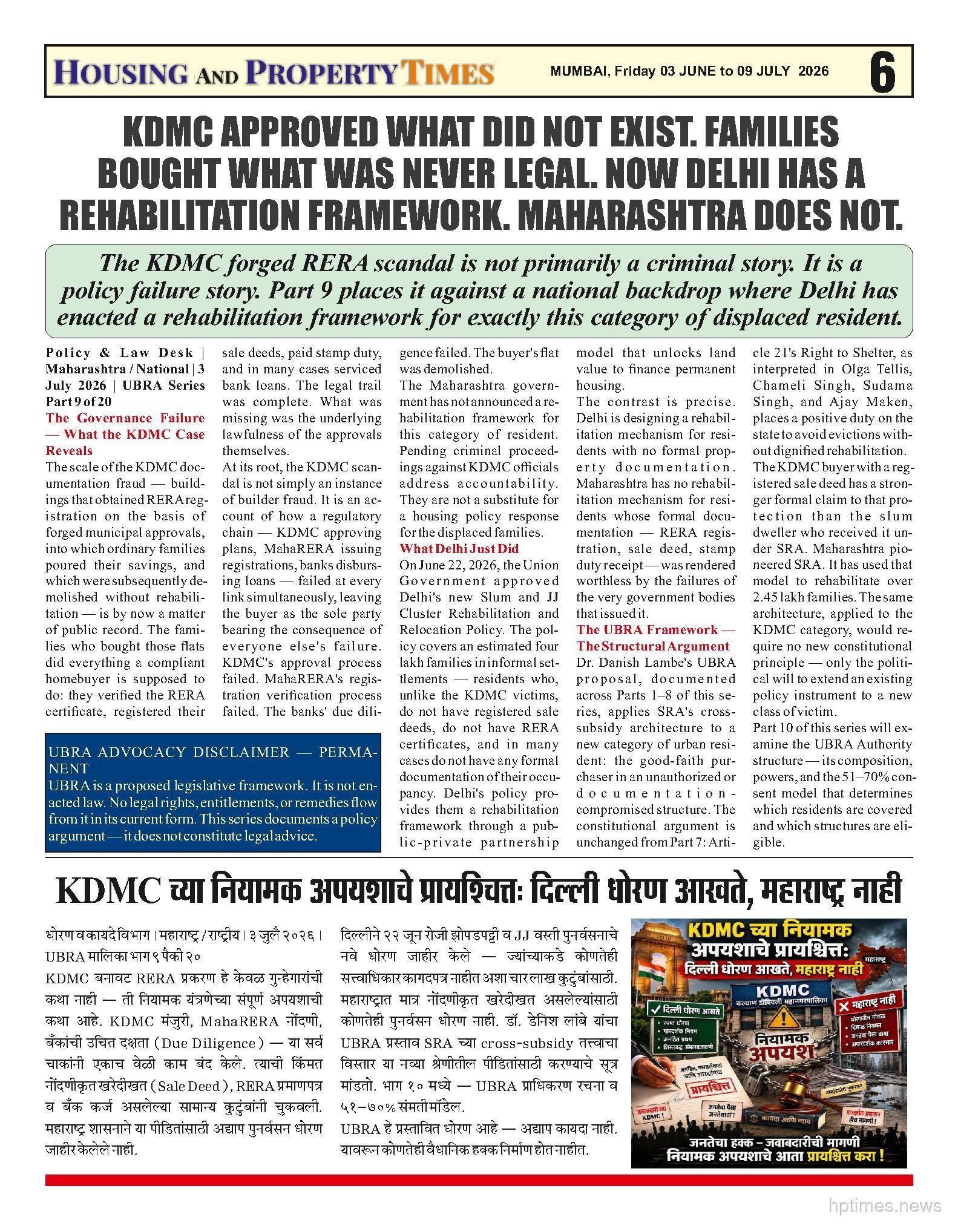 Page 6
THE DATE IN YOUR AGREEMENT IS THE DATE THAT COUNTS. NOT THE EXTENSION YOUR BUILDER OBTAINED ON THE PORTAL.
Page 6
THE DATE IN YOUR AGREEMENT IS THE DATE THAT COUNTS. NOT THE EXTENSION YOUR BUILDER OBTAINED ON THE PORTAL.
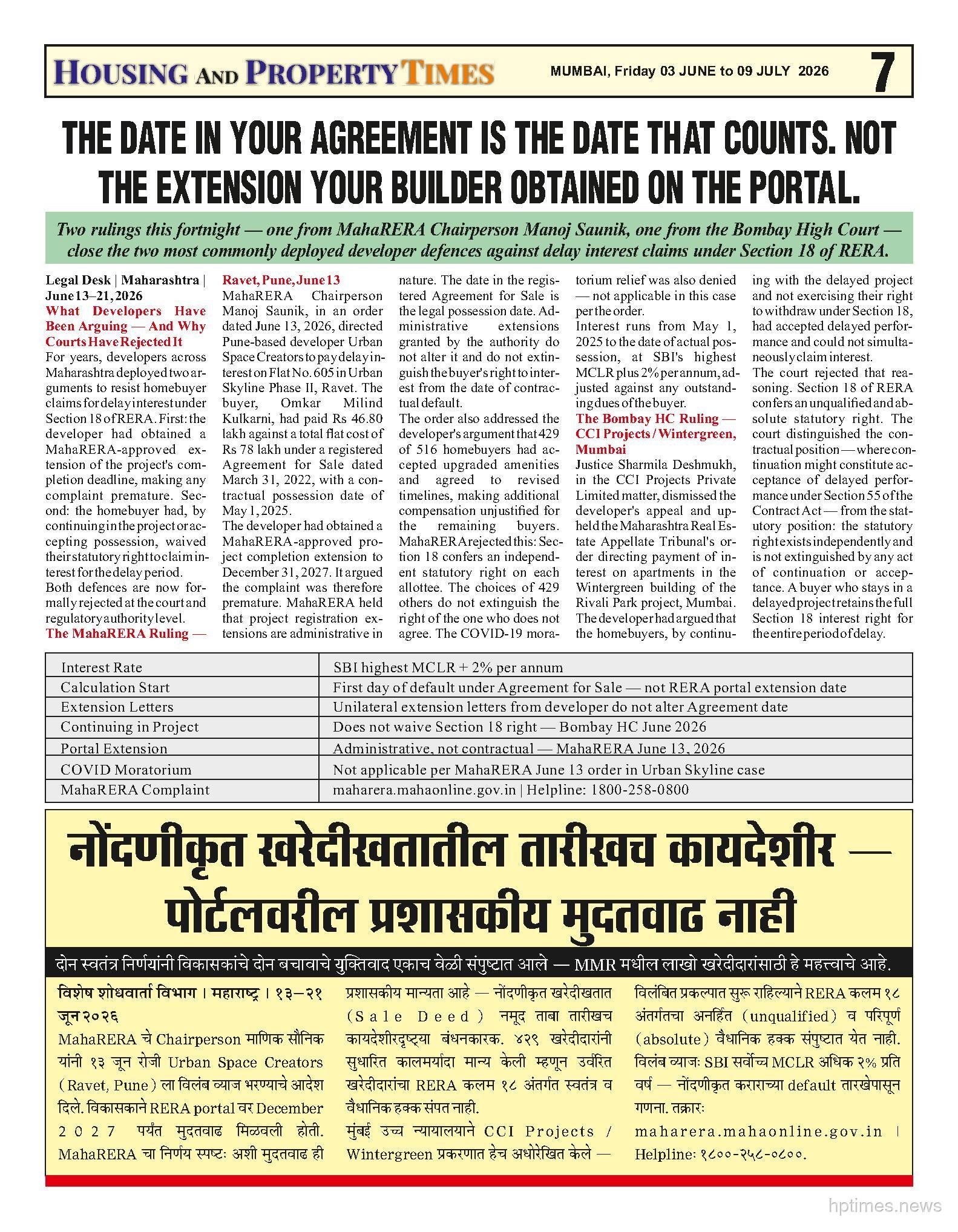 Page 7
WHO HAS THE FINAL WORD IN MAHARASHTRA — THE CABINET'S GOVERNMENT RESOLUTION OR THE URBAN DEVELOPMENT DEPARTMENT?
Page 7
WHO HAS THE FINAL WORD IN MAHARASHTRA — THE CABINET'S GOVERNMENT RESOLUTION OR THE URBAN DEVELOPMENT DEPARTMENT?
Comments (0)