📖 View in Flipbook All editions
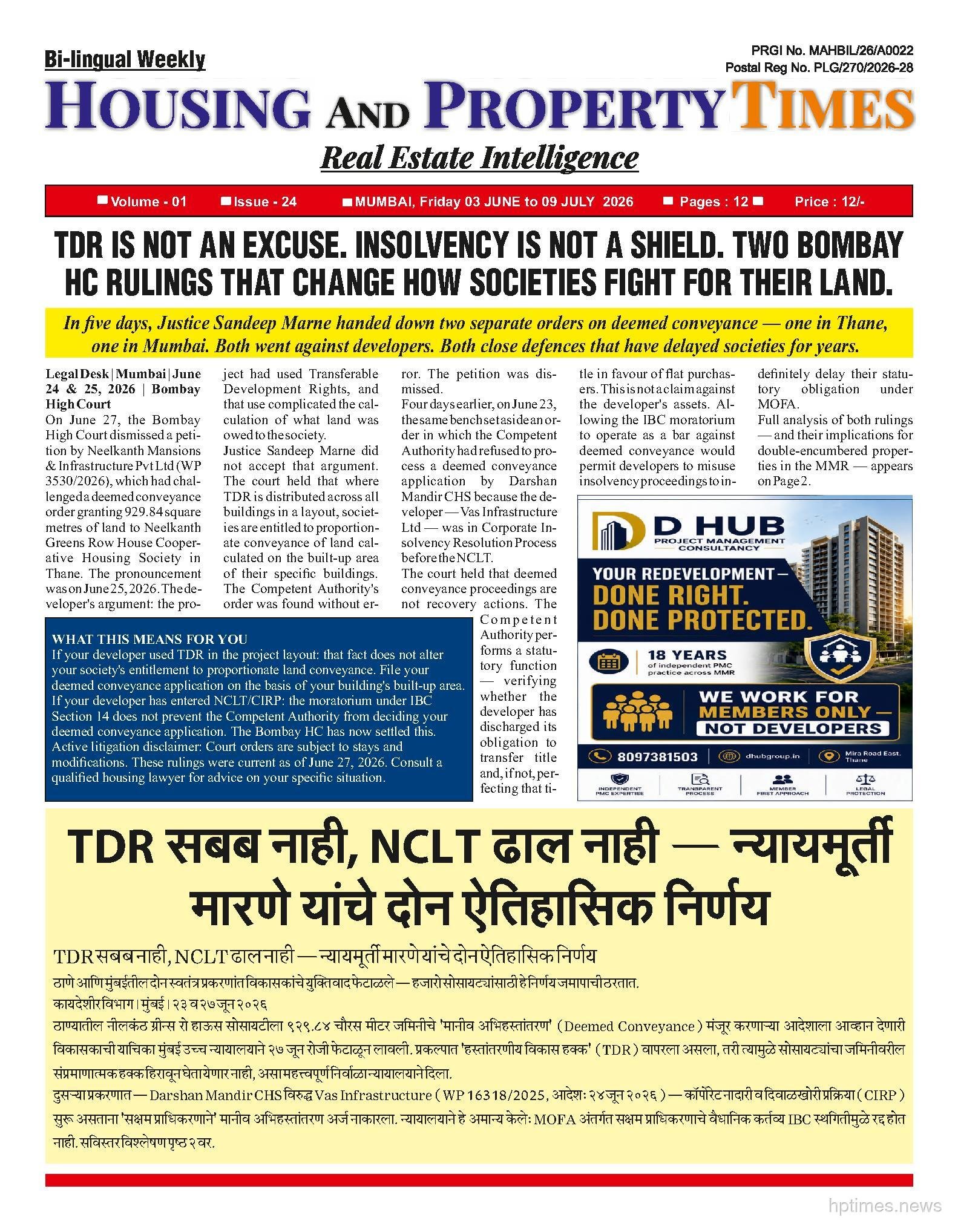
TDR IS NOT AN EXCUSE. INSOLVENCY IS NOT A SHIELD. TWO BOMBAY HC RULINGS THAT CHANGE HOW SOCIETIES FIGHT FOR THEIR LAND.
On June 25, 2026, the Bombay High Court dismissed a petition by Neelkanth Mansions & Infrastructure Pvt Ltd (WP 3530/2026), which had challenged a deemed conveyance order granting 929.84 square metres of land to Neelkanth Greens Row House Cooperative Housing Society in Thane. The pronouncement was on June 25, 2026. The developer's argument: the project had used Transferable Development Rights, and that use complicated the calculation of what land was owed to the society. Justice Sandeep Marne did not accept that argument. The court held that where TDR is distributed across all buildings in a layout, societies are entitled to proportionate conveyance of land calculated on the built-up area of their specific buildings. The Competent Authority's order was found without error. The petition was dismissed. Four days earlier, on June 24, 2026, the same bench set aside an order in Darshan Mandir CHS v. DDR (WP 16318/2025) in which the Competent Authority had refused to process a deemed conveyance application by Darshan Mandir CHS because the developer — Vas Infrastructure Ltd — was in Corporate Insolvency Resolution Process before the NCLT. The court held that deemed conveyance proceedings are not recovery actions. The Competent Authority performs a statutory function — verifying whether the developer has discharged its obligation to transfer title and, if not, perfecting that title in favour of flat purchasers. This is not a claim against the developer's assets. Allowing the IBC moratorium to operate as a bar against deemed conveyance would permit developers to misuse insolvency proceedings to indefinitely delay their statutory obligation under MOFA. Full analysis of both rulings — and their implications for double-encumbered properties in the MMR — appears on Page 2.
React
More from this issue & web
 Page 2
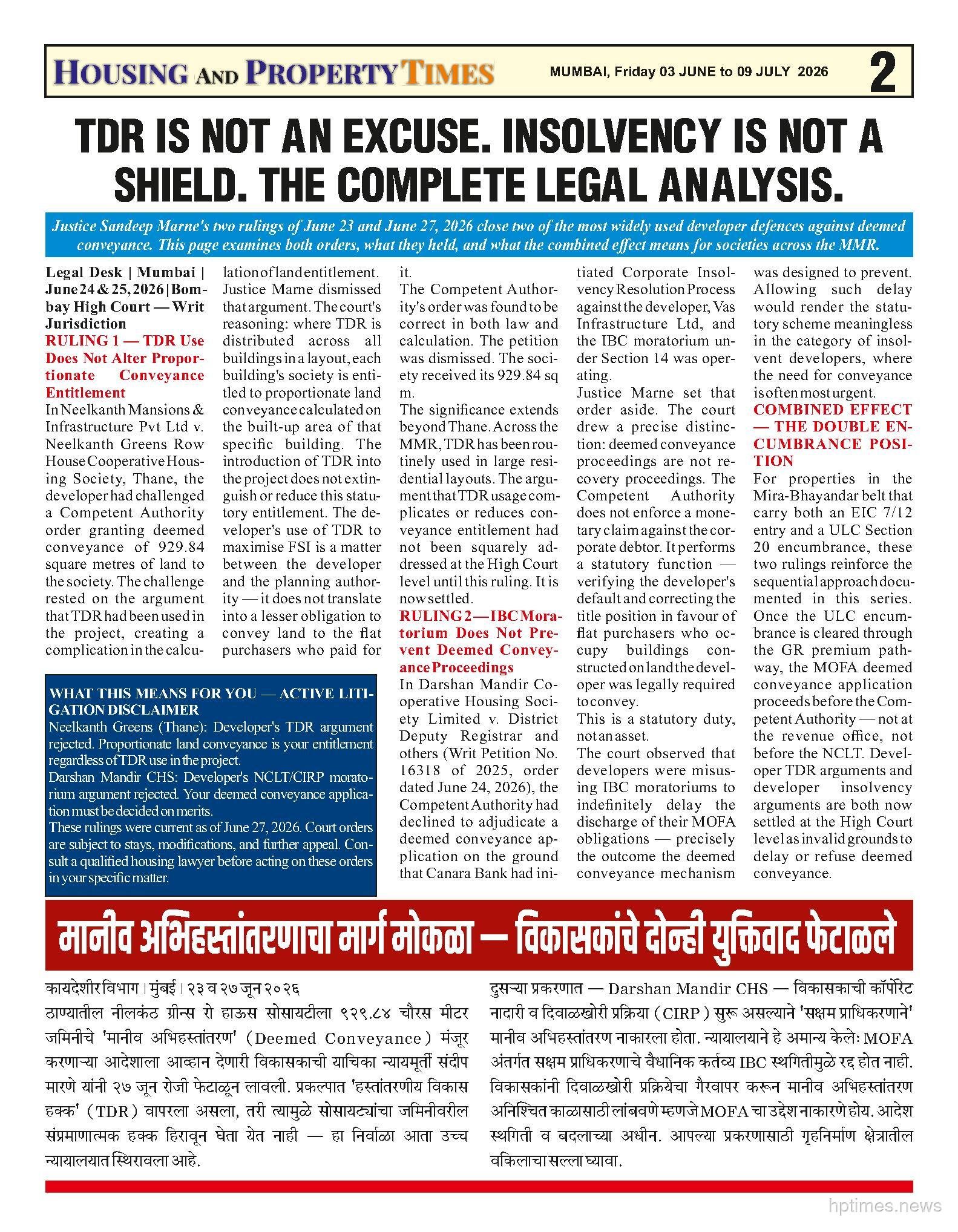
TDR IS NOT AN EXCUSE. INSOLVENCY IS NOT A SHIELD. THE COMPLETE LEGAL ANALYSIS.
Page 2
TDR IS NOT AN EXCUSE. INSOLVENCY IS NOT A SHIELD. THE COMPLETE LEGAL ANALYSIS.
 Page 3
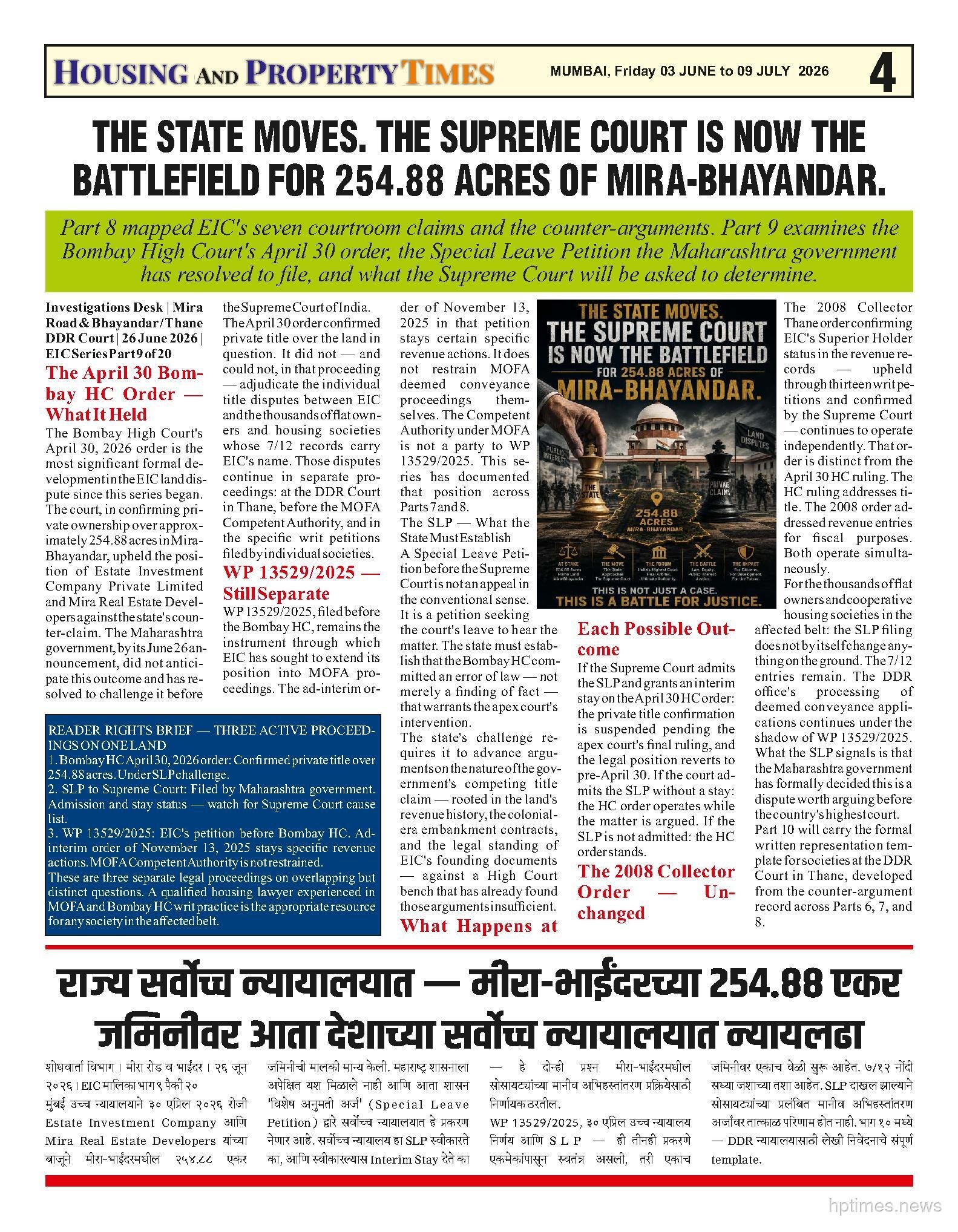
THE STATE MOVES. THE SUPREME COURT IS NOW THE BATTLEFIELD FOR 254.88 ACRES OF MIRA-BHAYANDAR.
Page 3
THE STATE MOVES. THE SUPREME COURT IS NOW THE BATTLEFIELD FOR 254.88 ACRES OF MIRA-BHAYANDAR.
 Page 4
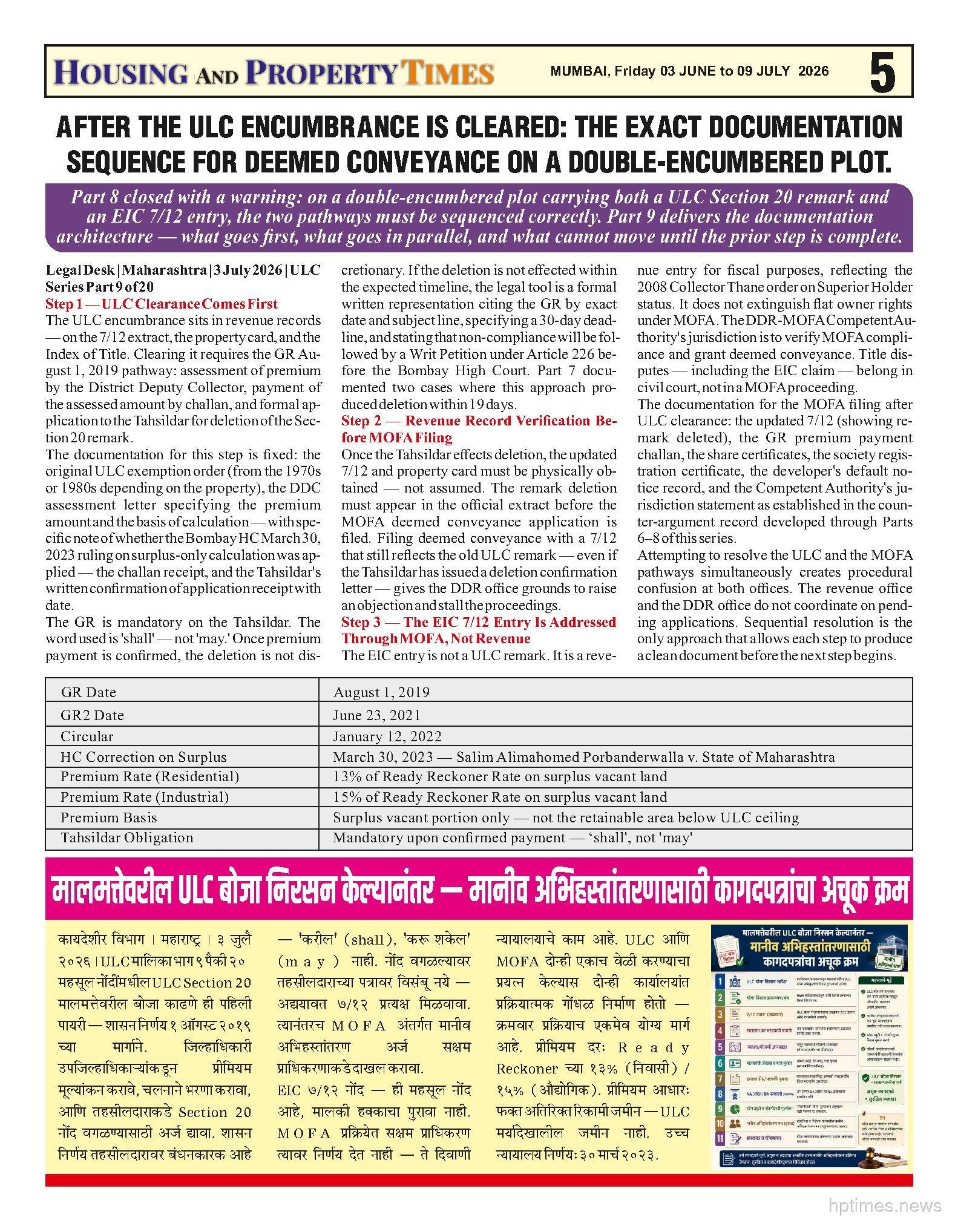
AFTER THE ULC ENCUMBRANCE IS CLEARED: THE EXACT DOCUMENTATION SEQUENCE FOR DEEMED CONVEYANCE ON A DOUBLE-ENCUMBERED PLOT.
Page 4
AFTER THE ULC ENCUMBRANCE IS CLEARED: THE EXACT DOCUMENTATION SEQUENCE FOR DEEMED CONVEYANCE ON A DOUBLE-ENCUMBERED PLOT.
 Page 5
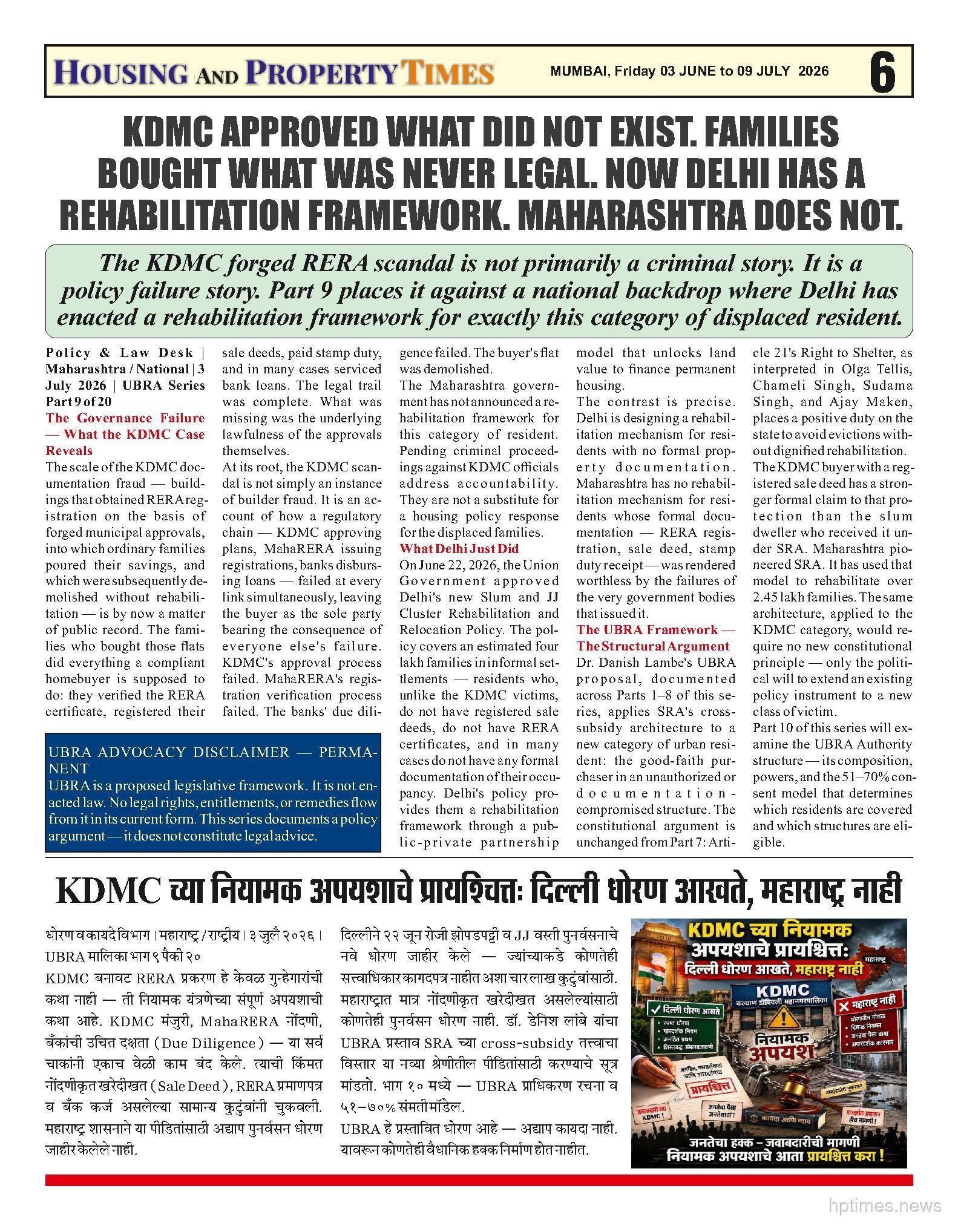
KDMC APPROVED WHAT DID NOT EXIST. FAMILIES BOUGHT WHAT WAS NEVER LEGAL. NOW DELHI HAS A REHABILITATION FRAMEWORK. MAHARASHTRA DOES NOT.
Page 5
KDMC APPROVED WHAT DID NOT EXIST. FAMILIES BOUGHT WHAT WAS NEVER LEGAL. NOW DELHI HAS A REHABILITATION FRAMEWORK. MAHARASHTRA DOES NOT.
 Page 6
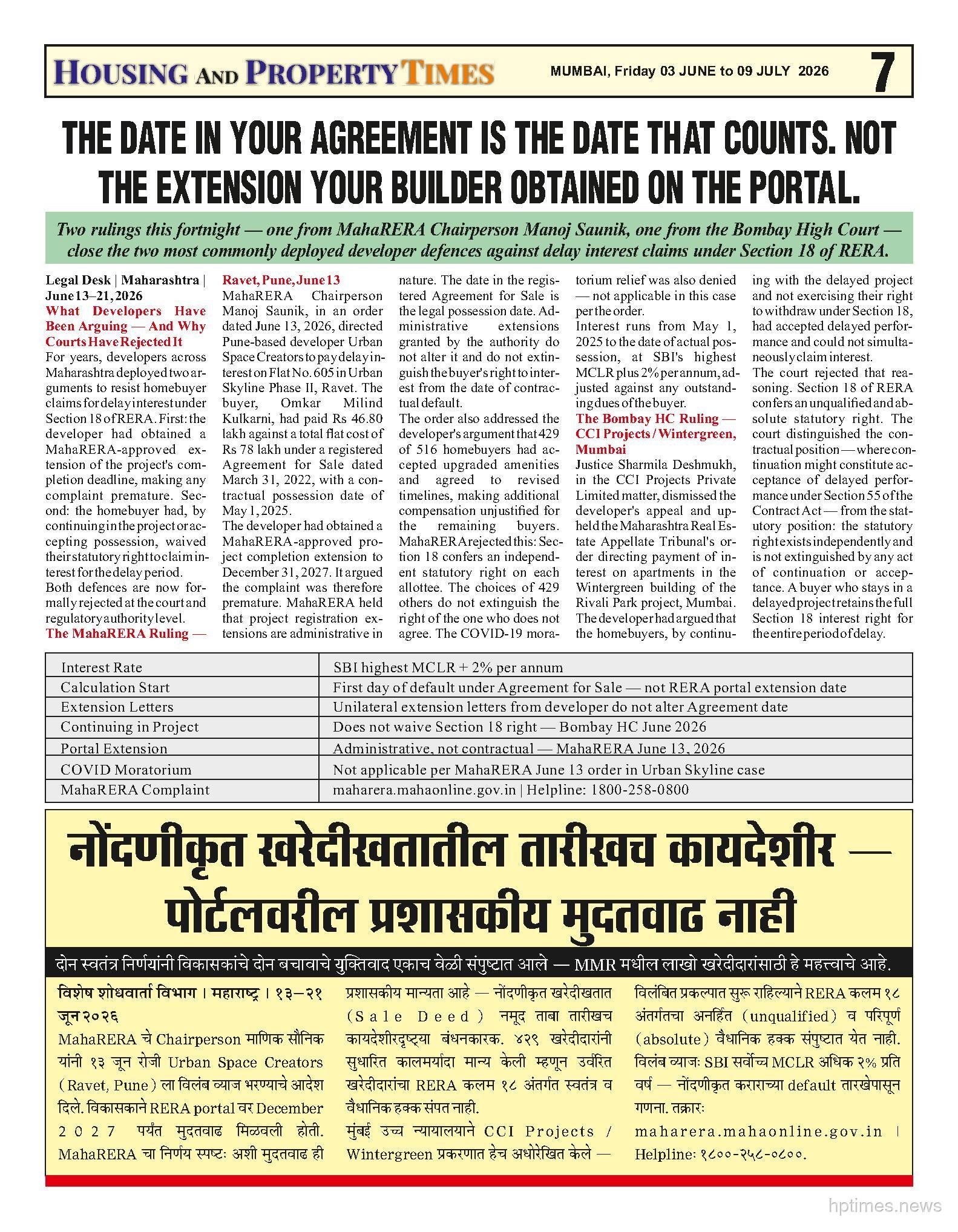
THE DATE IN YOUR AGREEMENT IS THE DATE THAT COUNTS. NOT THE EXTENSION YOUR BUILDER OBTAINED ON THE PORTAL.
Page 6
THE DATE IN YOUR AGREEMENT IS THE DATE THAT COUNTS. NOT THE EXTENSION YOUR BUILDER OBTAINED ON THE PORTAL.
 Page 7
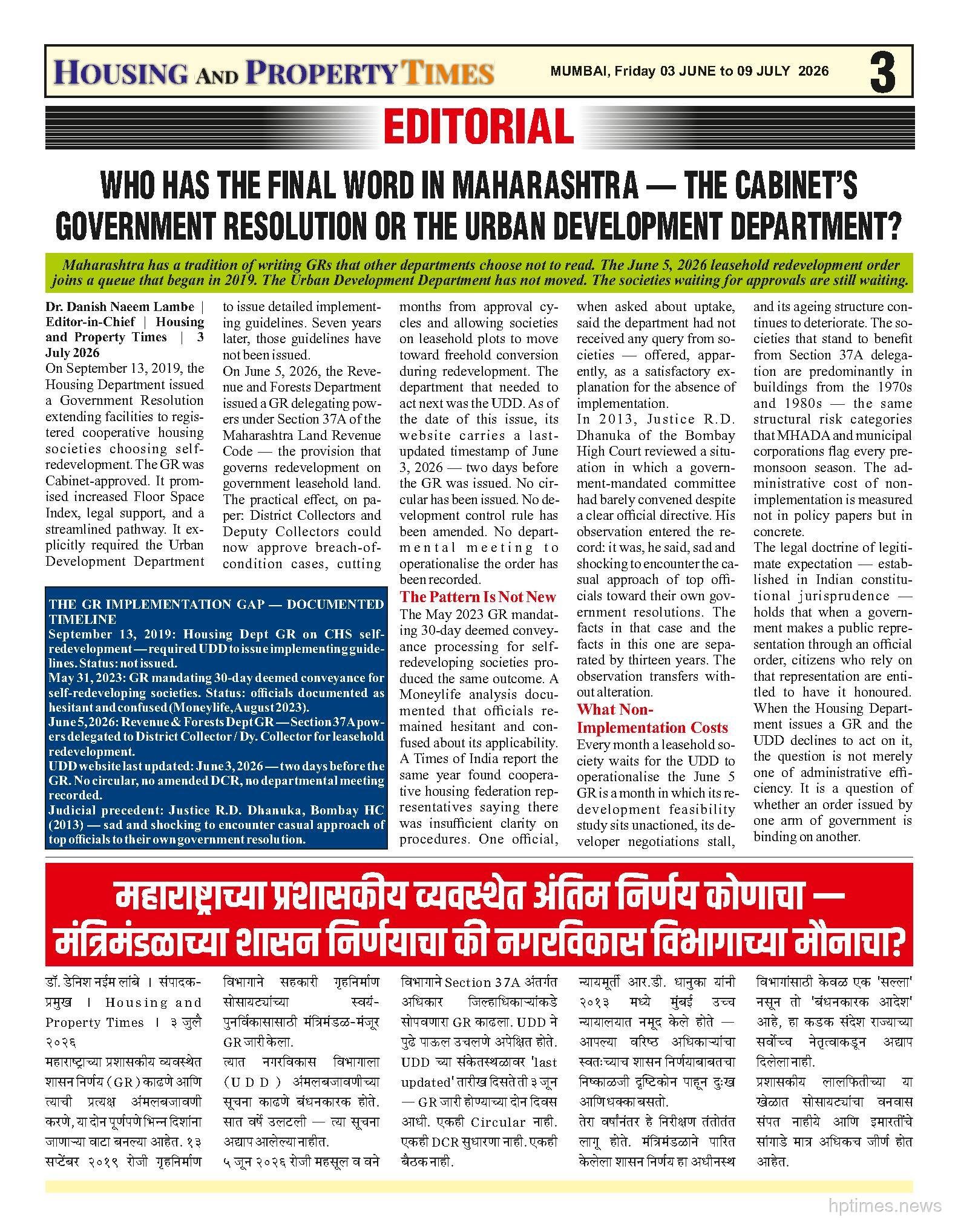
WHO HAS THE FINAL WORD IN MAHARASHTRA — THE CABINET'S GOVERNMENT RESOLUTION OR THE URBAN DEVELOPMENT DEPARTMENT?
Page 7
WHO HAS THE FINAL WORD IN MAHARASHTRA — THE CABINET'S GOVERNMENT RESOLUTION OR THE URBAN DEVELOPMENT DEPARTMENT?
Comments (0)