📖 View in Flipbook All editions
WHO WOULD RUN UBRA — AND HOW MANY RESIDENTS MUST SAY YES
UBRA कोण चालवणार आणि किती रहिवाशांची संमती लागणार? HPT LEGAL DESK | ANALYSIS Every demolition season revives the same question: who decides, and on whose consent? The proposed Unauthorised Buildings Rehabilitation Authority — UBRA — answers both by borrowing the architecture that has already housed over 2.45 lakh families through Maharashtra's Slum Rehabilitation Authority, and adapting it to residents who bought, in good faith, into buildings later found unlawful. Under the framework this series has been building part by part, UBRA could stand as its own statute or as an amendment to the SRA Act. It would establish a dedicated Authority with a governing body chaired by the Chief Minister or the Housing Minister, drawing members from the Housing, Urban Development, Revenue, Environment, Finance and Planning departments, alongside representatives of civil society. A Chief Executive Officer would run administrative divisions mapped to the state's major regions — Mumbai and the MMR, Pune, Nashik, Nagpur and Marathwada — mirroring how the SRA itself is organised for scale. The pivot point, as in slum rehabilitation, is consent. The proposal would require between 51% and 70% of a building's affected homeowners to agree before its rehabilitation plan can proceed — a band calibrated deliberately: high enough to demonstrate genuine buy-in from the residents concerned, low enough that a small block of hold-outs cannot freeze the majority indefinitely. Once that threshold is crossed, residents would form a cooperative housing society, which becomes the project's legal proponent in place of the informal or unauthorised structure that existed before. From there, the mechanics follow the SRA playbook closely. On identification of an eligible building, a moratorium on demolition would take effect while the Authority surveys the structure, verifies documentation and prepares a rehabilitation plan in consultation with residents. A developer would then be appointed — either through competitive bidding or self-development with technical assistance — and the Authority would sanction the additional Floor Space Index that finances the scheme, issuing commencement and occupation certificates that override other local approvals to keep the process moving. A dedicated tribunal would hear residents' grievances over wrongful exclusion from the eligible list, construction quality, or delay, with a requirement that its decisions be transparent and reasoned. The financing logic is what makes the scheme viable without a direct fiscal burden on the state: additional FSI is the currency of rehabilitation. For every square foot of free rehabilitation housing built, the developer earns a corresponding entitlement of square footage to sell on the open market — the same cross-subsidy that has funded slum rehabilitation projects across the state since 1995. Whether that ratio proves generous enough to attract serious developers to unauthorised-building sites, which are often smaller and more legally tangled than slum parcels, is a question this series will return to in a later part on the financial model. It bears repeating, as it will in every instalment of this series: UBRA does not exist in law today. This is a proposed framework being argued for in these pages, drawing on the SRA's record and on documented crises — including the 2025 Kalyan-Dombivli scandal, where 65 buildings were found to have been constructed using forged RERA certificates, affecting an estimated 6,500 homebuyers who had no way of knowing the paperwork was false. Readers should treat every entitlement, consent figure and safeguard described here as advocacy for a future law, not as a right that exists today.
React
More from this issue & web
 Page 1
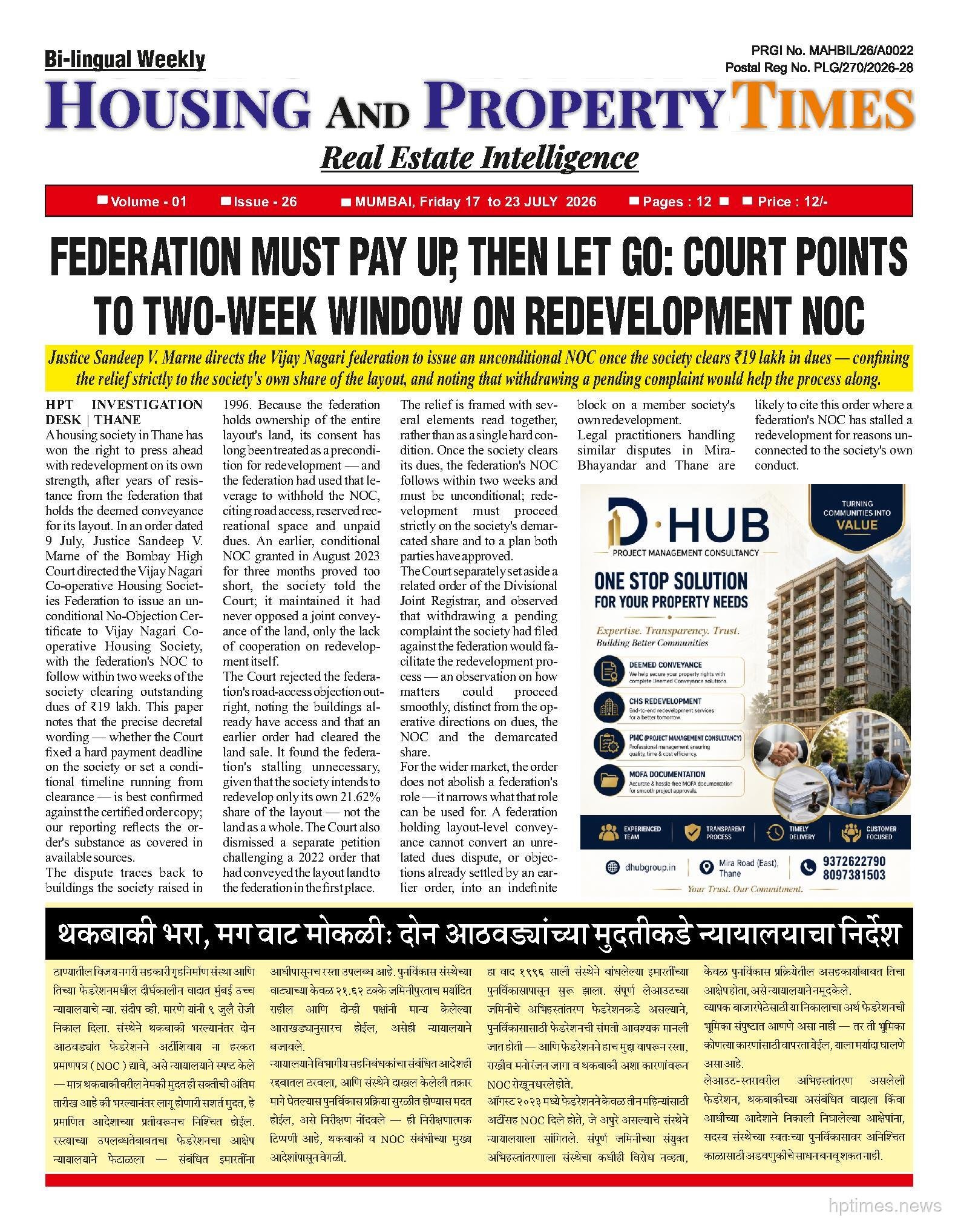
FEDERATION MUST PAY UP, THEN LET GO: COURT POINTS TO TWO-WEEK WINDOW ON REDEVELOPMENT NOC
Page 1
FEDERATION MUST PAY UP, THEN LET GO: COURT POINTS TO TWO-WEEK WINDOW ON REDEVELOPMENT NOC
 Page 2
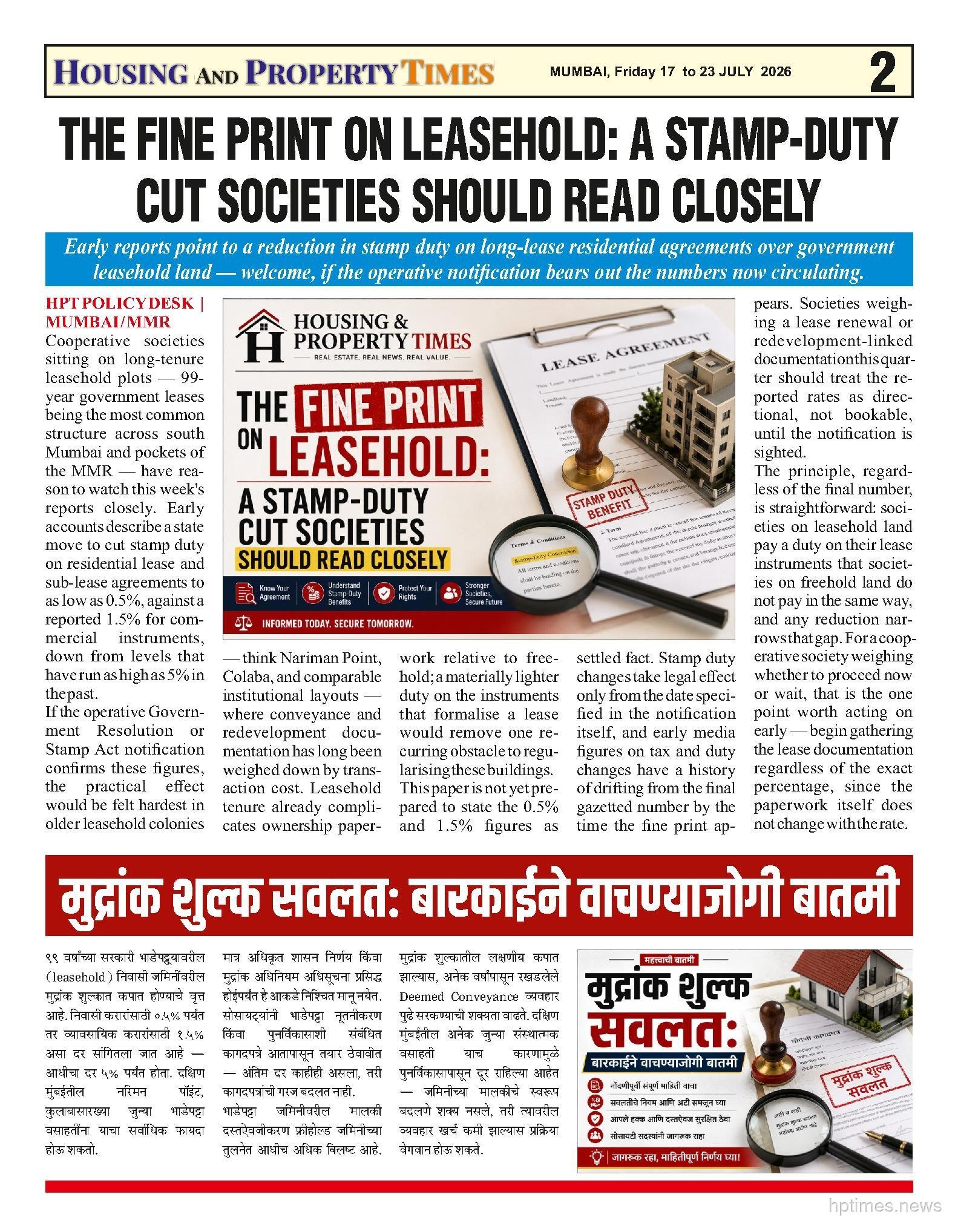
THE FINE PRINT ON LEASEHOLD: A STAMP-DUTY CUT SOCIETIES SHOULD READ CLOSELY
Page 2
THE FINE PRINT ON LEASEHOLD: A STAMP-DUTY CUT SOCIETIES SHOULD READ CLOSELY
 Page 3
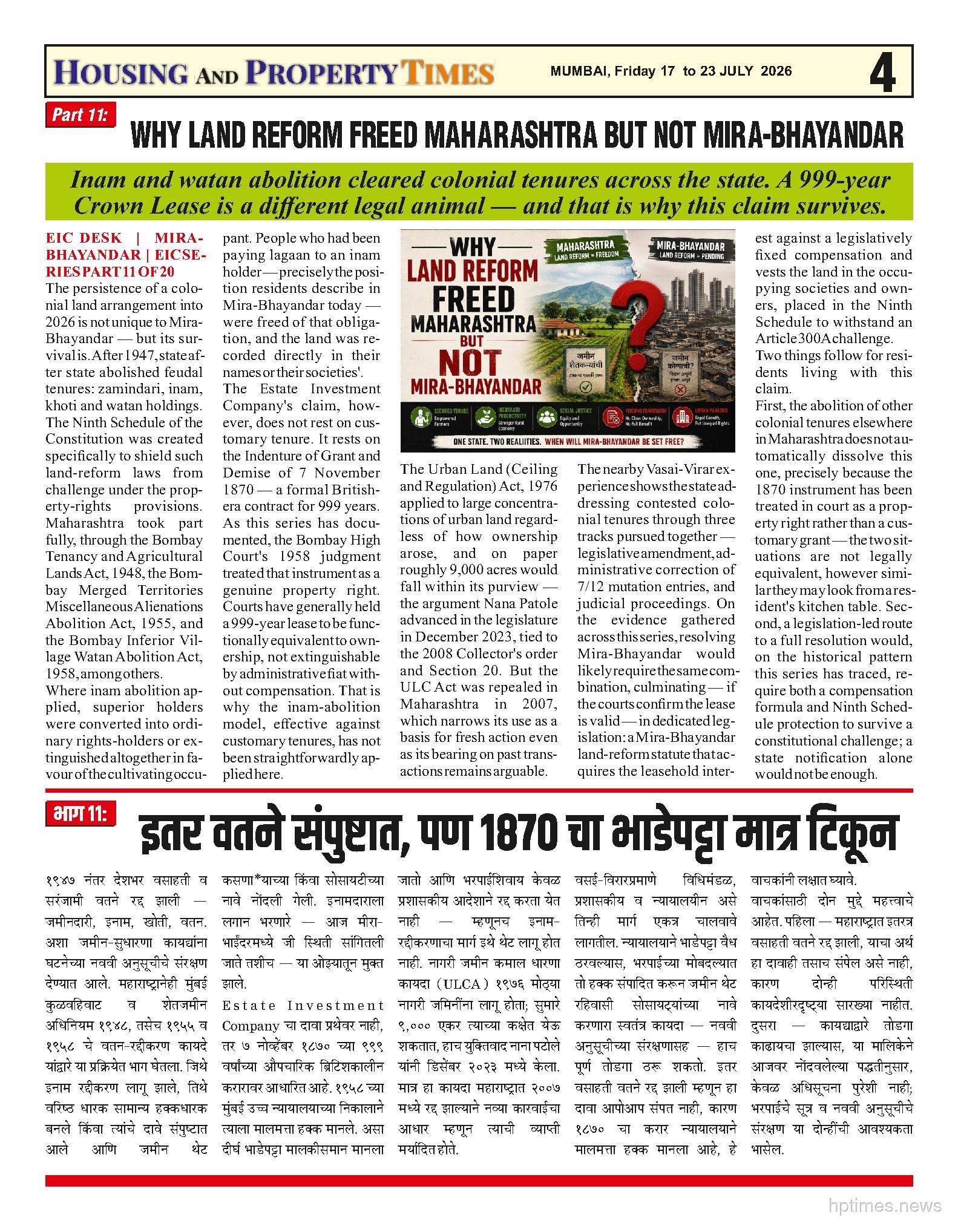
WHY LAND REFORM FREED MAHARASHTRA BUT NOT MIRA-BHAYANDAR
Page 3
WHY LAND REFORM FREED MAHARASHTRA BUT NOT MIRA-BHAYANDAR
 Page 4
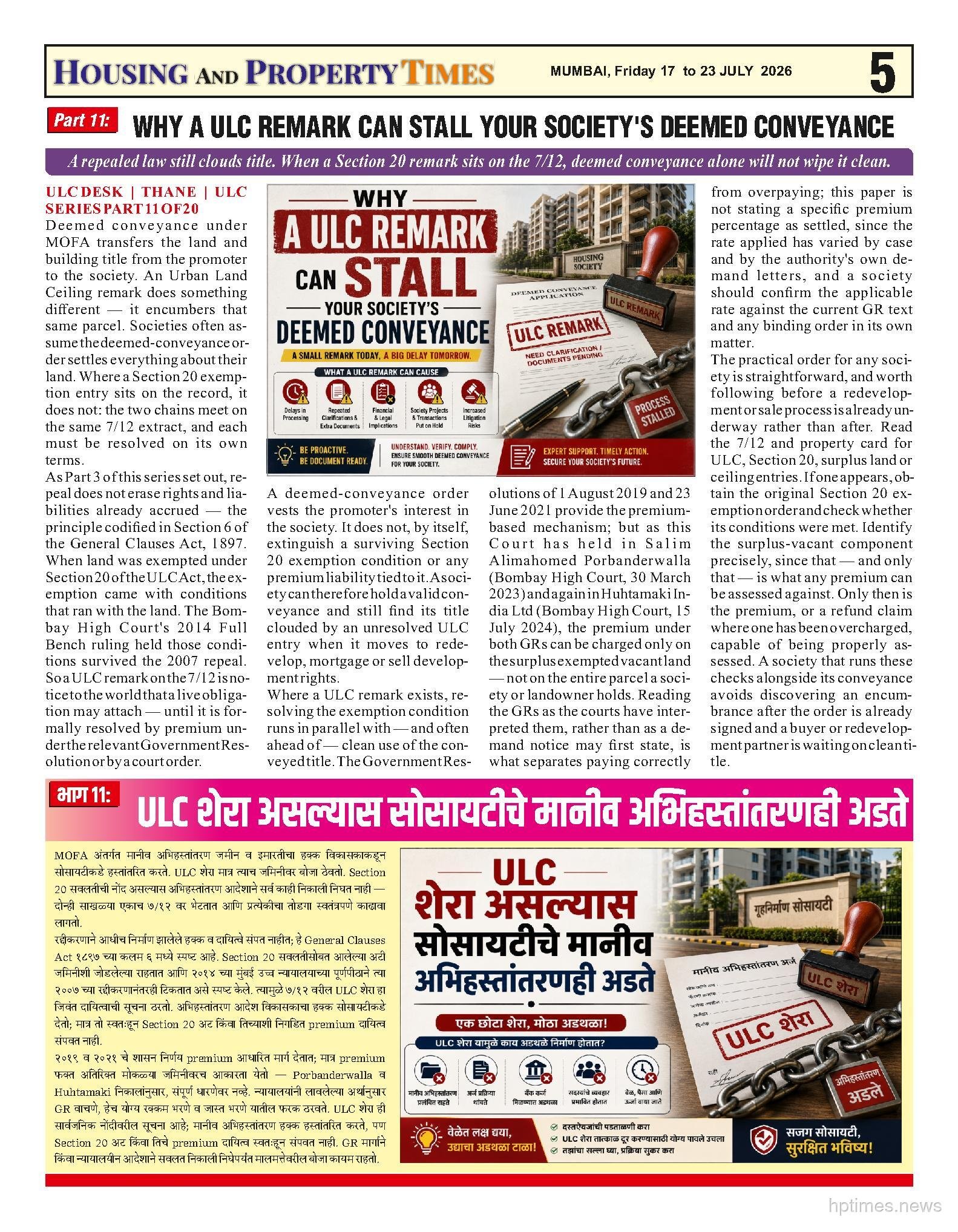
WHY A ULC REMARK CAN STALL YOUR SOCIETY'S DEEMED CONVEYANCE
Page 4
WHY A ULC REMARK CAN STALL YOUR SOCIETY'S DEEMED CONVEYANCE
 Page 6
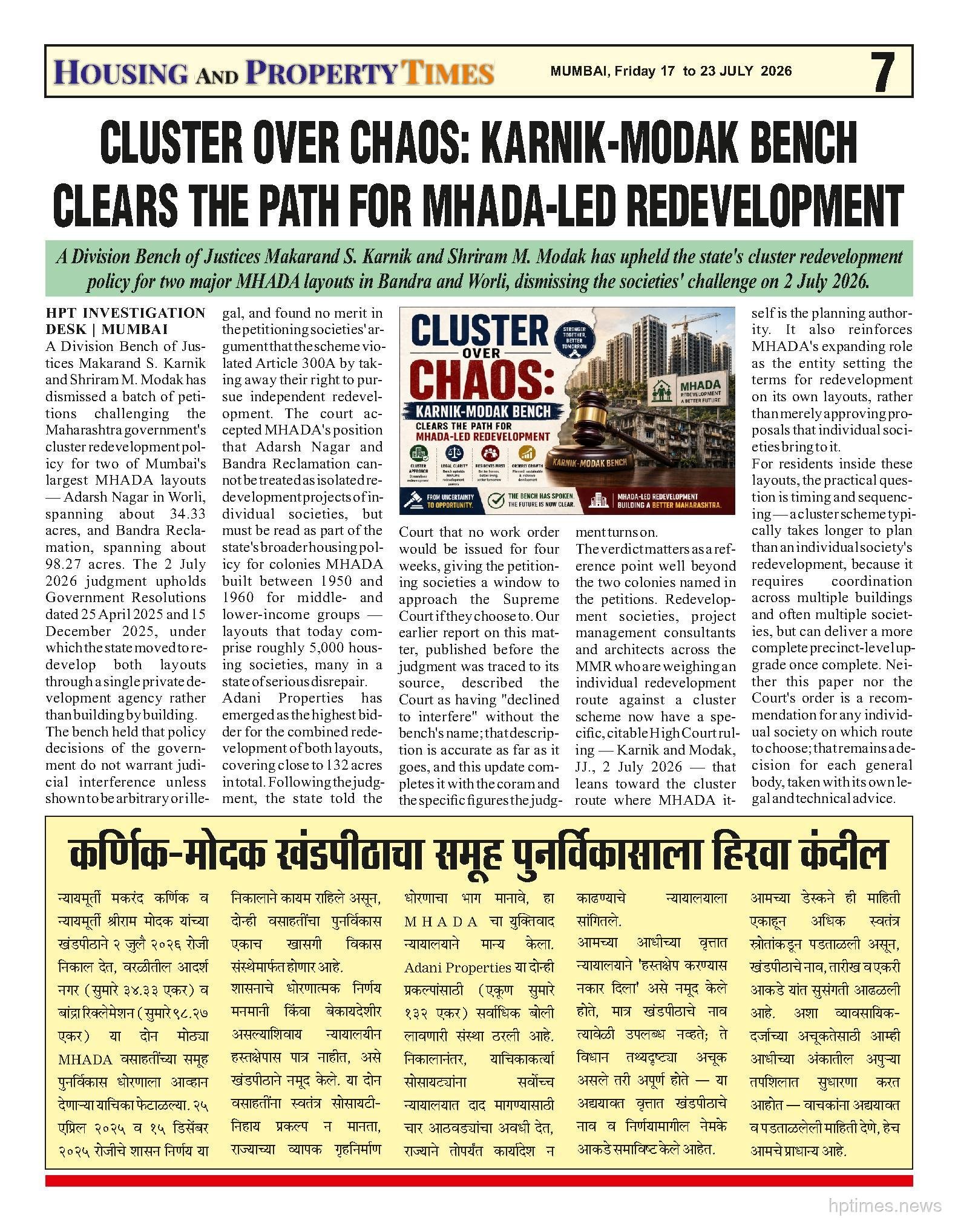
CLUSTER OVER CHAOS: KARNIK-MODAK BENCH CLEARS THE PATH FOR MHADA-LED REDEVELOPMENT
Page 6
CLUSTER OVER CHAOS: KARNIK-MODAK BENCH CLEARS THE PATH FOR MHADA-LED REDEVELOPMENT
 Page 7
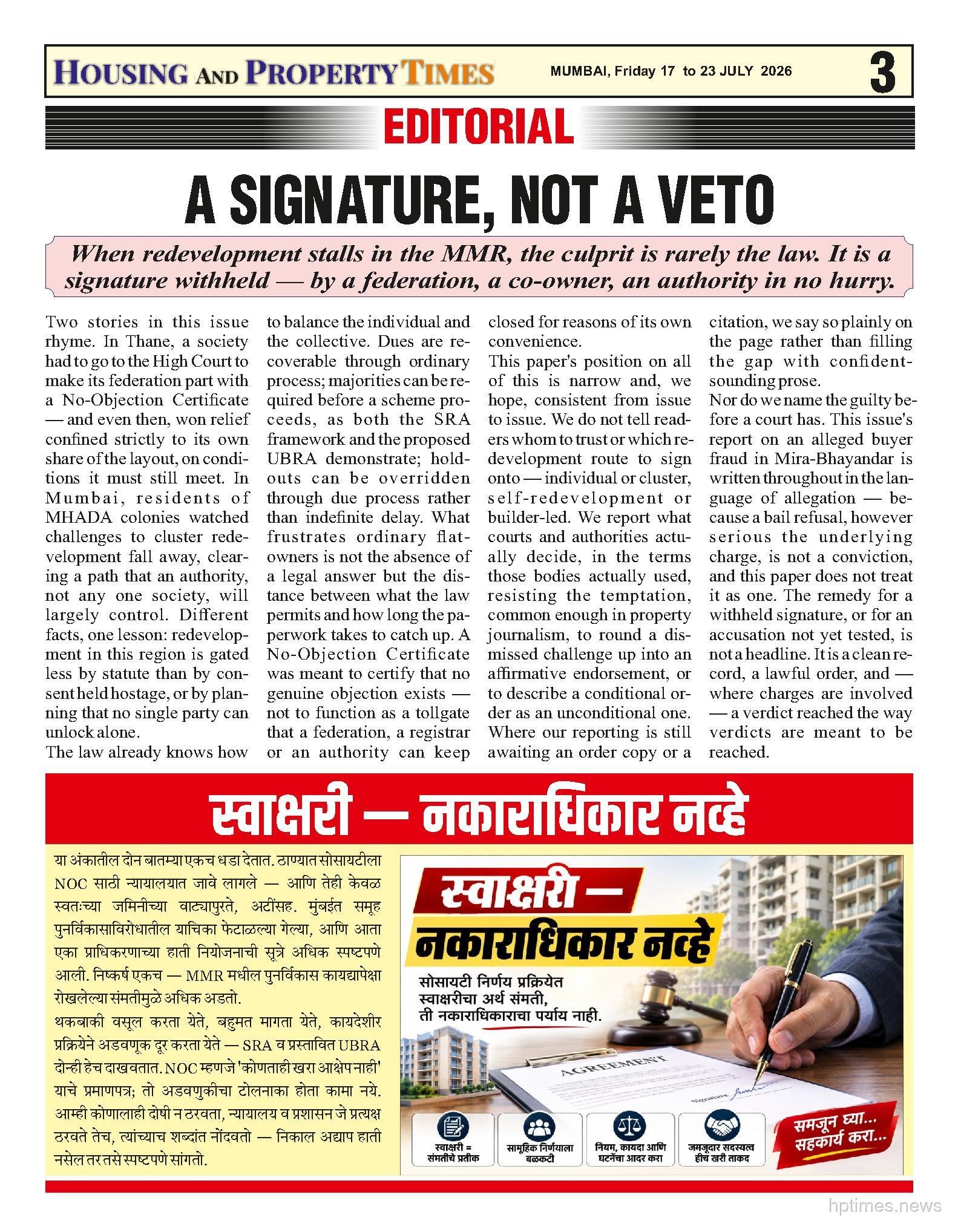
A SIGNATURE, NOT A VETO
Page 7
A SIGNATURE, NOT A VETO
Comments (0)